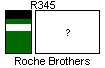
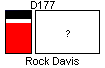
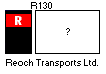
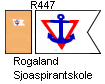
R


R, HUGHES & CO.

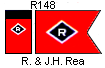
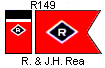
R. Hughes & Co.
R. Hughes & Co.

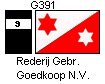
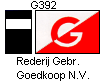
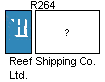
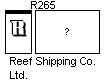
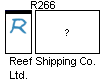
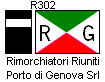
The funnel is black with a red band. The white flag bears a red rose slipped green, with the blue characters printed as “RG&Co.” in the corners; the o is raised with the dot below. Reed 1912 assigns this livery to R. Hughes-Jones & Co., which Loughran treats as a different company with a different livery. Reed also omits the dot beneath the o.

R. Hughes & Co. failed at the end of the 1920s and was reconstructed as R. Hughes & Co. (Liverpool) Ltd.

U.K., Liverpool.

R-TOWING OY.

R425

The funnel follows Jacob in a starboard photograph of 19 May 2013, with the logo referenced to the company website.

R-Towing provided towing and other sea services from Kalajoki. The company website was dated 2010.

Finland, Oulu.

R. & J.H. Rea Ltd.

Rea Towing Co. Ltd.

Rea Towing Co. Ltd.
Rea Towing Co. Ltd.

Mitchell gives Bantry Bay the separately referenced C143 funnel of Cory Towages.

The Rea family began as coal merchants in 1872 and entered Southampton towage in 1895 as R. & J.H. Rea. Liverpool operations followed in 1899 as Rea Steam Tug Co., and Bristol in 1903. Another account dates the business to 1879, possibly referring to barges. In 1918 Rea Ltd. was formed: Wm. Cory took half the overall business and full ownership outside Liverpool and the Mersey, where R. & J.H. Rea Ltd. continued. Rea Towing Co. was formed in 1922 for Mersey operations.

Expansion between 1958 and 1969 included purchases of other towage businesses. The fleets combined in 1970 with John Cooper (Belfast) and Newport Screw Towing under Cory Ship Towage, later Cory Towage. Rosanoski questions Brown’s statement that Rea Towing itself merged then: that name persisted in Lloyds into the 1990s, whereas R. & J.H. Rea’s fleet had passed to Cory earlier. Bantry Bay Towing was a subsidiary. Rea ships commonly used names ending “garth”.

U.K.: Liverpool, London and later Birkenhead in successive registers.

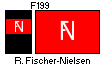
R. Fischer-Nielsen.

Documentary material — company attribution not established

F199
image by Phil Nelson, 24 June 2000

Talbot-Booth states that the diagonal line does not meet the top of the F.

Recorded as operator from the 1942 sources, Fischer-Nielsen operated D/S Draco and other companies. Vessel names began with S. Mitchell apparently dates sale of the last ships to 1968.

Denmark, Copenhagen.

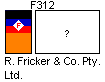
R. FRICKER & CO. PTY. LTD.

F312

The funnel is recorded for Gerard in the 1950s.

Registered in South Australia on 27 July 1922, R. Fricker operated ketches from 1933 and was the parent of Merilyn Shipping, listed by Lloyds as Merilyn Pty. Ltd. at the same address. The source records Nelcebee as abandoned on 25 June 1966, but also says Fricker bought it in 1965 and handed it to the South Australian Maritime Museum on 29 August 1985. Fricker was deregistered on 10 July 1999.

Australia, Adelaide.

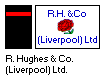
R. HUGHES & CO. (LIVERPOOL) LTD.

R. Hughes & Co. (Liverpool) Ltd.

The livery derives from its predecessor’s. The funnel is black with a red band. The white flag bears a red rose slipped green between blue inscriptions: “R.H.&Co” above and “(Liverpool) Ltd” below.

The company was reconstructed from R. Hughes & Co. at the end of the 1920s.

U.K., Liverpool.

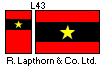
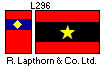
R. LAPTHORN & CO. LTD.

L43
L296

Brown gives the star angled upper horizontal arms, whereas a photograph of Hoo Willow shows an ordinary star. Rosanoski says the accompanying published funnel description is erroneous, giving both the base and star-bearing band as black.

L296 appears to relate to Hoo Swift, Hoo Maple and Hoo Beech. The flag was not given with it and is assumed to apply.

The company website supplies a flag image. Hoo Venture appears to have been chartered to John H. Whitaker; Mitchell’s W436 adds a W to the star on the L43 funnel.

Tony Lapthorn founded the family concern in November 1951 according to the company account, although Lloyds gives 1956. Most ships used the prefix Hoo. The fleet was offered for sale in January 2003, but a restructuring that November brought in a private investor as major shareholder and the business continued. Its management work included Harris & Dixon, John H. Whittaker and Bayford.

UK, Rochester.

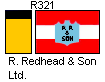
R. REDHEAD & SON LTD.

R321

In 1916 the funnel was yellow with a black top, probably used much earlier. The house flag is described as red-white-red with a red shield on the white band. Rosanoski notes that this disagrees with the published illustration unless the shield lay wholly within the white. The shield’s charges are not specified, and the available flapping-flag photograph confirms only the bands.

Robert Redhead was involved in towage from about 1855. Around 1874 his son Mark Henderson began sharing ownership and they traded as Robert Redhead & Son, perhaps without formal registration. After Robert’s death in 1903, Mark and Susannah H. White shared the fleet; her relationship to Robert is unknown. Mark died in 1915, and the partnership became Robert Redhead & Sons Ltd. in 1916. On 14 September 1929 it acquired The John Dry Steam Tug Co. and formed Redhead & Dry’s Tugs.

UK, Newcastle.

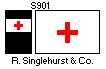
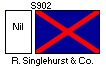
R. SINGLEHURST & CO.

S901
S902

Rosanoski considers this apparently the sailing-ship flag.

The cross varies in size between sources; Bonsor specifically calls it small. The flag continued in use by Iquitos Steamship.

R. Singlehurst, the Red Cross Line, operated sailing ships before 1866 and became a steamship owner in 1869. It opened a Liverpool–Iquitos service in 1898, possibly as Red Cross Iquitos Steamship. In 1901 it amalgamated with Booth Line as Booth Steamship Co. (1901), the Singlehursts retaining an interest for many years. The Iquitos concern is described as merging into Iquitos Steamship as part of that arrangement.

UK, Liverpool.

R., VAN URK.

V293

Mitchell may have based V293 on the second Calvijn, the only one he mentions; the attribution to that vessel is not certain.

Van Urk built Calvijn in 1955 and sold her in 1976. A replacement, also renamed Calvijn, was acquired in 1975 and sold in 1976. The vessels appear under E. Wagenborg’s Scheepvaart en Expeditiebrdrijf N.V. as operators.

Netherlands, Delfzijl.

R.A. & B.I. LARSSON.

L133

During the two years of ferry service the flag was blue with a narrow horizontal yellow band and a narrow vertical yellow band rising from it to the top edge, as shown in The Log.

R.A. & B.I. Larsson operated Ray Lartsson from 1970 to 1977, converting the fishing vessel into a ferry in 1975.

Australia, Lindisfarne, Tasmania.

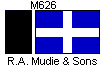
R.A. MUDIE & SONS.

M626
image by Ivan Sache, 2 April 2008

Sache’s FOTW flag follows Lloyds 1912.

R.A. Mudie began business in 1840 and acquired its first steamship in 1866. It formed and managed Village Steamship in 1905. Mudie ceased in 1912, while Village continued until 1916.

UK, Dundee.

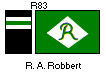
R.A.ROBBERT.

R.A. Robbert
R.A. Robbert

The black funnel has a white-green-white triband. The green flag has a white diamond containing a flowing green R.

R.A. Robbert managed the one-ship concern Det Dansk Norske D/S.

Denmark, Copenhagen.

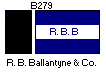
R.B. BALLANTYNE & CO.

B279

The funnel is black.

The flag is blue with a white horizontal band bearing blue “R.B.B”.

U.K., Glasgow.

R.G. ROBERTS.

R344

Rowland George Roberts of Fremantle, a seaman, owned Ne-Cede in 1946. He operated Ocean Cruiser as a Swan River excursion launch for a year before sale according to The Log; the Compendium instead gives a tentative ownership period of 1947–1950.

Australia, Perth.

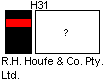
R.H. HOUFE & CO. PTY. LTD.

H31

Captain R.H. Houfe began operations in 1954. Listed initially under his own name and later as R.H. Houfe & Co. Pty. Ltd., he eventually sold out; the last vessel, King Islander, was sold in 1974.

Australia, Flankston; later Launceston.

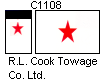
R.L. Cook Towage Co. Ltd.

R.L.COOK TOWAGE CO. LTD.

C1108

The funnel was used from at least 1912, and probably earlier. Whether a flag existed then is unknown, and no adoption date is supplied for the recorded flag.

Robert Lumley Cook began as a part-owner about 1865. His widow Elizabeth Sarah inherited three tugs in 1908; on her death in 1912 they passed to nephew Robert Cook Baister, who had probably already managed them for her. His son Robert Lumley Cook Baister inherited the business in 1921 and made it a limited company in February 1924. France, Fenwick Tyne & Wear took over in November 1947. T.G. Irving is recorded as an associate.

UK, Sunderland.

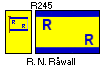
R.N. RÅWALL.

R245
image contributed by NDR, None
R247

The US Navy flag is blue with a very broad yellow horizontal band, bearing one blue R towards the upper hoist and another towards the lower fly.

Documentary images — company attribution uncertain

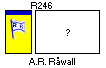
R246

This funnel may derive from Olympia, a vessel Rosanoski did not locate in Lloyds. The associated flag is described as white with blue bands at the top and bottom and RR.

Undated livery cannot establish use before/after sale.

R.N. Råwall operated in the 1950s and appears to have succeeded A.R. Råwall, recorded before the Second World War. US Navy 1961 instead gives the initials E.R.N.

Sweden, Råå.

R.S. Dalgliesh Ltd.

R.S. DALGLIESH LTD.

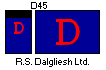
D45
image by Jarig Bakker, 29 December 2004
D265

The FOTW flag follows Brown 1951.

Dalgliesh Steam Shipping Co. Ltd.

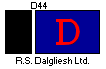
D44

This livery is attributed to Dalgliesh S.S. Co. Ltd.

Steamship owners from 1905, Dalgliesh operated general tramps, often with names ending in worth. Its operating interests included Dalgliesh Steam Shipping, Watergate Steam Shipping, Worth Steam Shipping and later Resolute Shipping. Lonrho sold the business to Kristian Jebsen in April 1974; Mitchell describes Jebsen as managers, although Lloyds does not record that role.

U.K., Newcastle.

R.S. LAMB & CO. LTD.

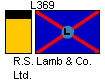
L369

The ships shared a dark-yellow funnel and retained their colours for some time after the Union takeover. The flag shown in The Log is blue with a narrow red saltire, over which is a light-blue circle bearing a black L.

R.S. Lamb was formed in 1903 and worked in the timber trade. Shipping operations began in 1910 through individual ship companies, including Inga, Ihumata and Omana, registered at Sydney and managed by Lamb. The Union Steam Ship Co. of N.Z. acquired an interest on 21 October 1909 and completed its fleet takeover on 19 February 1930. J.J. Craig of Auckland also had an interest. R.S. Lamb & Co. Pty. Ltd. was deregistered on 4 February 1983.

Australia, Sydney.

R.S. Platou Shipbrokers A/S.

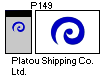
Documented shared associations — Platou broker flag / Platou Shipping–Hansa funnel composite

Platou Shipping Co. Ltd.

The flag source uses the shipbrokers’ name and the logo also appears on their website. Mitchell additionally gives the funnel for Hansa Shipping Partnership A/S K/S.

Ragnar Stoud Platou and his nephew Hans Thomas Gram established the shipbroking company in 1936.

The document separately records Platou Shipping Co. Ltd. at Høvik operating or acting for KS Hansa Bulk 10’s Hansa Rostock in 1989. It became Hansa Shipping Co. A/S in 1991; its Hansa-prefixed fleet appears in 1992–93 but is omitted in 1996–97.

Norway, Oslo.

R.T. ARTHURS & CO.

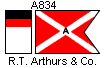
A834

R.T. Arthurs & Co. was formed in 1908 after Alexander & Arthurs dissolved. Its last ship, Benarthur, was sunk in August 1915, after which the S.S. Beechgrove Co. Ltd. business ceased.

UK, Glasgow.

R.W. CAMERON & CO..

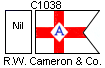
C1038
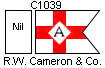
C1039
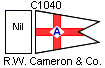
C1040
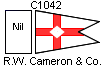
C1042
Pioneer Line of Australian Packets

The flag’s A stands for Australia. FOTW identifies it with Pioneer Line of Australian Packets; Rosanoski considers Loughran’s black-A version attributed to John Ogden Pioneer Line misleading. The Private Signals of the Merchants of New York chart in The Clipper Ships attributes its flag to R.W. Cameron without mentioning Pioneer Line.

Mystic Seaport associates this flag with East Indies and California trade, listing R.W. Cameron & Co. [1850] as Australia Line.

Mystic Seaport gives this flag both for John Ogden’s Pioneer Line and Cameron’s Australia Line, possibly supporting a joint Pioneer Line of Australian Packets operation.

Canadian-born Roderick W. Cameron entered New York shipping and, with broker John Ogden, established an Australian clipper line in 1852 according to the FOTW account. A contemporary sailing list begins with Revenue in July 1852 and runs through Ocean Queen in January 1855; the accompanying letter calls it the Pioneer Line of Australian Packets. The firm is said to have adopted R.W. Cameron & Co. in 1870. A later obituary instead dates the New York–Melbourne clipper service to the early 1860s. It also places his residence in New York to the end, contrary to the FOTW statement that he settled in Australia. He was knighted in 1883 and died while visiting London in 1900. Continued company activity is only tentatively stated in the FOTW account.

USA, New York.

R.W. MILLER & CO. PTY. LTD.

M18
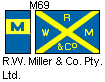
M69

The original flag was blue with a yellow saltire and yellow RWMCo. lettering in the respective quarters; Flotilla Australia shows a royal-blue ground. The livery was also recorded for Miller Steamship. The NJK portrayal of Millers McArthur in October 1964 gives a black funnel letter, and Rosanoski considers the letter in a black-and-white photograph of William McArthur darker than the blue funnel base, indeed black. He rejects Mitchell’s shallow V in the M on the evidence of that photograph.

The later flag added an ampersand. The livery was first used by Amanda Miller. Mitchell’s shallow-V M occurs in this funnel version too and is subject to the same photographic objection.

Robert William Miller was involved in stevedoring and lighterage, principally coal, from 1907. One account dates his private company to 1919; another records trading as R.W. Miller & Co. from early 1912, a lighter fleet from 1913 and incorporation on 12 July 1923. Shipowning began in 1919 with colliers and later extended to coastal tankers. The name changed from R.W. Miller & Co. Ltd. to R.W. Miller & Co. Pty. Ltd. in 1938. The sources also record subsequent names Millers Tankers Pty. Ltd. and Mount Thorley Operations Pty. Ltd.

Miller Steamship Co. Pty. Ltd. was liquidated in 1982. Atlantic Richfield acquired Bulkships’ holding in R.W. Miller (Holdings) in 1978, apparently through Arco Australia Coal. Howard Smith’s 35% holding of 1972 rose to 67.2% with the purchase of Ampol’s interest in 1979, then to 76.9% in 1983 and 99.9% by February 1985. It was subsequently sold to Coal & Allied Industries. Miller faded from shipping in the early 1990s.

Australia, Sydney.

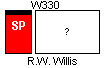
R.W. WILLIS.

W330

The funnel letters apparently identify the vessel rather than advertise a company. Rosanoski considers that Sirenia Pearl was acquired from Fairwill with the funnel left unchanged; The Log’s Fairwill account also assigns the letters to the vessel.

Willis operated Sirenia Pearl in Queensland waters.

Australia.

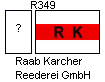
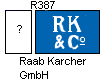
RAAB KARCHER REEDEREI GMBH.

R349
R387
image contributed by Jan Mertens, 19 June 2006

The flag is horizontally white-red-white, with black RK on the red band. A photograph of Raab Karcher V shows both the house flag and what Jan Mertens described as a bow pennant. Rosanoski questions the pennant interpretation: the apparent taper may be a fold, since the lower white area reaches the fly rather than converging with the red band.

Raab Karcher began as a co-operative coal business at Kaiserslautern in 1848, founded by Cark Raab and Carl Heinrich Karcher, later expanding into other commodities. Its shipping operation may initially have been inland; Otto Springorum I is recorded from 1958 to sale in 1973. Raab Karcher Reederei und Spedition apparently merged with Stinnes Reederei in 1995. The wider trading group operated within Stinnes/Veba from 1998 and passed to Saint-Gobain from 1 January 2000; the source only implies the shipping department’s demise.

The Dutch SEAM operation and a Rotterdam subsidiary of Raab Karcher & Co. passed to a Swiss Thyssen operating company by 1 April 1967. The account also identifies the earlier Dutch business as Scheepvaart en Agentuur Mij. Veerhaven.

Germany, Duisburg-Ruhrort.

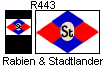
RABIEN & STADTLANDER GMBH.

R443
image by Eugene Ipavec, 6 May 2009
R444
R445
image by Klaus-Michael Schneider, 4 May 2000

The earlier flag is white with a lozenge touching its edges, quartered blue at top and bottom and red at left and right. A small upright white oval, edged black, contains black St. The caption names both Rabien and Stadtlander despite the absence of R. Massary 1930 retains this design. Eugene Ipavec’s FOTW version emphasises the black outline more strongly than the other sources.

The document distinguishes the original Flaggenbuch 1928 version from the 1934 update, referenced as R444, and notes the later Bremen stripes and initials.

The later table flag follows Bremen’s eight-striped pattern, overlaid with a white rectangle containing black R&St.

Operating from 1871, Rabien & Stadtlander helped establish Übersee-Reederei in 1921 and absorbed it in 1936 when its capital was insufficient under new company law. Its vessels included Rhön and Eifel, both wartime casualties; Eifel survived until an accidental sinking while carrying British ammunition in 1945. Miramar, however, places Eifel directly under Rabien & Stadtlander from its purchase in 1929.

Helmut Bastian became general manager in 1960 while also running his own shipping company, which failed in 1988. His son Rolf joined in 1976, apparently Rabien & Stadtlander, and later became managing director. The company continued in brokerage, sea transport and lake- and river-vessel management, with Nautrans described as a subsidiary running two vessels.

Germany, Geestemünde; later Bremen.

RACAL ENERGY RESOURCES LTD.

R81

The funnel is blue. The yellow flag has a horizontal red rectangular panel with notched upper and lower edges, bearing white RACAL.

U.K., London.

RADISSON SEVEN SEAS CRUISES.

R428
R429

Seven Seas Voyager photographs from July 2003 and September 2008 show a darker, more sky-blue logo, although Rosanoski suspects colour manipulation, especially in the earlier image. Other distant or cloudy views make the shade difficult to determine.

Song of Flower’s portside photograph from May 2002 appears to show a turquoise logo matching one of the reproduced website logos. The source calls this funnel R426, while the accepted gallery includes R428.

Also known as RSSC, the business is dated to 1990 in one account, but operations began on 26 May 1992 as Radisson Diamond Cruises with Radisson Diamond. Management initially combined Carlson’s Radisson Hotel Corporation and the vessel’s owner, Diamond Cruise Ltd. In December 1994 it merged with Seven Seas Cruises, operator of Song of Flower. Carlson acquired Radisson Diamond in 1996 and partnered V Ships in the late 1990s. The name became Regent Seven Seas Cruises in 2006. A separate account says Radisson was dropped in 2003, possibly only as a marketing abbreviation.

USA, Fort Lauderdale, Florida.

RAGNAR BRUNKMAN.

B189
B190
B192
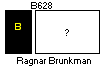
B628

Brown’s letter colour on funnel and flag is uncertain, probably blue but possibly green. Mitchell associates B189 with Brubor’s Irene and Norma.

Mitchell assigns B190 to Brunkman’s Mergus, which Lloyd’s lists as owned by Brubor.

The flag is yellow with green “B”, supported by US Navy and a Collectors Corner badge. Other sources use blue, so the difference remains recorded.

Ragnar Brunkman operated Rederi A/B Brubor before the Second World War in tramp and short-sea trades. Transmarin acquired Brubor in 1962 and continued it as a subsidiary for several years.

Sweden, Helsingborg.

Rahmann.

RAHMANN.

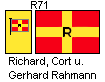
R71
image by Klaus-Michael Schneider, 13 April 2009

Mitchell shows a larger R on the funnel’s flag, extending onto the field. The top of the R in the FOTW version is smaller than in its printed source, itself smaller than Nüsse’s Gerhard Rahmann table flag. Rosanoski used the latter for his illustration.

The business appears as Richard Rahman with Paul in 1953–54, Richard, Cort & Gerhard Rahmann in 1956–57 and R. Rahmann & Söhne later. By 1988–89 Gerhard Rahmann K.G. was at the same Jork address with a different vessel, while Cort Rahmann K.G. at another address took over Paul, later managed by Reederei “Nord” Klaus Oldendorff. Nüsse records a Rahmann involvement with tom Wörden in Navalis Schiffahrtsgesellschaft.

Germany: Hamburg, Kr. Stade and Jork in successive Lloyds entries; Estebrügge in Die Deutsche Handelsflotte 1957.

RAILSHIP GMBH & CO. K.G.

R48
image by Jarig Bakker, 17 January 2006
R319

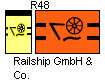
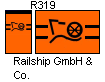
Brown 1995 gives the same design for flag and funnel, but Rosanoski’s photographs of the three vessels differ from Brown. The funnels are orange rather than yellow. Except for the wheel spokes, bands and emblem lines have equal widths. The bow-shaped chevron is higher, with a stepped upper horizontal line and a more upright counterpart, suggesting a forecastle rather than a flush deck. The wheel sits lower, has neither a central ring nor a vertical spoke, and the wavy sea line is longer. These photographic details form R319; the viewing angles may introduce distortion.

The R319 flag is a reconstruction from the funnel, not a directly observed house flag. Rosanoski considers Brown’s flag detail potentially incorrect, but the one reasonably identifiable flag photograph, Railship II on 1 July 1995, appears to show the manager H.M. Gehrckens’s flag.

Railship was formed by German, Finnish and Swiss interests in the mid-1970s and operated Railship I, II and III under H. & M. Gehrckens. Finnlines acquired 40% from EFFOA in 1996, another 54% through Poseidon in 1997 and the final 6% in December 1998. The fleet later entered Finnlines, with the source variously recording a 2001 sale of Railship I and ships sold in 2002. Railship II became Finnrider and Railship III Finnrunner, later Rider and Runner under Finland Ro-Ro. K/S.

Germany, Lübeck; Hamburg in another source.

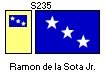
RAMON DE LA SOTA JR.

S235

The group livery has a yellow funnel with a panel of the blue flag bearing three white stars, whose arrangement the source records as Pbd. The funnel stars are described as ascending from fore to aft, although the illustration shows them as on the flag. Brown attributes the livery to Bordagain. Teresa of Socoa had another funnel in May 1965, possibly a charterer’s, cross-referenced as T180.

Ramon de la Sota Jr. managed flag-of-convenience subsidiaries including Artagan, Bordagain, Compañia Naviera del Vapor Albia and Socoa. Bordagain was based in Monrovia.

France, Biarritz; later Spain, Vizcaya.

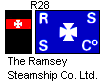
RAMSEY STEAMSHIP CO. LTD. (THE)

R28

The funnel follows Ben Maye in a starboard photograph of 7 April 2013; funnel and flag logos also appear on the company website.

The private company was incorporated in the Isle of Man in 1913, undertaking shipowning, broking, agency, stevedoring and marine engineering. In summer 2013 it announced winding-up because of pension liabilities. Ben Maye and Ben Varey were sold to Kent-based Angel Shipping, to be managed by its subsidiary Absolute Shipping.

UK, Ramsey, Isle of Man; Douglas in the 1978–79 register.

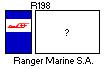
Ranger Marine S.A.

Documentary images — company attribution uncertain

R198

The stylised bird emblem follows a photograph of Heron at Lyttelton on 6 September 2003. Rosanoski assumes it belongs to the agent rather than registered owner Heron Maritime S.A.

Ranger versus Heron Maritime mark ownership unproved.

Formed in 1987, Ranger is recorded as manager in the earlier registers and as agent in the 1998 and 2000 accounts.

Greece, Piraeus.

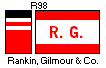
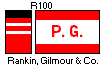
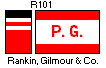
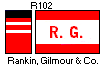
Rankin, Gilmour & Co.

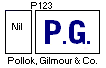
RANKIN, GILMOUR & CO.

P123
R98
image by Jarig Bakker, 6 January 2005
R100
R101
R102
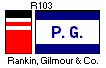
R103

Pollok, Gilmour’s flag continued for a time after the shipping interests were concentrated, and Griffin 1895 still attributes it to Rankin, Gilmour.

The Rankin Gilmour, Strang funnel formed the basis of Saint Line’s, with broader white bands adopted by 1904 while the flag still retained P as in R101. Lloyds and Reed 1912 show the R98 change. The source also dates the broader-banded R98 funnel to 1904, so the transition is not entirely consistent. Reed’s earlier flags omit dots after letters; LJC 1930 omits the dot after G. Mitchell makes the white funnel bands narrower than the intervening red.

Stewart and MN show Saint using Mitchell, Cotts’s flag after the Second World War while retaining its own funnel. Rosanoski questions the latter detail because Mitchell gives the manager’s funnel for the final three vessels, while its R98 examples are pre-war ships.

Rankin, Gilmour, Strang & Co.

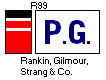
R99

Rosanoski considers the 1885 R103 combination more intelligible if its funnel were depicted as R99 and its flag understood as a predecessor of R100; this is an interpretation, not a correction to the surviving illustration.

The business originated in 1804 when John and Arthur Pollok partnered Allan Gilmour as Pollok, Gilmour & Co. Shipping interests concentrated under Rankin, Gilmour in 1861, with Saint names adopted for the first iron sailing vessel in 1865. Steamships followed in 1880 under British & Foreign S.S. Co. Ltd.; the associated London firm Rankin Gilmour, Strang disappeared by about 1912. Saint Line replaced British & Foreign in 1919 and continued after Rankin, Gilmour ceased around 1929–30. It moved from Liverpool to London in 1934 and shortly afterwards came under Mitchell, Cotts management. Sun Shipping’s last vessel, Cape St. David, transferred to Saint in 1957; Saint sold its remaining ships in June 1962.

U.K., Liverpool.

RANKINE LINE LTD.

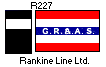
R227
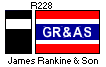
R228

Only Lloyds 1912 shows dots after the letters.

Merchant Ships 1959 and 1963, showing the funnels under George Gibson, give the white bands slightly greater width than the red rather than the reverse.

James Rankine & Co. of Grangemouth, later identified as James Rankine & Sons, at one time operated as Glasgow & Rotterdam Steam Ship Co. and traced its origins to Charles Tennant. The line served Grangemouth–Amsterdam/Rotterdam, ceased passenger trading after the First World War and merged into George Gibson & Co. on 14 January 1920.

U.K., Glasgow.

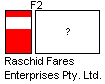
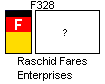
RASCHID FARES ENTERPRISES PTY. LTD.

F2
F328

Danny F’s photograph of 14 August 1982 confirms the funnel.

Formed in 1973, the concern was initially listed under Common Brothers’ management and subsequently in its own name. The head office moved from Beirut to Fremantle in 1991 while ships retained the Lebanese flag, then to Roumania in 1996, when the ships adopted St. Vincent and the Grenadines registration. An Australian operating company was also listed. NZMN reports a change to Central Shipping Co. S.a.r.l. in 1995, but Lloyds does not support that change.

Lebanon, Beirut, with later head-office moves to Fremantle and Roumania; Lloyds subsequently lists Beirut and Constanta.

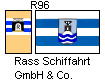
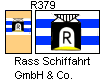
RASS SCHIFFAHRT GMBH & CO.

R96
R379

This livery is shown on Inga Lena on 17 December 2011 and in Josef Nüsse’s table flag.

Inga Lena on 11 September 2008 shows the yellow base of the emblem seen in the flag; in other photographs it may appear the same buff as the funnel. The panel’s position relative to the blue bands varies. Hoheplate and Hohebank also show this funnel. The flag derives from the company website, with a funnel-band example during Inga Lena’s construction. A 1979 black-and-white photograph of Hoheweg appears to show the same design.

Mitchell shows the upper striped triangular effect as solid red, and also gives a red R.

Ludwig Rass began his nautical career in 1947, became a coaster master in 1957 and, according to the company website, bought Hoheweg in 1961. Lloyds instead first lists Hanna, later under Friedrich Bernhard Rass while L. Rass held Hoheweg. Son Kersten began nautical training in 1982, qualified as master and became group chairman in 2003. Lloyds gives a 1995 company formation, which Rosanoski suggests may relate to the Bramstedt base.

Germany, Warstade; later Bremen and Bramstedt.

RATHBONE BROS. & CO.

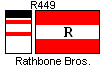
R449
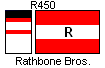
R450

The business originated in William Rathbone II’s timber yard in 1742. His successor William Rathbone III developed American and Baltic trade, with several ships owned by 1757. The family business passed through successive generations and partnerships; William Rathbone V and Richard formed Rathbone Bros. & Co. with James Powell in 1824. Regular passenger sailings to America had begun in 1818.

Lamport & Holt acquired the sailing fleet around 1865. The Star Line, recorded as Star Navigation Co., was sold to Thos. & Jas. Harrison in 1889, the transaction described as four steamers. After decline and recapitalisation in 1898 involving Henry Gair, Frank Rathbone took control and relaunched the business in wealth management in 1907. Trading was abandoned in the 1912 restructuring.

UK, Liverpool.

RATNAKAR SHIPPING CO. LTD.

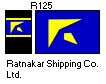
R125
R126

This funnel was observed on Ratna Shobhana.

The fleet used names beginning Ratna. The company also acted as agent for Texmaco Ltd.

India, Calcutta.

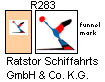
RATSTOR SCHIFFAHRTS GMBH & CO. K.G.

R283

Forum Fiji II’s starboard photograph of 18 April 2008 shows the blue bird and its ball facing forward, mirrored from the other side. Although chartered, the vessel retained her owner’s colours, also shown under her original name Ratstor in September 2007. A portside photograph of 23 May 2008 confirms the opposite view.

Ratstor was formed in 2000.

Germany, Leer.

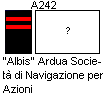
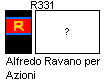
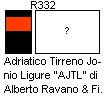
Ravano.

RAVANO.

A242
R331
R332

The funnel was observed on Alcaid in January 1967.

The Ravano family’s shipowning tradition is dated to 1838. The registers distinguish Giuseppe Ravano, fu Pietro; Alberto Ravano, fu Pietro, later Alberto Ravano & Figli; and Angelo di Enrico Ravano. Related names in the source include Adriatico Tirreno Jonio Ligure, Industria Armamento, Ausonia, Alfredo Ravano and Naves Shipping. Names ending “itas” recur. In 1961 A. Ravano renamed Humilitas, bought the previous year, as Polare and placed her under Albis Ardua; Mitchell connects that company to “Alberta Ravano”.

Angelo Ravano formed Contship S.A. in October 1969 and Contship Italia in the later 1980s. The group held 66.5% of Contship Europe. Costa Container Lines was bought and later sold by Angelo according to MN, while the website describes withdrawal from the trade in 1990. Bulktrade was part of the group, and Compañia Atlantica Pacifica is recorded as an associate.

Italy, Genoa.

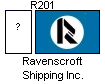
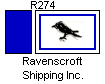
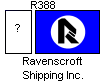
RAVENSCROFT SHIP MANAGEMENT INC.

R201
R274
R388
image by Jarig Bakker, None

The website logo differs from Jarig Bakker’s FOTW image: the R’s vertical stem is detached from the remainder, and its other two white divisions are more pronounced. The downloaded logo looked more sky-blue in 2004 and darker in 2012; Rosanoski does not regard the shade difference as necessarily significant. By the later account the website’s ship photographs show Ultrapetrol livery.

Ravenscroft began in New York in 1982, beneficially owned by Argentina-resident fourth-generation shipowners of the Menéndez family. It moved from shipowning into shipmanagement in 1989 alongside agency and chartering, and opened in Florida on 8 January 1990. Lloyds dates Ravenscroft Shipping Inc. to 1990; it became Ravenscroft Ship Management Inc. in 2006 and expanded beyond family-related clients.

Ultrapetrol bought the holding company Ravenscroft Shipping (Bahamas) on 20 March 2006 from related Crosstrade and Crosstrees companies, with an option to reverse the sale by September. The holding company was ultimate parent of Ravenscroft and Elysian managers. Subsidiaries Fulton Shipping/Elysian Ship Management started Elysian Cruises in 2004. The operating interests also included Naviera Yacu Puma, formed in 1996 at Iquitos, Peru.

USA, Miami, Florida; later Coral Gables, Florida.

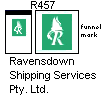
RAVENSDOWN FERTILIZER CO-OPERATIVE LTD.

R457

Cape Knox carried the Ravensdown motif while on time charter in the photograph supplied by Ian Farquhar in January 2014. He did not recall earlier use, since previous charters had mostly been voyage or short time charters. Longer charters were becoming more frequent, with ships taking logs or other cargoes between phosphate collections.

Formed in 1978, Ravensdown became wholly farmer-owned in 1987 after buying the remaining FERNZ shares. Melbourne-based Ravensdown Shipping Services began operations with chartered ships in February 2011.

New Zealand, Christchurch.

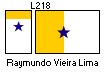
RAYMUNDO VIEIRA LIMA.

L218

Jorge Candeias suggests that the flag’s star relates to the star on Pará’s flag. His source is a house-flag chart from about 1950.

Raymundo Vieira Lima appears in registers from 1953–54 to 1963–64.

Brazil, Para.

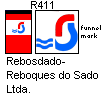
REBOSDADO-REBOQUES DO SADO LTDA.

R411

The funnel follows a portside photograph of Ponta do Sado taken on 19 September 2012.

The company operated the tug Ponta do Sado, with photographs traced back to September 2004. Rosanoski did not locate it in Lloyds 2005–06, presumably because of its small tonnage.

Portugal, Setúbal.

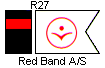
RED BAND A/S.

R27
image by Jarig Bakker, 12 September 2005

The white swallowtail has a thin red ring enclosing a small red disc above a shallow V resembling a flying bird, all red. The funnel follows Knock Sallie in October 2002 and is narrower than Brown’s depiction. Brown labels the image Red Band K/S but uses A/S in the index.

Red Band was formed in 1991 as a specialist shipmanager and became Fred Olsen Marine Services in 2005. Lloyds treats it as a Fred Olsen operating company, although Rosanoski found no relationship beyond business mentioned in the archived website. Its operating subsidiary Trassey Shipping, formed in 1992 at Belfast, later transferred its one vessel to a named subsidiary.

Norway, Oslo.

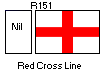
RED CROSS LINE OF PACKETS.

Red Cross Line
Red Cross Line

The flag is white with a red cross. No funnel is given.

This was a sailing-packet line, with David Ogden given as manager. A notice dated 1854, reproduced in The Atlantic Ferry, advertises Saul, Martindale and Co.’s regular packets to American ports under the Red Cross name.

USA, New York.

RED CROSS LINE.

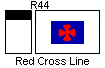
R43
R44

The flag is white with a blue panel bearing a red cross paty. The funnel is recorded for Lady Barkly on the Nelson–Collingwood route.

The later Log account mentions Lady Barkly and Wakatu but does not explain the different funnel-base colour.

J.S. Cross senior and junior operated the line, with Lady Barkly recorded from 1868 and Waitapu from 1887, both until 1896. The last ship was sold in 1896, but the company lasted until 1906. It is distinct from other Red Cross companies.

New Zealand, Nelson (assumed).

RED FUNNEL TRAWLERS PTY. LTD.

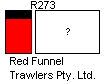
R273

The same funnel was used throughout the company’s changes.

The business began as Red Funnel Fisheries and bought Almeria in 1928, renaming her Goolgwai. It was reconstituted as Red Funnel Trawlers in 1933, registered on 11 October; the former company was delisted on 1 November following liquidation. A merger with Coastal Trawling is recorded, probably in 1933. The later register and directory still listed the company, based at Lugarno, New South Wales.

Australia, Sydney.

RED SEA LINES S.A.

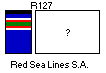
R127

The blue funnel has a narrow black top and white-red-green-red-white bands, with green broader than the others. No flag was noted.

Agents were Ubaldo Gennari fu Torquato & C. in the earlier account and Torquato Romano Gennari in the later registers.

Italy, Pesaro in 1963–64; Switzerland, Lugano in 1970–71.

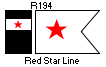
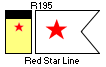
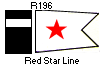
RED STAR LINE.

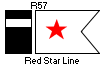
R57
R194
R195
R196

The original funnel is confirmed by a photograph of Switzerland in 1874. It was revived for Bernstein’s Red Star operation, though Rosanoski does not know whether this was deliberate or coincidental.

This funnel was in use by 1884.

The funnel of the associated Inman and International Steamship Company was adopted in 1893.

The white flag with a red star resembles that of the unrelated American Red Star Packet Line. Its exact shape is not consistent across sources: Reed gives proportions of 1:2, while some depict a tapered swallowtail. Later Brown entries domiciled at Hamburg suggest continued flag use under Bernstein. FOTW also carried a French attribution, another inconsistency noted in the document.

Formed in 1872 as Société Anonyme de Navigation Belge-Américaine, the Belgian subsidiary of the American International Navigation Co., Red Star began operations on 20 January 1873. It joined the Nordatlantische Dampfer-Linien-Verband consortium in 1892 and came under International Mercantile Marine in 1902. An account says the Belgian company disposed of its interests that year, but Rosanoski questions this because some ships remained Belgian; Red Star may subsequently have survived as a trading name.

Headquarters moved to London in August 1914, with most Belgian-registered ships transferred to the British flag under International Navigation of Liverpool. Westernland’s sailing on 12 December 1934 ended operations. Arnold Bernstein bought the last vessels in early 1935 and continued as Bernstein (Red Star) Line or Red Star Line GmbH. Arrested by the Nazis in January 1937, he took no further part; his ships were confiscated and reorganisation announced that November. In May 1939 the ships, goodwill and name rights passed to Nederlandsche-Amerikaansche Stoomvaart Maatschappij.

Belgium, Antwerp.

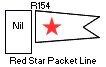
RED STAR PACKET LINE.

R154
image by Joe McMillan, 17 November 2001

One of the New York–Liverpool sailing-packet lines established in the 1820s, Red Star was operated by flour and grain exporters Byrnes, Trimble & Co. with shipowner Samuel Hick. They sold to Robert Kermit around 1835. The business is also recorded as Red Star Line.

USA, New York.

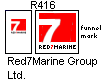
RED7MARINE GROUP LTD.

R416

The funnel follows DP Reel in a starboard photograph of 10 February 2013, with the logo referenced to the company website.

Red7Marine was formed in 2008 by the merger of diving company Anglian Marine Services and marine-construction manager Haven Ports.

UK, Manningtree.

Rederei A/B Gertrud.

Documentary images — company attribution uncertain

G49

The flag comes from a cap badge, but Rosanoski notes that it fits neither the company nor the manager.

Exact external badge photographs unavailable; no identity from O alone.

C. Grundelius managed the company.

Sweden, Stockholm.

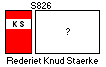
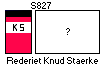
REDEREIT K. STAERKE.

S826
S827

Both funnels are assigned to Long Island. S826 appears in connection with H. Folmer management; S827 is recorded under the owner’s name and differs slightly, including a darker red.

The concern appears as operator for one company in the late 1970s and subsequently under H. Folmer & Co. management.

Denmark, Soby; Mitchell gives Nakskoy.

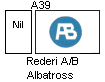
REDERI A/B ALBATROSS.

A39

The flag is white with a lightish-blue circle bearing combined white “AB” letters, which Rosanoski identifies with the Broström connection. It is sourced from a Collectors Corner cap badge and the Broström centenary history and confirmed in a black-and-white photograph of Albatross flying it. The design matches Bunkeroljor A/B’s flag apart from the blue shade shown.

FOTW's exact Albatross company entry reproduces Rosanoski, so it is not independent corroboration. The relationship and legal-name succession between Motorfart and Rederi A/B Albatross remain to be established; Swedish context is supported.

The company’s Albatross, built in 1942 and sold in 1966, was a fore-and-aft-rigged schooner with an auxiliary engine. Broström used her as a training ship from at least 1947, and she appears in Tirfing’s 1962 annual report. Lloyds names E. Th., or Eric Th., Christiansson as operator. He was managing director of Broström Lines Agency and the group’s shipping technical director from 1934 until retirement, tentatively placed in 1964–65.

Sweden, Gothenburg.

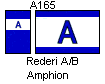
REDERI A/B AMPHION.

A165

US Navy 1961 shows a blue flag with a very broad white horizontal band bearing a blue “A”.

A photograph of Amphion shows a black funnel with a white circle and an indistinct emblem, possibly a star. Rosanoski suggests it may be a Caltex funnel, without establishing the attribution.

The company was established at Stockholm in 1951 by Captain Peter Schollin-Borg, shipowner Emanuel Högberg, Richard Hain, Sven Engwall and G. Magnusson. It operated the tanker Amphion from 1953 to 1959. The vessel was built by Kockums for Rederi A/B Amphion, but Lloyds 1956–7 lists her under Åke Högberg, and Rosanoski did not find the company name in Lloyds.

Sweden, Stockholm.

REDERI A/B ANDERS LÖFBERG.

L129

The unusual purple flag has a yellow diamond extending to the edges, bearing purple ABAL arranged in diamond form. The initials presumably stand for AB Anders Löftberg. The purple recalls the Lila coffee label.

The Löfberg brothers’ importing business began in 1906 and was divided in 1927. Anders, previously responsible for coffee roasting, established A/B Anders Löfberg with the Löfbergs Lila brand, named for the purple label of its popular coffee. His son Åke inherited the business in 1945. In spring 1967 the company decided to buy a ship to bring coffee from Europe to Karlsat, carrying timber outwards. The shipping venture lasted only a few years; another Anders took over in 1976, but his relationship is not established in the source.

Sweden, Karpstad; Karlshamn also recorded.

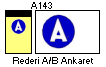
REDERI A/B ANKARET.

A143

A Collectors Corner cap badge shows a white flag with a blue circle towards the hoist, bearing a white “A”.

Rederi A/B Ankaret was operated by Arendt De Jounge in the 1950s.

Sweden, Slite.

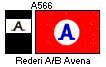
REDERI A/B AVENA.

A566

The flag shown by Lloyds 1912 is red with a white disc bearing a blue “A” with feet.

R.W. Thorburn formed Rederi A/B Avena in 1874 to own Avena. It was liquidated in 1912 and its last ship sold in 1913. Charles Thorburn is listed as operator in 1912.

Sweden, Uddevalla.

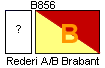
REDERI A/B BRABANT.

B856

A yellow “B” appears faintly in the share certificate’s background, but Rosanoski finds even its placement on a flag outline unclear. A cap badge provides the other reference: the letter’s exact colour is uncertain and the red half is assumed to be a single colour. Jan Mertens suggested a possible Belgian connection from the name, without establishing one.

Rederi A/B Brabant was formed in 1927 with Svante Svensson as managing director. A share certificate is dated that year, and the company appears in Lloyd’s telegraphic addresses in 1937–38.

Sweden, Stockholm.

REDERI A/B BREVIK.

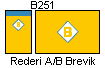
B251
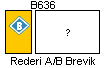
B636

Brown’s flag is yellow with a blue-edged white diamond and yellow “B”.

Later Norvik photographs show a blue funnel diamond with a narrow white orle enclosing a white “B”. Mitchell shows the letter on a blue diamond with a blue funnel top. Rosanoski suggests the difference from Brown might reflect a change of ownership, but cannot establish whether a corresponding flag change occurred.

Rolf Eliasson formed Brevik in 1952. Rosanoski thinks Knut Lundgren & Co. acquired it around the mid-1990s: the translation is unclear, but Brevik moved to Lundgren’s address while retaining Eliasson’s contact numbers and took over P/R Forsvik. Sirius announced its acquisition on 30 December 2006 and incorporated the ships into its fleet. Brevik remained an operating company in April 2007 and was deleted from the register listing in August.

Sweden, Gothenburg.

Rederi A/B Castor.

REDERI A/B CASTOR (2).

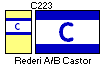
C223

REDERI A/B CASTOR (3).

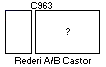
C963

Castor (1)

Carl E. Bergamn bought Castor in March 1916 and registered her under Rederi Ab Castor on 15 September; she was sold on 30 December 1916.

Sweden, Oksarhamn.

Keep the explicit scope label independent; no alias or company identity is inferred.

Castor (2)

Brown 1978 shows a horizontal blue–white–blue triband with a blue C in the white stripe. Rosanoski associates it with Pettersson’s company, approximately 1950–80. Later Mengwall funnel markings suggest that the flag did not pass to the successor.

Arne Elmer Pettersson acquired Dagö on 15 February 1950 and transferred her to Rederi A/b Castor that April. He operated the company through the following two decades. Its last listed vessel, Svanfjord, was sold in 1980 and renamed Sundex.

Sweden, Skärhamn; later Uddevalla.

Keep the explicit scope label independent; no alias or company identity is inferred.

Castor (3)

The white funnel follows Bellona on 8 August 2005. A different Bellona funnel is catalogued under Mengwall as N507.

The later Castor was operated, managed and owned by A.E. Mengwall, succeeded by G. Mengwall. It may have been the same company as Pettersson’s: Lloyd’s first assigned a new number, then reverted to the earlier number in 1996–97. Its stated foundation date of 1953 conflicts with the 1950 transfer to Castor and precedes Mengwall’s stated 1967 foundation. Bellona appears from 1980–81 and was rebuilt before the 1996–97 listing; the company was later a one-ship subsidiary and then an operating company. Rosanoski notes apparently identical particulars for Bellona and the earlier Svanfjord but does not resolve the vessel or company continuity.

Sweden, Uddevalla.

Keep the explicit scope label independent; no alias or company identity is inferred.

REDERI A/B CECIL.

C217

The Collectors Corner cap badge shows a yellow flag with a blue cross paty.

The Landskrona company operated Excelsior under G.F. Persson between 1921 and 1934.

Sweden, Landskrona.

REDERI A/B CERES.

C221
C222

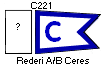
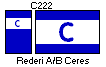
US Navy 1961 shows a blue flag with a broad white horizontal band bearing a blue C.

The Collectors Corner cap badge instead shows a white tapered swallowtail edged blue and bearing a blue C.

A Carina photograph shows TOTEM LINE on the hull and a black funnel with a red band edged white above and below. Its charge cannot be identified from the angle.

The company is recorded in the late 1950s under Åke Hogberg. Carina was built for it and sold in 1962; the construction year is given as 1959 in one account but 1958 under her later name in Lloyd’s.

Sweden, Stockholm.

REDERI A/B DALAVIK.

D90
image by Neale Rosanoski, 16 January 2007
D119
image by Neale Rosanoski, 16 January 2007

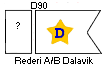
The cap-badge flag is a white swallowtail with a squat gold star bearing a blue D.

The presumed later version is white with an ordinary very dark-blue star bearing a white D, from Josef Nüsse’s collection.

Dalavik was formed in 1957 and operated by Christensson & Co., possibly its original owner. Rolf Christensson is later named as managing director. The source’s 2006 directory evidence describes oil and petrol transport in the North Sea and Baltic, while the 2007 FOTW comment says the surviving company was no longer involved in shipping; the accounts are not reconciled.

Sweden, Styrsö; later Gothenburg.

Rederi A/B Dalen.

REDERI A/B DALEN.

D91
image by Ivan Sache, 15 April 2006
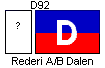
D92
image by Ivan Sache, 15 April 2006
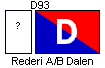
D93
image by Ivan Sache, 15 April 2006
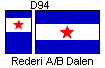
D94
image by Jarig Bakker, 15 August 2005
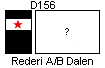
D156
D466

Collectors Corner gives a blue-over-red horizontal bicolour with a white D and a diagonal red-over-blue version, divided from upper hoist to lower fly, also with a white D.

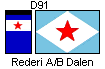
A third cap-badge flag is a triband with a red star, also represented in the Bryggan and Nüsse sources. Rosanoski suggests that ownership changes may explain the variants, particularly this form, which is identical or close to Stove Shipping’s flag.

US Navy 1961 shows a pale-blue flag with a white diamond throughout, bearing a red star. The FOTW caption’s date of 1991 is noted as erroneous in the source.

The funnel is recorded for Amacita and supported by a monochrome Bryggan photograph, but Rosanoski suggests its colour may be a mistaken reading of dark blue.

Sweden, Gothenburg.

DALEN-FRATERNITAS.

Dalen-Fraternitas appears at Lorentzen’s former address in the 1970s. The Swedish website dates the combined business’s beginnings to the early 1950s, rather than Dalen’s earlier formation. Lorentzen sold to the Bell Stove group in 1984; the Swedish operations were wound down and the last vessels sold in 1987.

Sweden, Stockholm.

Mitchell places the funnel referenced here as D366 on Jörgen J. Lorentzen’s card; the bibliography instead lists D466.

Dalen was formed in 1940, with Glomdal delivered that July under Otto Kihlström. It was associated with Rederi A/B Fraternitas. The later accounts describe Jörgen Lorentzen acquiring both in 1954, retaining Swedish registration and their Swedish office. Lloyds subsequently lists separate companies under Dalen-Fraternitas operation.

Rederi A/B Eckerö.

REDERI A/B ECKERÖ.

E31
E106
image by Jorge Candeias, 17 February 1999
E155
E242
image by Neale Rosanoski, 14 February 2005
E251
E252

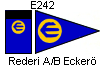
The early funnel is based on a brief verbal account of a white shield bearing a red sailing ship.

Mitchell gives this funnel for Roslagen and Alandia without dates. The bands are rendered equally spaced, though his drawing gives wider gaps between the lower three.

The yellow flag has a blue logo described as a disc containing the end of a horizontal trident, with ECKERÖ LINE lettering and a bar interrupted by narrow diagonals. The associated funnel is documented aboard Eckerö in 1982–91.

Suomi ja meri shows a blue pennant with a circle containing E. Funnel photographs do not settle the blue shade, which appears to vary between ships; Rospiggen indicates an earlier funnel.

Apollo’s 1995 photograph supplies E31, and Alandia’s website photograph supplies E155.

Eckero Shipping Ab Ltd., formerly Birka Cargo

E489

Eckerö Shipping Ab Ltd.

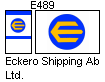
Transporter’s starboard and port photographs of 27 June and 10 July 2013 supply the funnel; Eckerö Shipping’s website supplies the flag logo.

Keep the explicit scope label independent; no alias or company identity is inferred.

Eckerö was formed in 1961 as a ferry company, adopting the Eckerö Linjen brand in the later 1960s; Eestinlinjat also appears with Apollo. A takeover bid in May 2007 raised its Birka Line holding to 57.9%, followed by more than 96% in November. Birka is described as a subsidiary shortly after the first increase, while the Birka Cruises website gives 28 May 2008. Birka Cargo became Eckerö Shipping, announced in April 2013; another source applies that change to the Birka Line listing.

Finland, Mariehamn.

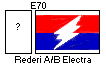
REDERI A/B ELECTRA.

E70
image by Neale Rosanoski, 9 February 2007

The cap badge shows a red-over-blue horizontal biband edged white at top and bottom, with a white lightning-flash symbol throughout the main bands.

Electra was a small Stockholm company active around the late 1940s and early 1950s.

Sweden, Stockholm.

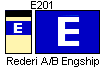
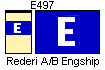
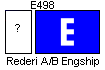
REDERI A/B ENGSHIP.

E201
E497
E498
image by Ivan Sache, None

Mitchell shows an ordinary yellow funnel without a black top. The website flag and logo appear to give E a shorter middle arm. E497 is documented by Passaden’s starboard photograph of 5 June 2006 and Serenden’s port-side photograph of 8 October 2005.

The Engblom family’s shipping began when Karl-Johan had a vessel built in 1890. Galleasses and other small ships supported the family until Apostol was sold in 1956. His son Georg and grandsons Kurt and Kaj then bought the road ferry Fix and converted it into the cargo ship Hulda. Georg transferred his interest to his sons in 1966. They also bought Yvonne with Fredrik and Ernst Bryggman, acquiring the Bryggman share in 1972. Lloyds gives Engship’s formation as 1973, which Rosanoski marks sic.

Engship and Blomship merged under the former name in 1981. Rettig Oy Bore acquired the private company in January 2006; in January 2007 it merged into Oy Rettig Ab Bore and the Engship name ceased. Listed operating companies included Langh Ship and Lillgaard. Fleet names used the suffix den.

Finland, Nagu and Turku/Åbo.

REDERI A/B FJORD.

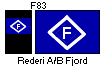
F83

The US Navy source attributes the livery to Torkel Sanne.

The company is recorded from 1937–38. Torkel Sanne operated it in the 1950s and early 1960s, followed in the 1966–67 register by Lennart Kihlberg of Kihlberg-Rederierna.

Sweden, Gothenburg.

REDERI A/B FRATERNITAS.

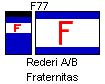
F77
image by Phil Nelson, None
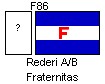
F86
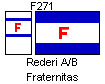
F271
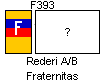
F393

Avanti was recorded with this funnel in December 1964, without mention of a black top. Mitchell puts the same funnel on Jörgen J. Lorentzen’s card without specifically naming Fraternitas.

Collectors Corner calls this flag “Type 3”, but shows no other versions to explain the designation.

Mitchell’s Lorentzen card gives no vessel source for this funnel. Rosanoski suggests Avenir, built for the company in 1962 and sold in 1973, because Mitchell’s drawing shows a yellow funnel.

Dalen and Fraternitas began in the early 1950s as part of Otto Kihlströms. According to the translated Bryggan account, Jörgen Lorentsen bought the business in 1954 but retained its Swedish flag and registered office. Rosanoski suggests this explains continued Kihlström listings and Lorentzen’s Swedish address. Lorentzen sold to the Bell Stove group in 1984; Swedish activities were liquidated and the last Dalen and Fraternitas vessels sold in 1987.

A second account places Fraternitas in the 1954 division of the Lorentzen family interests, assigning it to James Stave Lorentzen, Jørgen Lorentzen and Jørgen’s son-in-law Otta Greg Tiedeman. Rosanoski notes name variations in the translated account, particularly Stave for Stove.

Dalen-Fraternitas later appears at Jørgen J. Lorentzen’s former address, and the 1985–86 fleet listing is under Belstoverederiene. Vessel names began with A.

Sweden, Gothenburg.

Rederi A/B Fredrika.

REDERI A/B FREDRIKA.

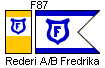
F87
image by Jarig Bakker, 15 August 2005
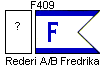
F409

A photograph of Wilhelmina broadly supports a pale funnel ground and apparently white band, but the charge cannot be distinguished.

The cap-badge sources show this as a possible variation or replacement: the Swedish collection labels it 3 among three badges.

Kramfors Rederi A/B — Kramfors tug

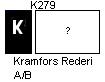
K279

Earlier Kramfors A/B use is only presumed; no general shared-use claim.

Kramfors context

This funnel comes from a black-and-white photograph of Kramfors, built in 1892 for Kramfors A/B and transferred to Kramfors Rederi A/B in 1914. Rosanoski presumes the same livery applied to both companies.

The Kramfors parent, inherited by SCA, disposed of other shipping activities, retaining only towing vessels and what the source calls pråmar, tentatively translated as barges, from the 1930s until the 1950s withdrawal. Kramfors A/B merged into Kramfors Rederi A/B on 31 December 1952.

Keep the explicit scope label independent; no alias or company identity is inferred.

The sawmill concern Kramfors’s A/B had owned timber-towing vessels since 1863. In 1914 it formed Rederi A/B Kramfors to carry finished products, renaming it Rederi A/B Wilhelmina a year later to avoid confusion with the parent. Another Kramfors shipping company was named Rederi A/B Fredrika in 1916 and bought Rederi A/B Hernodia that year. Petrus Emanuel Högberg acquired Fredrika in 1923 and moved it to Stockholm.

Within the Högberg family, Fredrika became in practice a Stockholm’s Rederi A/B Svea subsidiary. Its ships were named after Ådalen towns; the last vessel, Dorotea, was sold in 1972. Lloyds names Erik Högberg as operator, whom Rosanoski assumes to be another family member.

Sweden, Stockholm.

REDERI A/B FRODE.

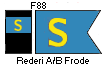
F88

The Collectors Corner cap badge shows a blue swallowtail with a yellow S.

Frode operated from before the Second World War into the early 1950s under H. Selander, called N. Selander by Mitchell. Merchant Ships 1942 also associates the funnel with Rederi A/B Mercurius under Selander; its 1944 edition makes Frode the operator of Mercurius. By 1953–54 Lloyds lists Mercurius under L. Jeansson.

Sweden, Stockholm.

REDERI A/B GOTLAND.

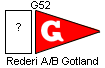
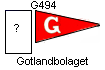
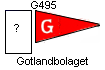
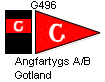
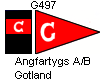
G52
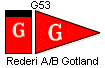
G53
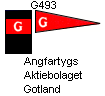
G493
G494
G495
image by Phil Nelson, None
G496
G497
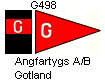
G498
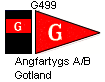
G499
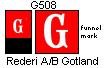
G508
G541

Brown 1958 also attributes this livery to Sven Walberg, while Nüsse provides the table-flag evidence.

Collectors Corner illustrates G494; the Swedish Cap Badges source also gives G495. Phil Nelson’s FOTW image follows Stewart 1963 but is drawn longer, in line with that variant.

Brown 1951 and 1958 differ slightly in the G’s shape, but both place it towards the hoist.

Mitchell omits a black funnel top under the Gotlandsbolaget name. Photographs of Gute on 8 August 2005 and Visby in July 2004 likewise show no black tops.

On the chartered Gotland Marieann, photographed port side on 22 January 2013, the funnel merges into white superstructure with a beach-scene mural at its base. The superstructure changed from orange between 1 September and 1 October 2011. A port-side photograph of Gotand Carolina, as spelt in the source, on 8 March 2007 shows a more conventional rendering.

A port-side photograph of Alice on 21 April 2013 documents this funnel.

The G varies slightly in shape between most sources; Rosanoski groups only versions sufficiently alike.

Ångfartygsbolaget Gotland, known as ÅG, was founded at Visby in 1865. The company website gives 5 May and five local businessmen; another account gives March under the initiative of County Governor Henric Gyllenram. It became Ångfartygsaktiebolaget Gotland in 1894 and Rederiaktiebolaget Gotland in 1962, commonly Gotlandsbolaget. The source dates shipowning to 1866 but prints the maiden voyage as 25 June 1886; that discrepancy is not silently repaired.

Rederi A/B Pool began competing in 1960 and was bought from Nordö in 1967. Mitchell records a Gotlandstrafiken name apparently associated with an island–mainland service ending in 1989. South Pacific Interline was sold to Thor Dahl.

Silja’s interest was sold on 1 January 1999, after which the account describes Destination Gotland as wholly owned. The subsidiary operated the Gotland–mainland ferry service for the Swedish Government. It also managed Sigyn after Svensk Kärnbränslehantering bought the previously chartered vessel from Gotland on 1 March 2005, until Furetank took over on 1 January 2012. A separate 1% holding in Silja acquired from Sea Containers is also recorded.

Sweden, Visby.

REDERI A/B GUSTAF ERIKSON.

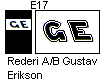
E17
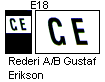
E18
image by Jarig Bakker, 1 October 2005
E430
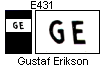
E431
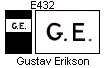
E432
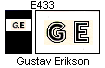
E433
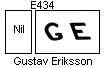
E434

Loughran gives this flag for sailing ships.

Kirsta’s black-and-white photograph supports the funnel, with its letter appearing a different shade from black. The view towards the bow does not establish that there was only one letter.

Tingo’s port-side photograph confirms funnel and flag, with a further starboard funnel view. Much of the base is white, making the band appear to sit on a deep black top. The white base ends around the bottom of the bridge windows and does not exactly follow the superstructure.

The outlined letters are the modern version; Loughran assigns the earlier style to sailing vessels, although Brown 1995 returns to it.

Nomadic’s website shows a former vessel with a combined funnel, which Rosanoski thinks may imply continuing ownership. The image does not establish flag use.

Gustaf Adolf Mauritz Erikson, also recorded as Gustav Eriksson and under Erikson Line, left the sea in 1913 to become a Mariehamn shipowner. He operated his famous windjammer fleet until his death in 1947. His son Edgar, who joined in 1935, could not make sailing ships profitable and began selling them in 1949; Pommern was presented to Mariehamn as a museum ship in 1953. The first steamship was bought in 1937 and the first newbuilding delivered in 1947. Lloyds instead traces the corporate name from Mariehamms Rederi in 1913 to Rederi Gustaf Erikson in 1974, which Rosanoski finds inconsistent with the 1917–18 entry.

The company participated in United Owners and held shares in Marivienti. United Shipping, formed at Mariehamn in 1991, later appeared under Birka Line. In late 1987 the Erikson family reduced its holding to one-third, with Dan Odjfell and Uni-Trans taking a third each. Uni-Trans bought Odjfell’s shares in early 1989; the family regained its 66.7% holding in June 1992.

Finland, Mariehamn.

REDERI A/B GÖTA KANAL.

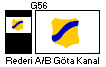
G56
image contributed by NDR, None

The older flag is white with a gold shield bearing a blue wavy bend sinister, which Rosanoski presumes represents the canal. His sources are a Collectors Corner cap badge and Loughran.

Founded in 1869 as Ångfartygs Aktiebolaget Göta Kanal, the concern adopted the Rederi name in the 1950s and is described as lasting into the mid-1980s. Svea and Tirfing acquired it jointly in 1918; Tirfing later sold its share, and Svea obtained a majority in October 1942. Operators listed over time include A. Rönnow, Helge Källsson, Thunrederierna and Erik Thun.

Sweden, Gothenburg.

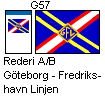
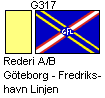
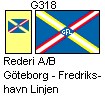
REDERI A/B GÖTEBORG-FREDERIKSHAVN LINJEN.

G57
G317
image by Jarig Bakker, 8 August 2005
G318
image by Jarig Bakker, 8 August 2005
G319
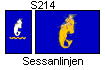
S214
image contributed by Neale Rosanoski, 9 May 2006

A black-and-white photograph of Kronsprinsessan Ingrid confirms the funnel. Sources differ over whether the flag letters follow the diamond’s angles. Talbot-Booth specifies light blue, while FOTW’s version is very dark; the Bryggan images are indistinct.

Bryggan appears to show a second, lighter-blue flag with a white, yellow-edged saltire arm from upper hoist to lower fly. Rosanoski found no independent support for this variant and suspects that unclear printing may instead be intended to distinguish funnel markings with flag panels.

A postcard of Prinsessan Christina, chartered on the service in 1982, supplies the funnel but does not resolve its panel lettering. The cap badge gives gold GFL letters angled to the diamond, itself edged gold, with a darker gold than the bright yellow edging of the diagonal band. One website omits the blue funnel top. Marinart instead describes a white funnel with black top and a multicoloured GFL or other device.

The later Sessan design has a crowned mermaid. The cap badge shows a blue flag with a gold mermaid, but the funnel postcard appears to make the figure white over yellow sea; the website logo is also white with blue outlines and shading. Rosanoski questions the badge colours because he would expect flag and funnel to agree. The design was short-lived, giving way to Stena’s colours in 1982.

The Gothenburg–Frederikshavn service began in 1873 with the Danish Vulcan, followed in 1874 by the Swedish Gustav II Adolf and Albert Ehrensvärd. Railway extension southwards in 1888 reduced the trade’s importance. Economic guarantees in the early 1920s brought Hallandsbolaget, within the Broström group, into the service with Najaden in 1924. This developed into Sessanlinjen. The Göteborg Fredrikshavns company name dates to 1935, with Hallandsbolaget administering it until that function transferred in 1952.

Sessanlinjen was the trading name. Stena’s acquisition is dated 1981 in one account and 1980 in another, with the company becoming Stena Sessan. Kronprinsessan Victoria, built in 1980 and only briefly in Sessan service, adopted Stena colours in 1982 and became Stena Saga in 1988. The Sessan trademark soon disappeared after the takeover.

Sweden, Gothenburg.

REDERI A/B GÖTEBORG-OSLO LINJEN.

G58
image contributed by NDR, None

The cap-badge flag has diagonal red and blue quarters separated by a yellow saltire. White letters occupy the quarters: Æ at the top, G at the hoist, O at the fly and L at the bottom.

The line appears under Finnn G. Mellin, as the source spells the name, in the 1950s and under Helge Källsson in 1963–64. Bremö comprised the listed fleet through 1958–59; in 1963–64 it remained under the former operator while the company appeared as Goteborg under the new one.

Sweden, Gothenburg.

REDERI A/B GÖTEBORGS.

G335

Sweden, Stockholm.

REDERI A/B GÖTHA.

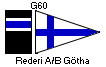
G60
image by Jarig Bakker, None

Collectors Corner’s evidence is an emblem combining crossed flag and anchor. The Amsterdam harbour flagchart, associated with Nerlandia, shows a narrow cross in the flag.

Götha ran a passenger service between Gothenburg and Antwerp. Adolf Bratt inherited it in 1944 and continued it separately; it became part of Rexkondernen, absorbed into Salénrederierna in 1967. Götha and Adolf Bratt jointly owned Rederi A/B Rex from 1965. The operator sequence in the source runs from G.A. Bratt, absorbed into the Erik Kekonius group, through Kekonius to Salenrederierna.

Sweden, Gothenburg.

REDERI A/B HERNODIA.

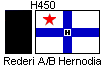
H450
image by Ivan Sache, 2 April 2008

Rosanoski corrects the FOTW reading “Hernogia”, No. 145, to Hernodia, No. 150 in Lloyds 1912. He suggests that the “H” may stand for Hans Hamberg and may apply to both companies under his operation.

Rederi A/B Hernodia was bought by Rederi A/B Fredrika in 1916. Lloyds 1917–18 lists it and Hernosand Rederi Aktiebolaget, each a single-ship company, under Hans Hamberg as operator.

Sweden, Hernösand.

REDERI A/B HOUTSKÄR.

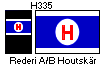
H335
image by Phil Nelson, None

Rederi A/B Houtskär appears in the 1958–59 and 1963–64 Lloyds registers under its manager, Laivaus O/Y Aura Shipping A/B.

Finland, Abo.

REDERI A/B HÖGANÄS.

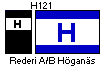
H121
image by Phil Nelson, None
H344

The livery is sometimes attributed to Carl Norrthon rather than the company. Rosanoski explains that Norrthon operated as Rederi A/B Höganäs, hence the H on the flag. Merchant Ships’ funnel entries distinguish the Norrthon and Höganäs listings, while Stewart and FOTW use the manager’s name. Ole Andersen noted the close resemblance between the FOTW flag and the Höganäs website illustration.

Rederi A/B Höganäs is recorded from 1939 through 1966–67. Carl Norrthon Jr. managed it and was probably its owner; Jordan places Norrthon, and consequently Höganäs, under Nordtröm & Thulin management.

Sweden, Höganäs.

REDERI A/B JAN.

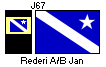
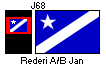
J67
J68
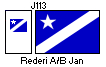
J113
image by Jarig Bakker, 15 August 2005
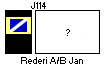
J114

J67 was noted on Felis in May 1963.

A black-and-white photograph of Jaga appears to confirm J68, with the star forward in a mirrored starboard arrangement.

J113 may apply to Erato. Its starboard-bow photograph appears to show a white funnel with a narrow black top or cowl. The FOTW flag follows the Bryggan website.

Mitchell records J114 under Otto Kihlström.

Rederi Jan was operated by Otto Kihlström in the 1950s and early 1960s and by Paul Pålsson in Lloyds 1966–67. Both operators appear to have entered the Broström group, leading Rosanoski to suggest that Jan may also have been absorbed.

Sweden, Gothenburg.

REDERI A/B KULLABERG.

K74

The flag is described as blue with a broad yellow horizontal band and a yellow K towards the hoist. US Navy 1961 centres the K instead. Mitchell assigns the funnel to Kark Axel Sjösten, as written, with Hanna sighted at Dundee in July 1945. Whether Wega shared the flag is unknown.

Kullaberg operated from at least around 1930 into the early 1960s under Axel Sjösten, later recorded as Karl Axel Sjösten. The changed address leaves Rosanoski unsure whether this was the same person. Axel also operated Rederi A/B Wega; similar H-initial and a-ending ship names suggest common ownership, but do not prove it.

Sweden, Höganäs.

REDERI A/B KÄRNAN.

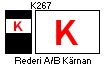
K267
image by Jarig Bakker, 15 August 2005

The FOTW flag follows Bryggan. Elias Granqvist suggests that the company may have been named after Kärnan, the castle represented in Helsingborg’s arms and flag.

Carl P. Hultén, I. C. Hultén and J. Lund formed the tramping company in 1897. After Carl’s death in 1901, Bernhard Ingelsson succeeded him in 1902. Ingelsson established Transmarin fourteen years later and merged Kärnan into it in 1921. The final two vessels transferred but retained their original funnel markings.

Sweden, Helsingborg.

REDERI A/B LIDO & CO.

L127
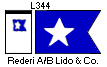
L344

Nüsse’s table flag is white with a waving blue swallowtail bearing a white star, and the blue legend REDERI AB LIDO below. Rosanoski regards it as probably an advertising version for shore use.

Stella Nordic’s funnel shows a blue swallowtail with a squat white star slightly towards the hoist. Rosanoski suspects that a sea flag, if one existed, would follow this design, but no such flag was observed.

Lido was formed in 1989 and used Stella-prefixed ship names. Its last vessel was sold in 2003 to Seaflower Shipping of Vista Shipping Agency without a name change.

Sweden, Skarhamn.

REDERI A/B LILLGAARD.

L340
L341
L342

L340 comes from Breant on 8 June 2007.

L341 comes from Forte on 24 May 2006.

Fjärdvägen’s emblem has narrower interlocking diamond frames meeting close to their tips. Finnish & Åland Funnel Marks instead adds a black top, places the logo and second band higher, and shows blue overlapping red on both sides, which Rosanoski considers incorrect.

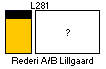
Documentary images — company attribution uncertain

L281

Mitchell assigns L281 to Harriet, but Rosanoski could not trace the vessel in Lloyds and did not understand an accompanying Liljestrand reference.

No vessel/company identification secure.

Lillgaard was formed in 1974. Json Shipping appears as manager at the same address in 1985–86; later registers place Lillgaard within Rederi A/B Engship.

Finland, Mariehamn.

REDERI A/B MALMOIL.

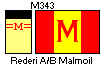
M343
image by Phil Nelson, 2000-Sep-21

Nelson’s flag follows Stewart 1963. Rosanoski emphasises that the yellow stripe is broader than either red stripe.

Malmoil was formed at the end of the 1950s by Einar A. AHansen and Kockum, as named in the translated account. Einar Hansen is recorded as operator in the 1960s, and Salénrederierna in 1980–81.

Sweden, Malmö.

REDERI A/B MOTORTANK.

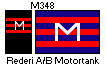
M348
image by Phil Nelson, None

Stewart and the derived FOTW flag show unequal bands with narrow red ones. Rosanoski considers this an error: other sources and the Broström centenary history confirm equal bands, with the M correctly positioned relative to the red bands.

Motortank was established in 1939, jointly and equally owned by Ångfartygs A/B Tirfing and AB Investor, but did not properly begin operations until 1945. Part of the Broström group, it was managed by Gunnar Larsson and later C.T. Höijer. Ship names used the suffix land.

Sweden, Gothenburg.

REDERI A/B NORDFART.

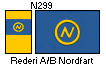
N299
image by Phil Nelson, None

The US Navy version has an upright N entirely within the ring. Mitchell assigns the livery to Waldemar Höglund. The FOTW illustration follows Stewart.

Nordfart is recorded under manager Waldemar Höglund in Lloyds editions from 1953–54 to 1970–71.

Finland, Mariehamn.

REDERI A/B NORDIC.

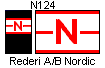
N124
image by Phil Nelson, None

The earlier FOTW illustration is based on Stewart 1963 and identified with Nordic of Stockholm.

Documentary images — company attribution uncertain

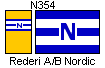
N354
image by Jarig Bakker, None

Brown 1978 and 1982 show three blue and two white horizontal bands, with a white interruption in the middle blue band bearing a blue N. Rosanoski could not establish the connection, if any, between this later flag and the company.

Later company identity uncertain.

Lloyds lists Nordic under F.H. Andersson in 1953–54 and as owners also in 1963–64. In 1966–67 it appears under the managers, while its previously owned vessel is listed under A/B Gasmarin with the same managers. By 1973–74 the manager was Wanander-Rederierna. The company appears to have ceased operating in the mid-1970s.

Sweden, Stockholm.

REDERI A/B NORDSHIP.

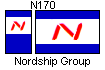
N170
image by Jarig Bakker, 24 October 2005
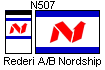
N507

Brown 1995’s Nordship Group livery presumably belongs to the earlier Nordship operation under Trybom. Compared with Brown, the company website and Nüsse show a much broader N, its upward stroke ending in a more pronounced arrowhead. Nüsse presents the flag under Stefan Trybom, with a different blue shade on his second website. Photographs of Nordking from starboard and Nordtrader from port confirm the N507 funnel.

Documentary images — company attribution uncertain

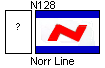
N128

A Collectors Corner cap badge labelled Norr Line of Gävle is presumed by Rosanoski to belong to the same operation, since he found no company of that exact name.

Similar name/design does not establish corporate identity.

The Nordship name originated in 1976 when eight small Swedish shipping companies formed a pool to compete in Baltic and North Sea trades, sailing under a common flag. Rosanoski considers Stefan Trybom A/B the apparent initiator. Jacob Engwall gained control of Trybom in 1985; his son Torsten helped found Engco Invest in 1988, which became full owner of Trybom and A/B P.J. Haegerstrand. The pool came under Trybom in the 1990s. Rederi A/B Nordship was formed in 2001 under Engco control, with Trybom managing part of the fleet until about the end of 2004. Engco held 51%; other group interests included shipbrokers in Gävle, Söderhamn and Stockholm. Baltic cargoes included steel, biomass fuels and forest products. Osterstroms Rederi acquired Nordship in January 2007.

Sweden, Saltsjobaden, described as a port south-east of Stockholm.

REDERI A/B NORDÖ-LINK.

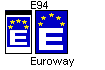
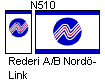
E94
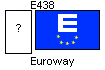
E438
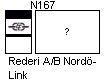
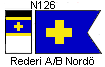
N167
N510
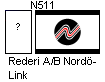
N511
image by Jorg Candeias, None
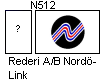
N512

Lübeck Link carried the Sea-Link emblem on its funnel. The cited description specifies a black funnel with a broad white band bearing the emblem.

The former Nordö flag was a blue swallowtail with a yellow couped cross. For Nordö-Link, Candeias’s FOTW illustration uses black where Rosanoski reads very dark blue in Nüsse’s table flag, supported by the company logo. Rosanoski allows that the new flag may originally have been black. Bryggan’s variant, N512, omits the upper and lower bands and uses a black circle with blue outer strokes of the N. The N510 funnel follows Malmö Link on 3 September 2005; Rosanoski believed these colours were confined to former Nordö vessels, with Finnlines ships retaining Finnlines livery.

The Euroway flag is a vertical blue oblong bearing a large white E beneath an arc of five yellow stars. Its unusual proportions suggest possible shoreside use, rather than establishing a sea-going flag. The funnel is recorded on Frans Suell.

Nüsse’s second website replaced the earlier Euroway flag illustration with this version.

Sea-Link acquired Rederi A/B Nordö about 1986 and reorganised it as Nordö-Link. The company’s own website gives formation in 1982, contrasting with Lloyds’ 1952 and Bryggan’s 1949 dates for its predecessor. Nordö-Link operated the Euroway service from 1992 to 1994. The account describes a sale by Sea-Link and independence in 1992, cooperation with Silja Line, then liquidation of the loss-making Euroway operation in March 1994. Finnlines bought Nordö in 2002 and continued it as a subsidiary.

Nordö-Link Management was formed in Malmö in 2002. Initially holding a vessel, it subsequently managed part of the principal company’s fleet and became Finnlines Ship Management in 2005.

Sweden, Malmö.

REDERI A/B NORDÖ.

Rederi A/B Nordo
Rederi A/B Nordo
image by Jarrig Bakker, None
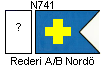
N741

Collectors Corner identifies the company as Nordö of Malmö. The funnel is illustrated by Gotlandia on the Bryggan website; Bryggan photographs of Scandinavia show a black funnel bearing the bands and cross.

Nüsse identifies the flag as Nordoe-Line and shows a lighter blue in both versions of his website.

Nordö originated in 1949 according to the Bryggan account, whereas Lloyds gives 1952 through its successor Nordö-Link. Its subsidiary Rederi A/B Pool competed with Rederi A/B Gotland under the Ö-linjen name from 1960 and was bought by Gotland in 1967. Ebert Petersson appears as Nordö’s operator in 1958–59 and Pool’s operator in 1963–64. Financial difficulties led to the sale of Nordö to Rederi A/B Sea-Link in 1986 and its reorganisation as Nordö-Link.

Nordö acquired 34% of Moltzau Line, subsequently Europa-Linien, in 1973.

Sweden: Kalmar, later Oskarshamn and Malmö.

REDERI A/B NORNAN.

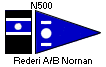
N500
image by Jarig Bakker, 8 August 2005
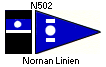
N502

The FOTW flag follows the Bryggan website.

Rosanoski considers this funnel version an apparent printing error.

Nornan was operated by Th. Ahrenberg. The historical account gives a 1928 merger with Hallands Angbats A/B to form A/B Halland & Norman, with trade ending after the Second World War and the name surviving for a time in the Bröstrom group. Rosanoski questions the duration of that merger: Lloyds’ 1937 telegraphic addresses list only Hallands Angbats, suggesting the combined company had ceased earlier.

Sweden, Gothenburg.

REDERI A/B NORRSTRÖM.

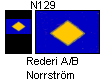
N129

The Collectors Corner cap badge shows a blue flag with a yellow diamond.

Ivan Jeansson operated Norrström from at least 1942 until the beginning of the 1970s.

Sweden, Kalmar.

REDERI A/B NOVATOR.

N83
image by Jarig Bakker, 26 November 2005
N508
N742
N743

Mitchell assigns this funnel to Sven Wirström with a Novator note. It appears to match Fagervik in a black-and-white company-website photograph.

The flag design follows Brown 1995, but the Collectors Corner cap badge and Nüsse’s table flag indicate 1:2 proportions. The earlier badge and Nüsse image show a dark-blue field; the second Nüsse website has a softer blue, which Rosanoski thinks may reflect image processing rather than a real colour change. A Baltic Press photograph dated 12 November 2006 confirms the N83 funnel.

Novator was founded in 1933 and became part of JönssonNovabolagen. Rudolf Jönsson’s shipbroking firm, also founded in 1933, assumed responsibility for charters of Novator’s Fagervik in 1934. Novator built Baltic Print, Baltic Press and Baltic Bright for Holmen Paper’s special requirements. Rosanoski infers bareboat-charter arrangements from their appearance under other companies in Lloyds, and later suggests Holmen chartered them with Charterfrakt managing. A separate group account describes a mixture of part-owned and chartered ships on long-term contracts. Lloyds lists Sven Wirström as Novator’s operator in 1966–67 and 1970–71.

Sweden, Norrköping.

REDERI A/B OSTENIA.

O52

The flag is blue with a red O, based on cap-badge evidence.

Olga, daughter of Fredrik Olsson, and her husband formed Ostenia in 1937 from her share of his estate. Rederi A/B Fredborg had been divided between her and her sister, whose share led to Ragne. Lloyd’s later lists Olga Ahlsiö as operator. The last ships were sold in 1964 and the business eventually turned to real estate.

Sweden, Västervik.

REDERI A/B PILEN.

P394
P395

The funnel follows a black-and-white photograph of Pilen in 1966.

A differently flowing P appears in another black-and-white photograph, tentatively dated 1970. A 1984 photograph confirms the colours, by then under the new owner. The date of the design change is unknown; it may simply have been retained because the vessel’s name remained unchanged.

The company originated on 1 October 1965, involving C. Johansson, P.A. Johansson, S. Martinsson and N. Lingren. It operated the tug Pilen until sale to Mayvor Nielsen of Södertälje in 1983; the unchanged name leaves unclear whether the purchase included the company. Nielsen apparently retained the vessel until 1988. Piltank, possibly a bunkering barge, was also owned from 1966.

Sweden, Kappelshamm.

REDERI A/B POLAR.

P92

The funnel was noted on Polar Kristall in July 1970, its design representing an ice crystal. A Collector’s Corner cap badge shows a blue swallowtail with the ice-crystal design in white and gold.

The company is recorded under Nils Oscar Pyk in 1963–64 and Polar Shipping in 1966–67 and 1970–71.

Sweden: possibly Mölle; Helsingborg; Nyhamnsläge.

REDERI A/B RAGNE.

N144
R65
image by Jarig Bakker, 9 August 2005
R241

Rosanoski thinks use of the family company’s flag probably ceased with the fleet sale in 1979.

Mitchell attributes this funnel to Ragnar Nilsson rather than the Rederi company. The flag is not shown, but Rosanoski expected it to apply.

The funnel bears a flag shown flapping in Brown and Mitchell. Birgit Ragne’s version has a thin black staff without a truck; Marieborg’s has a narrow blue staff with a truck. A panel-only version is also recorded. Freehost14 describes the staff as angled “Pbd”, with the flag flying from it.

Documentary images — company attribution uncertain

J118

This funnel appears to come from Brita Ragne, built in 1981.

Late operation and company allocation unknown.

For the final period a funnel report shows a lighter-blue flag with a white K. Its significance is unclear because the letter has no apparent connection to the known parties, and whether a house flag was actually used then is unknown.

Ragnar Nilsson managed Fredrik Olsson & Co. from its formation in 1921 and married Olsson’s daughter Signe in 1923. He became a shipowner in 1935. After Signe inherited part of Rederi A/B Fredborg with her sister Olga, Ragnar and Signe reorganised it as Rederi A/B Ragne in 1938, combining their names in the company title. With Anders Smith of Stockholm they formed Svenska Chicago Linjen in 1947.

Their son Lennart succeeded Ragnar as chief executive in 1965. Financial difficulties led to sale of the last ship in 1979, though Ragne-Rederierna continued in ferries for Rederi A/B Goteborg-Fredrikshavn Linjen. L. Jeansson bought the shares in 1981, followed by a brief revival before shipping ceased two years later. A 1985–86 register entry nevertheless lists Ragne under Seamanagement A/B.

Sweden, Västervik.

REDERI A/B REX.

R177
R178
image by Jarrig Bakker, None
R179

The emblem resembles a compass needle. Lloyds depicts a longer, thicker needle with a black ring at its core; Rosanoski’s image follows the Collectors Corner flag badge, whose ring appears gold.

This variant may derive from a starboard funnel view: the mirrored needle places its upper point forward on either side.

Sources differ over the size and colour of the central core. Rosanoski’s funnel follows a black-and-white photograph of Lindo. Ships & The Sea and Merchant Ships 1942 show a white circle; Mitchell omits a core. Several sources attribute the livery to K.M. or Ragnar Källström, and US Navy 1961 also assigns it to Rederi A/B Regin, suggesting possible use across the family’s operations. Michael Stamford understood the flag and cap-badge emblem as a compass needle inclined at about 59 degrees, Stockholm’s latitude.

The related FOTW illustration K247, attributed to Ragnar Källström, is bright blue and does not precisely reproduce Stewart. Rosanoski considers it more properly the Rex flag. He notes that the white ring seen on a funnel should be much thicker than in most illustrations, and leaves the livery after Salén’s takeover unclear.

Waldemar Beijer founded Rex in 1903 and employed Malkolm Källström from 1906. Transatlatic Rederiaktiebolaget of Göteborg bought the company in 1917. Beijer established a new Rederiaktiebolaget Rex in 1923 with K.M. Källström as chief executive. Its ships were named after the Swedish archipelago without reusing names. Källström died in 1949 and was succeeded by his sons Ragnar and Knut.

Michael Stamford records Rex, then owned by Ragnar Källström, and Rederi Transoil as the founders of Tor Line in 1965; the name combined TransOil and Rex. Salenrederierna took over Rex in February 1967. Vessel names continued to end in ö until the mid-1970s.

Rex bought Thordén Lines A/B of Uddevalla in 1975.

Sweden, Stockholm.

REDERI A/B RUNA.

R249

US Navy 1961 shows a blue flag with a white R formed from straight lines.

Ove Swensson operated Runa in the 1950s. Rosanoski found a later maritime-freight business of the same name but could not establish that it was the same company.

Sweden, Helsingborg.

REDERI A/B SATURNUS.

S209

The later Saturnus version is described as the reverse colours, a yellow swallowtail with a blue S, supported by US Navy 1961 and a Collectors Corner cap badge. The newer cap-badge website shows a slightly different angle. A monochrome photograph of Securus from its 1947–1960 period shows the funnel. Ocean Ships 1967 attributes that funnel to Svea, which Rosanoski considers probably an allocation error. His November 2006 comment instead calls the letter B; this conflicts with the earlier S description and is not silently corrected.

Documentary images — company attribution uncertain

S210

Brown 1958 shows a blue swallowtail with a yellow S, apparently supported by black-and-white ship photographs. Mitchell’s funnel instead has a white S and is placed under Eman Högberg. Bryggan assigns the blue-and-yellow livery to Rederi A/B Staffan, which Svea acquired and later absorbed. US Navy 1961 also gives Staffan this flag, but with a different funnel.

Conflicting allocations do not prove shared use.

Rosanoski suggests that Saturnus and Staffan may both have used the blue flag, or that Staffan’s adoption of it prompted Saturnus to reverse the colours. Neither explanation is established.

Saturnus was formed in 1939 as a tanker joint venture between Stockholms Rederi A/B Svea and Kooperativa Förbundet. The latter was bought out in 1956, with later commentary describing Saturnus as a full Svea subsidiary. The earlier account also refers to a share being placed in OK-rederierna [Oljeksumenterna-OK], without clearly explaining its relationship to that account. Saturnus is listed under operators Svea and Emanuel Högberg. Rosanoski links the end of its separate identity to the Johnson takeover of Svea in 1975, initially describing this as presumed.

Emanual Högberg headed a syndicate of Swedish families, Stjärnbolagen, which acquired over half of Svea around the 1930s. He apparently became CEO and principal operator, with other family members also involved.

Sweden, Stockholm.

Rederi A/B Sea-Link.

REDERI A/B SEA-LINK.

S52

Jorge Candeias describes the emblem as three interconnected tildes forming SL, initially questioning the flag. Rosanoski confirms it from Josef Nüsse’s collection. Nüsse’s example is double-sided, with the emblem nearer the hoist. The Stockholm, Nacka and Malmö register names refer to the same company.

GT-Link A/S / Europa-Linien A/S

S213

Nüsse assigns this flag to Nacka, whereas S52 is assigned to Malmö. Its emblem is a stylised black bollard surmounted by black EE letters arranged diagonally. It was subsequently identified as GT-Link A/S [Europa-Linien A/S], acquired in March 1987.

Formed in 1980, Sea-Link acquired Rederi A/B Nordö-Link in 1986 and sold it to Finnlines in 2002. Finnlines appears as owner from Lloyds April 2006, leading Rosanoski to presume that Sea-Link had meanwhile faded out. Ship-Link (U.K.) Ltd. is listed as an associate.

Sweden, Stockholm; later Nacka and Malmö.

REDERI A/B STAFFAN.

S982
S1004

The blue swallowtailed flag bears a yellow S. US Navy and Kommandobryggan attribute it to Staffan, while Brown gives it to associated Rederi A/B Saturnus. Rosanoski suggests possible shared use or a connection through Curt Högberg and Svea without establishing it. Mitchell records the funnel under both Staffan and J. Haag.

Bryggan assigns this version, also shown for Saturnus as S210. A black-and-white Staffan photograph appears to show Svea’s funnel but a light flag bearing S, closer to the Saturnus livery.

Staffan was a Stockholms Rederi A/B Svea subsidiary with ships registered in its name from 1935 to 1966, when it was absorbed by the parent. Operators included J. Haag and Curt Högberg.

Sweden, Gävle.

REDERI A/B SUNSHIP.

S258
image contributed by NDR, None

The flag is yellow with narrow blue borders at the top and bottom and a blue diamond containing two yellow seahorses facing each other. A published allocation incorrectly called the company Sundship.

Formed in 1989, Sunship operated chemical tankers. In 2003 its last vessel passed to Stolt-Nielsen’s Montana Blue Shipping, with Stolt-Nielsen already acting as manager.

Sweden, Halmstad.

REDERI A/B SVENSKA LLOYD.

S144
S145
image by Jarig Bakker, 1 September 2004
S181
image by James Dignan, None
image by Jarig Bakker, 1 September 2004
S182
S633
S987

The initial S145 funnel lasted until the early 1870s, when S144 replaced it. Rosanoski considers S633 probably erroneous. The early flag was yellow with a blue saltire; it changed around the First World War to avoid confusion with the Russian naval ensign, presumably when the yellow faded.

The Thule takeover in 1916 brought its funnel colours, with Bryggan dating the change from S182 to S181 to that year. Cargo ships initially used the separately cited S183 funnel, but the account says all used S181 by 1938, despite Harnack continuing to illustrate both. Saga’s monochrome photograph confirms S181. Sources differ in cross shade. One published S181 flag narrows the cross to a point at its centre; Bakker’s museum-based alternative specifically rejects a Maltese cross.

Brown 1926 incorrectly substitutes the Thule livery, an error later corrected in FOTW. Another published rendering was wrongly labelled Helmsig & Grimm; Rosanoski identifies it as Svenska Lloyd. Ridley Steam Tug sometimes adopted customers’ markings: Premier is photographed towing Thule in the mid-1920s with the S183 colours. The yellow-circle, blue-star interpretation of that funnel in one source is unsupported.

Swedish Lloyd is usually dated to 1869. Another account gives an 1868 foundation, loss of the first ship in 1869, dissolution and immediate re-establishment as Förnyade Ångfartygs A/B Svenska Lloyd. Between 1915 and 1918 it acquired Göteborg-Manchester, Svithiod and Thule. Göteborg-Manchester remained a subsidiary in one account, while Thule was absorbed in 1916.

Managers included W. Frodi, K.R. Bökman, Kjell Andersén and Torgeir Christoffersen. Svenska Lloyd participated in the short-lived England-Sweden Line consortium in the mid-1960s. Broström became majority shareholder in 1972, and the company lost its separate identity in 1977.

Sweden, Gothenburg.

REDERI A/B SWEDISH BULK.

S1798
S1799

Swe Trader’s 2005 and 2006 photographs show the funnel base as a narrow strip merging into the white superstructure.

Swe Bulk similarly has a narrow funnel base merging into the white superstructure, whereas Resolute’s October 2013 photograph shows the normal format. Swe Bulk carried www.opship,se on its superstructure, which Rosanoski connects with Gothenburg agency and chartering firm O.P.Svensson Shipping A.B.; no ownership conclusion is added.

Founded in 2001, Swedish Bulk was a Henriksson family business based in Gothenburg, specialising in dry cargo.

Sweden: Askim, Gothenburg and Vastra Frolunda in successive register entries.

REDERI A/B SÖDERÖ.

S651
image contributed by NDR, None

A Collectors Corner cap badge supplies a yellow flag with a very broad blue horizontal band, a yellow circle and a blue B.

The company is recorded under manager W. Grosche in the 1950s.

Sweden, Stockholm.

REDERI A/B UNION.

U205
image by Jarig Bakker, 18 August 2005

The U205 funnel and flag are documented in Lloyd’s 1904 and 1912 and on the Bryggan website. Jarig Bakker’s FOTW flag image of 18 August 2005 was based on that website.

Rederi A/B Union operated Union from 1889 to 1900. Lloyd’s names G.O. Wallenberg as operator in 1904 and N.W. Lof in 1912.

Sweden, Stockholm.

REDERI A/B VERITAS TANKERS.

V275
image by Eugene Ipavec, 6 February 2011
V276

V275’s funnel comes from Astral photographs of 22 July 2009 and 3 November 2007, with the pole angled forward on both sides. The flag is documented on Astina on 25 June 2009 and illustrated by Eugene Ipavec from the photograph supplied by Jan Mertens.

Josef Nüsse’s table flag, V276, includes small initials AB for Aktiebolag. Mertens cautions that this may be the actual flag, but the Astina photograph and company website flag image were inconclusive. Rosanoski considers the table flag probably right, noting what might be an A in the photograph; the distinction remains unconfirmed.

Formed in 1983, Veritas was a family business originating in the bunkering trade. Its website names owners Anders, Ove and Inga-Lena. Rosanoski tentatively identifies them from the staff list as Anders Johnsson, Ove Johnsson and Inga Lena Sörensson.

Sweden, Donsö.

REDERI A/B VÄDERÖTANK.

V170

V170 is based on port and starboard photographs of Mareld. The emblem is mirrored so that the blue bands point aft on both sides; Marisp photographs show its use by Linnea as well. A starboard photograph of Primula on 9 March 2013 instead has the bands pointing forward, making the sides appear identical. Mitchell shows a variation of J. Poulson Chartering’s P374 funnel but names no vessels.

Formed in 1991, the company owned and operated ships through Rederi AB VäderöTank and the Norwegian Linnea Shipping A/S, and controlled other businesses including European Eco Tankers. Linnea was formed in 1997 and listed at Lysaker. Lloyd’s names Tärntank Rederi A/B as owner in 1998–2000, but drops that ownership from 2003; the company website did not mention it.

The 2011–2012 listings place VäderöTank vessels under Grebbestad-based Vadero Ship-Management H.B. Another company, Vadero Ship Management Inc. in Manila, is dated to 1991 as VaderoTank and renamed in 2006; the later website is identified with this company. The original legal entities and locations remain distinct.

Sweden, Grebbestad; Mitchell gives Frederica.

REDERI A/B VÄSBY.

V102

V102 is the flag recorded by Collectors Corner; no separate written design description is provided.

Rederi A/B Väsby appears in Lloyd’s 1953–1954 under manager Helmer Hansson. Rosanoski limits that management identification to this company.

Sweden, Lerbergfet.

REDERI A/B ÄLVTANK.

A1054
A1055

A1054 follows a photograph of Ramona dated 25 May 2009.

The later funnel follows a portside photograph of Ramona dated 21 June 2013. A photograph of Ramira from 29 July 2009 suggests that her purchase on 1 February 2009 marked the start of the colour change; a further Ramira photograph is dated 11 March 2014.

Mitchell records T423 in connection with Johannes Jakobsen, retaining that spelling.

The business originated with Fridolf Jakobsson’s purchase of the schooner Kristina in 1922, followed by the motor schooner Nanny in 1930. The first tanker, Ramona, was bought in partnership in 1948, followed by Alvtank in 1951 and Tanker in 1956, skippered by sons Sven and Johannes Jacobsson. The later owners are named as brothers Johannes and Sven Jakobsson and their brother-in-law Per-Arne Nilsson.

Registers trace the fleet through Josef Jakobsson, Josef Jakobsson & Others, Josef Jakobsson Partrederi and Rederi A/B Tanker Line. An Älvtank company incorporated in April 1993 is recorded first as a Tanker name company and then an operating company. From 2003 the accounts distinguish Älvtank HB and a Rederi A/B Älvtank name company formed in 2002; by December 2005 the latter was listed separately, with one vessel managed by Älvtank HB. Rosanoski notes that the company website mentioned only Rederi A/B Älvtank. Its two ships were shown as chartered by Nordtank Shipping in July 2006.

Sweden, Donsö.

REDERI A/S LYSSHIP.

L99

The white flag has half blue arcs in the upper fly and lower hoist touching the field edges. The yellow or buff funnel bears a panel of the flag.

Lysship appears in the 1970–71 register.

Norway, Oslo.

REDERI AKTIEBOLAGET HENCKEL.

H454
image by Jarig Bakker, 16 August 2005

Rederi Aktiebolaget Henckel briefly operated Carl Henckel in 1912. N.P. Swensson is named as owner/operator.

Sweden, Helsingborg.

REDERI ALFA I/S.

A59

Denmark, Copenhagen.

REDERI SWEDIA A/B.

S130
S973
S974

The flag, listed by Nüsse under Swedia Shipping A/B, is probably an advertising version. Its small black lettering reads SHIPPING.

The funnel emblem, based on Vingasjo, may represent a flag. Its yellow central charge seems to be a shield with two diagonal dashes, the second smaller and possibly lower; the colours are unclear.

This funnel is based on a company photograph of Vinga Helena. Its colours look darker but are unclear, so the emblem drawing follows the website logo.

Formed in 1991, Swedia partly grew out of Vingatank Rederi A/B and was owned by Per and Ewa Hansson with Christian Johansson. Its first vessel, Vingasjo, had been managed by Vingatank, and the companies shared the original address. Ship names began with Vinga. Johansson Rederimanagement managed part of the fleet; its common address led Rosanoski to suggest a connection with the owners.

Sweden, Donsö.

REDERI WASA-UMEÅ A/B.

W187
W197

W187’s funnel and flag come from Brown 1982.

W197’s flag is sourced to Collectors Corner; the document supplies no separate written comparison.

Also apparently known as Rederi A/B Vasa-Umeå and O/Y Vaasa-Umeå A/B, the company was formed for Baltic inter-island services. F.E. Nyman managed it in 1966–1973 and part of its fleet in 1978. It also managed part of O/Y Enso-Gitzeit’s fleet. Later vessels ended their names in Express.

Mitchell dates the transfer of ships and services to Sally to 1987, although Rosanoski considers that it appears by Lloyd’s 1985–1986. One ship was under the associated A/B Vasa Shipping O/Y, later Wasa Line, at the same address. Mitchell’s placement of the information under Vaasanlaivit O/Y apparently suggests an origin in O/Y Vaasa-Umeå, but the relationship remains qualified.

Finland, Vasa.

REDERIAKTIEBOLAGET BRIS.

B187

The blue pennant bears a white “L”, documented by Brown 1951 and a Collectors Corner cap badge. Rosanoski suggests a possible connection with Larssons Skeppsmäkleri from the funnel but does not establish it. Swedish Cap Badges also shows additional badge examples.

John Larsson operated Rederiaktiebolaget Bris in the 1950s. Vessel names ended in “bris”.

Sweden, Gothenburg; Stockholm is given by Lloyd’s.

Rederiaktiebolaget Hedvik.

Rederi A/B Hedlund & Wikström

H480

H480 is based on a photograph on the Tugboatlars website. The funnel bears “H&W”, with the ampersand smaller than the letters.

Axel Mauritz Hedlund of Furögrund began the business in 1930. Expansion brought his brother-in-law Herman Wikström into it in 1937, as Rederi A/B Hedlund & Wikström. After Herman’s death in the mid-1950s his widow Ingeborg succeeded him. Rederiatiebolaget Hedvik was registered on 25 September 1962; the surviving vessel Hedvik transferred to it and was sold on 23 June 1965.

Sweden, Skellefteå.

REDERIAKTIEBOLAGET NORD.

N559
image by Ivan Sache, 23 April 2008

Sweden, Stockholm.

Rederiaktiebolaget Transatlantic.

REDERIAKTIEBOLAGET TRANSATLANTIC.

S622
image by Jarig Bakker, 11 August 2005

The early Swedish South African flag used SSAL letters, subsequently replaced by RABT under the Transatlantic name. Lloyds 1904 and 1912 and Bryggan document this early version.

TRANSATLANTIC SHIP MANAGEMENT A/B.

Transatlantic Ship Management was formed in 1982 and joined the August 1988 Bilspedition takeover. It managed for Transatlantic, Transocean and Svenska Amerika Linien.

Sweden, Gothenburg.

REDERI A/B TRANSPACIFIC.

Transpacific appears under Transatlantic’s management in the pre-war and wartime sources, and under Per Carlsson in 1958–1959.

Sweden, Gothenburg.

REDERI A/B TRANS-EX.

Trans-Ex, also listed as Transex, appears from the 1939 sources. Managers included Transatlantic, Gunnar Carlsson, Thorsten Edwijn and, in the later entry, Rolf Carlsson.

Sweden, Gothenburg.

Later dated Transatlantic notes

Later dated notes under the Transatlantic name record acquisition of Marilinja operations in October 2012 and a planned 2013 separation into industrial shipping and Viking Supply Ships businesses. Viking Invest received Kistefos’s 62.9 per cent holding in January 2013. The document does not explain the continuity between these later operations and the earlier liquidation history.

Keep the explicit scope label independent; no alias or company identity is inferred.

Bryggan dates T87’s funnel to 1904–1936 and T85 to 1936–1984, followed by Transocean’s T273. Published flag renderings differ in blue shade and letter thickness, but Rosanoski considers these probably source or printing variations rather than dated flag changes. The same flag continued under Transocean after 1984. Loughran’s statement that the funnel top changed from black to blue after the war conflicts with earlier sources.

T85 is also assigned to Transpacific, while T86, bearing a T, appears for the tanker companies Transmark, Transocean, Transoil and Tankoil. Nike’s photograph supports the tanker use, though NJK considered T86 another company’s livery. Some sources angle the T’s arm in the opposite direction. Brown’s index distinguishes these subsidiaries from Transatlantic’s own T85 ships.

Transatlantic was formed in 1904, initially as Swedish South African Lines or Svenska Sydafrika Linjen. The founders are given as William R. Lundgren, D.G. Kennedy and Gustaf Palmgren, with Lundgren’s fuller name and Kennedy’s initials varying elsewhere in the notes. Lundgren had earlier interests in Concordia, Nike and Sirius; Transatlantic acquired Sirius in 1907, Nike in 1908 and the original Rex in 1917. Gunnar Carlsson succeeded Lundgren after his death in 1914, remaining until 1967, with family chief executives continuing to 1989.

The first tanker arrived in 1922 and most tankers passed to the 1927 Transoil subsidiary. Depression-era liquidation led to reconstruction in 1933. A wartime controlling interest in Swedish America Linien was subsequently regained by Broström. Transoil became independent in 1952, while Transatlantic pursued bulk shipping and reefers, co-operating with Salén as Transal from 1962. The managed network included Tankoil, Transex, Transmark, Transocean, Transoil and Transpacific. Transmark is called a subsidiary by one source and a part-owner by another.

Transatlantic and Salén’s Transocean took over Broström’s liner trade in 1984, including Svenska Amerika Linien and the Svenska Orient liveries. Financial difficulties led to fleet sales and charterbacks in 1986. Bilspedition’s takeover is dated August 1988 in the detailed history, although an earlier comment gives 1998. Transatlantic bought out ACL’s other owners in 1989 according to one account, while ACL dates sole ownership to 1990. Bilspedition began liquidating shipping interests in 1992; the last Transatlantic vessel was sold in 1994, when ACL also had a public offering.

The company participated in ACL from 1966, Australia-New Zealand Direct Line, Barber Blue Sea from 1974 and Scandinavian West Africa Line during the war. The 1907 Australian service led to ScanAustral with Wilhelmsen and East Asiatic, dated 1969 or 1970. South African co-operation with Wilhelmsen and Fearnley & Eger began in 1911 and ended in the late 1980s under Nordic anti-apartheid restrictions. Pacific Australia Direct Line is traced to the early 1920s, with later ANL and ACT partners; its sale is printed March 1998 against a 1988 citation. A Pacific Orient Express link is qualified by a pamphlet naming Ditlev-Simonsen as sole owner. Koppartrans, formed with Stora Kopparbergs in 1947, apparently through Transoil, passed in stages to Shell in 1958 and about 1963–1964.

Naming traditions reflected the trades: Greek mythology, later reused for Transoil; names ending in ic, revived for reefers in the 1960s; Swedish seas from 1915, especially in African service; Aboriginal names for Australia from Mirrabooka in 1928; American states from Oklahoma in 1949; and cloud formations from Nimbus in 1947. Other names reflected company figures, partners or charterers.

Sweden, Gothenburg.
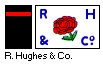
REDERIBOLAGET GOTTFRID ÅSTRÖM & SÖNER.

A576
A577

The funnel follows a photograph of Viking 4 from the late 1950s.

The funnel follows Eol in 1994, with the letter shape taken from a bow marking. The tug had belonged to the Kalix Sjötjänst joint venture before its 1992 failure.

The business originated in the early 1930s, with Gottfrid’s sons Ingemar, Eskil and Ingvar participating from the late 1930s. It continued within the family after Gottfrid’s death in 1945. In 1954 Gottfrid Aström of Risögrund was reorganised as Rederibolaget Gottfrid Åström & Söner at Kalix, with tugs receiving “Viking” names. Wiréns Rederi A/B took over in 1992 after the bankruptcy of their joint venture Kalix Sjötjänst A/B.

Sweden, Risögrund; later Kalix.

REDERIBOLAGET ZACHARIASSEN & CO.

Z26
Z27
Z28
Z29

The funnel emblem comprises two Zs.

The Stewart funnel and flag are also represented by Phil Nelson’s FOTW image.

US Navy 1961 supplies this funnel and flag variant.

Brown 1978 supplies this funnel and flag variant; no separate verbal comparison is supplied.

Originally A.G. Zachariassen according to Merchant Ships, the concern appears in Jordan as J.A. Zachariassen & Co., identifying Mimi and Berndt G. Zachariassen. Later registers use Rederibolaget Zachariassen & Co. Danielsen Shipping acted as agent.

Finland: Nystad, Helsingfors and Usikaupunki.

REDERIET ERIK WINTHER.

W219
W220
W235
W236
W404

Stewart and Styring’s attribution of a red-white-red triband with a red cross to Winther is incorrect: that design belongs to Havenbedrijf Mabesoone. Rosanoski identifies the preceding Stewart flag, with the same bands and a red diamond frame enclosing a red W, as Winther’s. Brown 1982 omits the frame and gives the W a more ornate form. FOTW’s initial erroneous illustration was replaced following Rosanoski’s advice.

The company website supplies W236’s flag. Rosanoski considers the narrow red fly stripe in Ivan Sache’s W235 portrayal probably a device separating the logo’s white band from the webpage background, rather than part of the flag. The logo differs from Brown’s ornate W; whether Brown is inaccurate or a later change occurred remains uncertain.

The Karen Winther photograph supplies W236’s funnel. Its white base might instead be considered part of the superstructure, giving the W404 treatment. Mitchell’s W404 probably derives from the same vessel’s line drawing; the photograph does not clearly resolve the markings.

The shipping business originated with A/S Vestjysk D/S, formed in 1931 by Niels Winther. After his death in 1933, management passed to his cousin and namesake, whose son Erik took over in 1943 as Rederiet Erik Winther-Aktieselskabet Vestjysk Dampskibsselskab. Lloyd’s instead gives formation in 1945 without a former name; Rosanoski connects the accounts through the same managed company.

The last ship, Karen Winther, was sold in 2000. The company still appeared on its website in August 2004 as Erik Winther Aktieselskabet Vestjysk Dampskibsselskab, but the site was no longer operating when checked in January 2010.

Denmark: Esbjerg, changing to Copenhagen in the 1930s; Hellerup in Lloyd’s 1978–1979.

REDERIET FINN OLSEN.

O343

The funnel probably relates to Canlill, for which the source gives an uncoloured line drawing.

Recorded as Finn Olsen in 1978–79 and Rederiet Finn Olsen in 2001–02, the company was absent from Lloyd’s 2005–06. Nevertheless Canasta, bought in 1984, was still trading in 2011 according to Miramar. Ranafjord was acquired in 2011; Strand Shipping’s website confirms Finn Olsen as operator.

Norway, Bodø.

REDERIET HELGE R. MYHRE A/S.

M136

The flag is diagonally quartered white and blue, with the third blue quarter cut away to form a swallowtail. The yellow or buff funnel has a black top and a flag panel. Hebris was observed in June 1966 with the flag pointing aft.

Founded in 1955, Myhre managed Skips A/S Vågen and other shipowning companies. Its operations and management merged with Irgens Larsen as Kvaerner Shipping on 1 June 1992.

Norway, Stavanger.

REDERIET LINDINGER A/S.

L255

L255 is documented in Brown 1982.

Lindinger appears as ship manager from 1963–64 and also owner in the 1973–74 and 1978–79 accounts.

Denmark, Copenhagen.

Rederiet Otto Danielsen.

A company-website photograph of Maj Danielsen on 4 August 2009 shows the vessel in Tschudi colours.

Otto Danielsen founded the company in 1944. By 2004 it was managed by the third family generation, Ulla Danielsen; ships commonly bore family names, including some managed vessels. In April 2005 Tschudi Shipping acquired the company and merged it with Tschudi Shipping Denmark ApS, retaining the Rederiet Otto Danielsen name.

Denmark: Copenhagen, later Holte and Virum.

REDERIET PER H. HANSEN.

H408

The flag depicted on the funnel is drawn with blue edging. Mitchell adds another emblem below the funnel drawing and a reference to Jens Wal above the company name, but neither connection is clear.

Per H. Hansen’s vessel was handled by Thomas Wang, initially as agent and later as manager. The sole ship, Tarco Sea, was apparently sold to Tarconord without a name change and remained under the same management.

Norway: Akland in Lloyds, Risor in Mitchell.

REDERIJ A/B EXPRESSLINJEN

E72
image by António Martins-Tuválkin, 5 August 2007
image by Neale Rosanoski, 9 February 2007
E308

The flag, derived from a Collectors Corner cap badge, is blue with a yellow X breaking a yellow arrow. The funnel is based on a black-and-white photograph of Marina; its band appears much lighter, so the illustrated shade of blue may be incorrect.

Expresslinjen operated Marina from 1963 to 1969 as a subsidiary of Stockholms Rederi A/B Svea, also named as manager. Lloyds instead lists Curt Högberg [Emanuel Högberg] as operator.

Sweden, Stockholm.

REDERIJ C. VERMEULEN.

V189

Mitchell’s line drawings appear to confirm V189 as a plain white funnel. Rosanoski considers that the ships later wore Universal Marine’s colours, but does not supply a separate design description here.

Cor Vermeulen, born in 1948, entered shipping in 1965 and became a captain in 1982, buying his own ship. Lloyd’s dates the company to 1982 and initially places it under Wagenborg management. He later became involved in managing the Universal Marine B.V. group. From August 2005 Lloyd’s begins listing the ships under Universal Shipping B.V., identified by Rosanoski with Universal Marine B.V.

Netherlands, Geldermalsen.

REDERIJ DRIEMAST B.V.

D567

The funnel follows port and starboard photographs of Meander dated 8 December 2006 and 31 July 2013. Rosanoski interprets its emblem as M for the ship; the company website supplies the logo and crest.

Brothers Henk and Jan Martin Mastenbroek formed Rederij Driemast, owner of the single tug Meander, built in 2006.

Netherlands, Nieuwegein.

REDERIJ GROEN B.V.

G581

A port-side photograph of Allure G documents the funnel.

Groen began in 1973 with three sport-fishing and recreational vessels, moving into offshore work in 1980, initially under Telco Marine. Lloyds separately gives formation in 1979 and later records ownership and management under Groen’s own name.

Netherlands, 's-Gravenhage.

REDERIJ HANNAH N.V.

H321
image by Jarig Bakker, 31 January 2001

N.V. Stoomschip Hannah, recorded under F.W. Uittenbogaart’s management in the 1939 account, became Rederij Hannah in the early 1960s and ceased by the decade’s end. Vessel names used the suffix laan.

Netherlands, Rotterdam.

REDERIJ KATINKA B.V.

K162

The blue flag has a very broad orange horizontal band bearing a white circle that touches the blue areas. Within it is a blue upright anchor surmounted by an orange K, separated from the anchor by the field colour. No funnel is given.

Netherlands, Amsterdam.

REDERIJ LOOSMAN EN TEN RAPEL.

L477

L477 is retained from the Mitchell collection.

Formed in 1987, the company operated Dina Jacoba until 2001. It appears under Amasus Shipping as agent and later as a minor operating company.

Netherlands, Urk; later Ridderkerkl.

REDERIJ T. MULLER B.V.

M266

The blue flag has a white cross, with an orange diamond at its centre bearing a white M. No funnel is noted.

The company is recorded in Lloyds 1992–93.

Netherlands, Dordrecht.

REDERIJ WANTIJ B.V.

W525

W525 comes from Donau photographs: the dark-blue band looks almost black on the port side on 27 June 2012, while the starboard view of 27 May 2013 is more bluish and has the same orientation. The W is enclosed in a thin light-blue frame.

Established in 1982 by Messrs Koch, Eleveld, Verdoom, Veema and Berends, Wantij was a single-ship business with an owner always on board. The website names the later owners as Jan van Veen, John Hartman and Naftali Bokzijl.

Netherlands: Dordracht, later Papendrecht and GAZwijndrecht in the registers.

REDERIJ WATERWEG.

Rederij Waterweg
Rederij Waterweg

The flag is blue with a white horizontal band and an overall red W. No funnel is given.

Netherlands, Workum.

Redhead & Dry’s Tugs Ltd.

REDHEAD & DRY'S TUGS LTD.

R322

The new company retained Robert Redhead & Son’s funnel colours, at least for some time after the merger. No house-flag design is established; the source only presumes a Redhead flag with suitably amended lettering.

Formed in September 1929 when Robert Redhead & Son took over The John Dry Steam Tugs, the company joined the consortium purchasing Joseph Crosthwaite (Tugs) in 1933. France, Fenwick Tyne & Wear acquired it, including its Crosthwaite interest, in May 1944.

UK, Newcastle.

Reederei "Nord" Klaus E. Oldendorff Ltd.

REEDEREI "NORD" KLAUS E. OLDENDORFF LTD.

O72
image by Jarig Bakker, 27 November 2005
image by António Martins, 30 April 2005
O238
O239

The house magazines show a table flag in spring 2004 and a full flag of 2:1 proportions in spring 2005. Brown 1995’s flag is drawn in bright blue in the German FOTW account, while the Cypriot version is darker, probably following the website logo. NJK reported O72 as the only funnel version seen; Rosanoski also cites Nordwoge, photographed on 20 April 1984.

This funnel follows a photograph of Nordsino.

REEDEREI "NORD" KLAUS E. OLDENDORFF GMBH.

O150

Ltd.

Germany, Hamburg; subsequently Cyprus, Limassol.

Keep the explicit scope label independent; no alias or company identity is inferred.

GmbH

The GmbH section records Lübeck, Hamburg, Limassol and again Hamburg.

Keep the explicit scope label independent; no alias or company identity is inferred.

The family company began trading on 12 December 1964. Lloyd’s initially gives 1987 for the Ltd. company’s formation, later changing this to 1964. Klaus Oldendorff moved operations from Germany to Cyprus on 1 January 1987; the account says neither the company name nor its house flag changed. He died on 17 March 2003 and was succeeded by his wife Christiane E.

The source records the Ltd. and GmbH forms separately, with the GmbH as an operating company in 1998. Ships generally had Nord-prefixed names, and chartered-out vessels retained the funnel.

REEDEREI ANDRẾ WIECZOREK GBH & CO. K.G.

W534
image by Eugene Ipavec, 4 February 2009
W535

Eugene Ipavec’s FOTW image follows a table flag approximately 15 × 25 cm. Rosanoski considers its blue darker than W535’s. A later source describes Frank W’s funnel as carrying a square version of W534.

Andre W, photographed on 2 July 2012, flies Wagenborg’s flag at the foremast and W535 at the mainmast. The funnel is plain white and the company panel is attached to a railing.

Kapitän André Wieczorek founded the concern in 1985 at St. Peter-Ording under the name given as Seeschiffahrt André Wierczorek. Freya was sold in 1990 and replaced by Leana in partnership with Reederei Jochen Döhle, chartered to Unifeeder until sale in 1995. Clara then operated for International Shipbrokers of London until 2003, when Marc-André replaced it under Wagenborg agency. Wieczorek also managed Effort until its sale in November 2004. The Reederei André Wieczorek name is dated to 2005; L & W Bulkschiffahrts is recorded as an associate.

Germany: Hamburg, Rellingen, then Hamburg again.

REEDEREI BERND DREWITZ GMBH & CO. K.G.

D526

RBD Borea’s port-side photograph of 15 January 2010 identifies the logo, with a starboard view from October 2007 confirming it. The marking was also used by RBD Dalmatia, temporarily Blikur. A comment on RBD Esperanza identifies RBD as the managing owners Reederei Bernd Drewitz, tentatively giving the fuller name Reederei Bernd Drewitz Erste Verwaltung. Ships may be listed under other partners despite carrying this marking.

Also known as RBD, the concern is recorded in Hamburg from 18 July 2006 and in Emden from 7 November 2006 for ship construction and operation through limited partnerships. A Lübeck registration followed on 8 July 2011. Lloyds initially used Berndt Drewitz Verwaltungs before listing Reederei Bernd Drewitz as manager.

Germany, Hamburg.

Reederei Bernd Sibum GmbH & Co.K.G.

REEDEREI BERND SIBUM GMBH & CO.K.G.

S787
image by Ivan Sache, 7 September 2008

The blue flag bears a yellow diamond nearly reaching its edges, charged with a blue S. On Grete Sibum’s funnel the flag is mirrored so that the pole faces forward on both sides, while the S reads normally, as though double-sided. Photographs also show the flag flying on Anna-Marie Sibum; the FOTW account names Anna-Maria Sibum, Rita Sibum and Grete Sibum.

Hermann & Stefan Sibum

S1815

The family business began in 1953 when brothers Stefan and Hermann Sibum bought Gerd. It operated coasters before concentrating on container ships in the 1980s. Stefan’s son Bernd ordered Stefan Sibum, delivered in 1997. Reederei Bernd Sibum is dated to 1996 and operated as a manager, with Reederei Bernd Sibum Verwaltungs GmbH as partner. The register sequence separately records Hermann & Stefan Sibum, later Hermann Sibum, Veha-Reederei and Reederei Bernd Sibum.

Germany, Haren/Ems.

Reederei Blue Star GmbH.

REEDEREI BLUE STAR GMBH.

B512
B933

BLUE STAR GROUP.

The Rotterdam Blue Star Group was formed in 2004 and apparently ceased with the 2009 sale. It is distinct from the group associated with Blue Star Maritime. Its operating companies included Reederei Blue Star and Blue Star Management B.V., formed in 2005 to take over P&O Nedlloyd’s management activities and renamed Maersk Ship Management in 2007. The latter remained within A.P. Möller.

Netherlands, Rotterdam.

Reederei Blue Star

The company inherited Blue Star Line’s livery through the 1998 sale to P&O. Rio Teslin’s port side on 12 June 2012 confirms B512.

B933 follows Rio Thelon’s starboard side at Port Botany on 30 July 2012, with the flag painted on the superstructure. Renamed on 1 March 2012, the vessel had changed to MPC Münchmeyer Petersen’s colours by December.

Reederei Blue Star was formed jointly by Koninklijke Nedlloyd Groep and P&O in 2002, becoming wholly owned by P&O Nedlloyd. The February 2006 merger brought it into A.P. Möller Maersk. A German buyer was sought during restructuring, and sale to Reederei Ernst Komrowki was announced on 18 June 2009.

Germany, Hamburg.

Keep the explicit scope label independent; no alias or company identity is inferred.

Blue Star Holding

Blue Star Holding brought together E.R. Schiffahrts, Komrowski Befrachtungskontor and the Komrowksi-owned Reederei Blue Star.

Germany, Hamburg.

Keep the explicit scope label independent; no alias or company identity is inferred.

REEDEREI CASSEN EILS GMBH & CO. K.G.

E58
E78

The yellow or buff funnel has a blue-white-blue triband with a broader white centre. An overall white circle bears a black cross paty charged with white E. The blue flag carries a white cross and the same circular emblem. A second version edges both the white cross and circle in black. Shades follow the website image.

The concern is listed as Cassen Eils in 1963–64 and Reederi Cassen Eils in 1970–71, with the later incorporated title appearing in the 1998 and 2000 registers.

Germany, Cuxhaven.

Reederei Christoph Jakobs.

Jakobs bought Eros in 1974, renamed it Eos in 1985 and sold it in 1987 along with Athos, acquired in 1982.

Germany, Buxtehunde.

REEDEREI CLAUS-PETER OFFEN GMBH & CO.

O19
image by Jarig Bakker, 27 September 2005
O349

The flag has five horizontal blue and white stripes, approximately 2:1:6:1:2, with a widened cross formy in the centre. Nüsse’s second website gives a clearer blue. San Fernando photographed from starboard on 20 November 2005 confirms the funnel and flag; CPO England from port in October 2013 shows a duller blue. Mitchell dates the funnel variant to 1987 or possibly 1989, the final digit being unclear.

Mitchell’s darker-blue-banded funnel is presumed to be the original. His Holstental Shipping note is unexplained but probably relates to the early ship-named companies and Holsten-prefixed fleet.

Mitchell also records Ivarans livery for charter ships.

Claus-Peter Offen was formed in 1971 and bought its first ship on 9 June. A container fleet was established in 1978. Chemical and product tankers followed under Offen Tankers from the beginning of 2007, and bulk shipping under Offen Bulkers from 2008. A 20% interest in Ivarans is recorded in 2000.

Germany, Hamburg.

Reederei de Vries & Co. K.G.

REEDEREI DE VRIES & CO. K.G.

D502
D505

The funnel follows Thorhaven on 30 August 1982.

Kludas apparently presents this funnel as an alternative for World Discoverer, but the period is unclear. Rosanoski’s comparison refers to D504 and then D5043 for the book’s ship photograph, leaving the numbering uncertain.

Tankreederei de Vries & Co. K.G., explicitly identified source allocation

D172
D173

Brown 1971 gives D173 for Tankreederei De Vries & Co. K.G.; Mitchell also assigns the D172 funnel to that company.

Discoverer Reederei GmbH

D503
D504
image by Klaus-Michael Schneider, 17 April 2009

A starboard photograph of World Discoverer confirms this funnel form, with the bird flying towards the front. Rosanoski presumes the bird also faces forward on the port side.

The FOTW flag is white with a blue capital D surrounding a white globe with blue meridians, and a rising red line beneath. Rosanoski notes that this does not exactly follow Kludas: the globe lines should be black and the red line is not properly extended beneath the letter.

Formed in 1955 as De Vries & Co., the business later appears as Schiffahrtsgesellschaft de Vries & Co. mbH and Reederei de Vries & Co. K.G., acting as operator, owner and manager at different periods. Tankreederei De Vries & Co. K.G., also in Hamburg, is listed as an associate.

Discoverer Reederei GmbH was formed in Bremen in 1976 as K.G. Discoverer Reederei GmbH and renamed in 1985. Its vessel appeared under Adventurer Cruises Inc., formed in 1984, with Thyselelius Schiffahrtsges. Heyer & Tunnecke as agents. Discoverer later managed Adventurer and was listed as a de Vries operating company. By December 2003 the sole ship was registered under Delta Steamship Shipping Co. Ltd., formed that year.

Germany, Hamburg.

Reederei Eckhoff GmbH & Co. K.G.

REEDEREI ECKHOFF GMBH & CO. K.G.

E76
image contributed by Josef Nüsse, None
E348
E479

Kamilla’s photograph dated 25 September 2002 supplies the funnel. Nüsse lists the table flag under Hans Eckhoff.

The company gallery supplies the funnel from an unnamed vessel and the website logo supplies the flag. A flag panel also appears on managed S. Fighter’s superstructure at Newcastle on 29 May 2009.

Onego Ponza’s port-side photograph dated 15 February 2013 shows breaks in the letters and a different blue shade. It was the only ship listed as owned, but Rosanoski cannot establish whether ownership explains the design difference.

Hans Eckhoff — Mitchell historical funnel

E349

Vessel/date and relation to later Hans-Peter/Reederei Eckhoff companies remain unresolved.

The family management business traces its origins to Johann Behrtens in 1896 and describes Hans-Peter Eckhoff as the fourth generation. Lloyds distinguishes Reederei Hans Eckhoff, dated to 1991, from Hans-Peter Eckhoff’s concern, said to have adopted its incorporated form in 1994. Their register entries and managed name companies change over time; by 2006 the Eckhoff K.G. address coincided with Hans-Peter’s. A later Reederei Eckhoff GmbH & Co. K.G. entry records ownership and management at Jork. JSM-Shipping is listed as an associate of the Hans-Peter company.

Germany, Jork.

Reederei Ehler.

The vessels’ funnels appear probably to carry charterers’ colours, while a flag-emblem panel on the superstructure confirms the company colours. Nathalie Ehler’s funnel was plain yellow on 28 February 2008.

Formed in 1978, the concern appears successively as Kapt. Heinz Ehler, Heinz Ehler and Heinz Ehler K.G., adopting Reederei Ehler by the 2004 listing. The fleet was held under its own name and later name companies.

Germany, Otterndorf; also listed as Ottendorf-Niederelbe.

REEDEREI ELBE SHIPPING GMBH & CO. K.G.

E469
H139
image contributed by Josef Nüsse, None

Nüsse supplies the table flag from both versions of his website.

Bermudian Express’s starboard photograph dated 22 December 2012 supplies the funnel, and the company website supplies the flag. BBC Steinhoeft’s port-side photograph of 19 February 2014 omits the black funnel top.

Kapitän Wolfgang Hammann founded Reederei Wolfgang Hammann in 1986, placing ships on time charter, and renamed it Reederei Elbe Shipping in 2003 according to the company website. Lloyds instead dates Schiffahrtgesellschaft Wolfgang Hammann to 1995 and initially records two entries, one under Pohl Shipping management. Rosanoski notes that neither the date nor name is supported by the website.

Germany, Drochtersen.

REEDEREI ERWIN STRAHLMANN E.K..

S1113
S1120
S1121
S1122

Provider’s photograph of 22 September 2007 supplies this funnel.

Bounder’s diamond frame is only slightly curved, unlike the pronounced curves on Elsebeth, which agree with S1122.

Koralle’s indistinct photograph leaves the panel’s upper extent uncertain, and the funnel diamond is clearer on the flag than on the funnel. Carrier also shows a faint diamond outline but confirms the panel arrangement. The flag drawing follows the superstructure panel; photographs of actual moving flags appear to have more conventional straight sides.

Szczecin branch

The Szczecin branch’s website flag has an eagle shield and an apparently straight-sided diamond frame. Its narrative and source-list identifiers differ, S1550 and S1150.

Keep the explicit scope label independent; no alias or company identity is inferred.

Erwin Strahlmann founded the concern in 1988, initially managing companies belonging to captains and later becoming an unlimited partner as they withdrew. Lloyds instead gives 1990 as the formation date. A separately constituted Szczecin branch, owned by Strahlmann, began in 2002 for technical supervision and agency work and added crewing in 2008.

Germany, Marne.

Reederei Frank Dahl.

REEDEREI FRANK DAHL.

D99
D437
Reederei Frank Dahl; printed ID D437
D541
D542

Nüsse records table flags for both Frank Dahl and Reedereikontor Cuxhaven. Vessels commonly display charterers’ funnels with the D99 flag painted on white superstructure, as a waving flag on a pole. Vossborg also shows the emblem attached to an undefined white funnel panel in August 2010, and had acquired a black funnel top by June 2013.

Veerseborg’s photographs show several arrangements: a panel on the superstructure with a black funnel and pale band, a plain white funnel, and an earlier black funnel with a broad white band bearing the panel, represented by D542. Rosanoski relates the latter to Wagenborg employment and suggests the plain funnel may reflect a transitional period. D541 follows a portside photograph of August 2013.

The June 2010 Vossborg photograph appears to show a stage between the earlier black or possibly dark-blue funnel and the later fully white D99 funnel, with a panel added.

Reedereikontor Cuxhaven GmbH & Co. KG

C1239

A second flag appears in a Transas logo and on Nüsse’s newer site.

Frank Dahl went to sea in 1970 and became mate for Gerhard Ahrens, later acquiring shares. They jointly managed the business from 1984; after Ahrens died in 1987 Dahl became general partner in the two shipowning companies. Formation is variously given as 1973, 1983 or 1987; Rosanoski questions 1973 because Dahl was still studying with spells at sea.

On 15 May 2002 Dahl formed Reedereikontor Cuxhaven with Kapitän Michael Jäger and Kapitän Olaf Wulff as equal partners. Wulf Seetransporte was operated jointly with Otto Wulf.

Germany, Drochtersen; Cuxhaven.

REEDEREI GEBR. ECKERT K.G.

E75

The white flag has a blue border and a blue frame enclosing blue E. Shades follow the website image.

The concern appears as Gebr. Eckert in 1978–79 and as Schiffahrtsgesellschaft Reederei Gebr. Eckert in later management listings. Peter Dohle managed part of its fleet in 1985–86, while Eckert itself managed one company.

Germany, Hamburg; Cranz.

Reederei Gebrüder Winter GmbH & Co. K.G.

REEDEREI GEBRÜDER WINTER GMBH & CO. K.G.

W84

Funnel photographs of Adelaide Express show dark blue narrow bands. In a 27 June 2012 port-side photograph of Commander these appear black, but Rosanoski considers them probably blue.

The flag is documented by Josef Nüsse and FOTW. An approximately 15 × 25 cm table flag offered on eBay in February 2007 suggests stripe proportions around 1:5:1, excluding the thin blue lines. Its black bands are slightly wider than those in the reproduced image.

Jakob Winter

W309

Mitchell gives the W a different shape, presumably distinguishing the then separate businesses of Harald and Jakob.

Harald Winter

W310

Mitchell’s flag portrayal is probably intended as an enlargement of the funnel panel, although the W is absent from his funnel depiction.

The document reproduces a flag and flag logo from the company website and records red as RGB 199, 000, 020.

The Winter family had been active in shipping since 1900. Shipbroker Harald Winter and his brother Kapitän Jakob Winter formed Reederei Gebrüder Winter in 1970; Dieter Winter is also listed as a proprietor. Harald and Jakob were cousins of Heino Winter. A later Lloyd’s account dates Schiffahrtskontor Reederei Gebrüder Winter to 1991 and the GmbH & Co. K.G. name to 1999; Rosanoski notes that the 1991 formation date conflicts with earlier register entries.

The operating concerns included Dieter Winter K.G., formed in 2004 at Jork, and Jan und Dieter Winter Bereederungs Gebrüdder, formed there in 2005. Harald Winter also held a decisive share interest in Walther Moller & Co.

Germany, Hamburg and Jork.

REEDEREI GERD A. GORKE.

G70

Formed in 1986, Gorke operated a fleet under its own name and named subsidiaries.

Germany, Hollern-Twielenfleth.

REEDEREI GERDES GRUPPE.

G582
G583

The source calls this “version 2”, documented on Gerhard G’s port side on 20 July 2013 and Ulrike G’s starboard side; Ulrike G has a narrow black top.

Apparently the more commonly used design, this appears on Dette G to port and Christina G to starboard without a funnel top. Helene G instead has a blue top matching the G.

The family business dates its formation to 1993, while Lloyds gives 1994. Gerdes Shipping & Chartering was formed in 2003 and the Dutch Gerdes Ship Management subsidiary in 2009. Earlier operating companies included Gerems, formed in 1998, Gerems “Bjorn” in 2001 and Gerdes Bereederungs und Verwaltungs in 2002.

Germany, Haren-Ems.

REEDEREI GERHARD LANGE K.G.

L561
L562

Mitchell draws the letters black without specifying their colour; Rosanoski assumes white. A bow-port photograph of Susanne L on 1 January 1989 confirms grey and a white L but hides the base. The funnel might instead have been white with a black top and a grey band lower down, possibly changing with the ship’s names. Nüsse supplies a table flag.

L562 is based on a poor starboard view and may be incorrect. A very narrow black top is possible and a lifeboat obscures much of the base. The letters appear angled; only the spine of G is clear, so the rest is assumed. Rosanoski suggests the black may have been a change to improve contrast.

Lloyds dates the company to 1979, probably its corporate formation: Gerhard Lange already owned Susanne L, bought and renamed in 1967. Another Susanne L was built in 1979. Miramar records its sale in 1984, but Lloyds 1998 lists it under the name subsidiary K.G. Mercur Schiffsbeteillgungs-GmbH. Shipspotting details suggest alternation between Susanne L and Bremer Mercur, with Susanne L used again during 1989–95, perhaps reflecting charters. In 1998 Lange appears as an operating company of Johs. Thode; a 2013 directory marks its status deleted.

Germany, Dithmarschen.

REEDEREI GÜNTHER BAHR.

B208

The flag is diagonally quartered white and blue, with an overall red diamond edged in undefined white and bearing white “GB”.

The registers list Gunter Bahr as manager of a one-ship partnership in 1985–1986 and 1992–1993.

Germany, Drochtersen.

REEDEREI H.-P. WEGENER.

W3
image by Jarig Bakker, 17 December 2005
W81
image by Jarig Bakker, 20 May 2009
W375
image by Jarig Bakker, 20 May 2009
W377

A funnel sighting at Liverpool in 1969 shows a flag design, from which Rosanoski tentatively reconstructs an original flag: red with a broad white horizontal band bearing a blue W. Its use as a flown flag is presumed, not established.

The horizontal biband in Brown 1995, illustrated by Jarig Bakker, is presumed to have followed the early design. The sequence is not independently established.

The documented later flag is an unequal horizontal biband, predominantly white over blue, divided by a wavy line with four rises and three falls. A large uneven red W, outlined black, touches the blue. Nüsse’s table flag confirms the waves; actual flags on the company website show darker blue than its light-blue logo. The source records unusual proportions as “1:563”. Carina’s funnel photograph of 17 February 2007 shows the design on a square panel, visible by its shadow, with a black-outlined W. Ship photographs show lighter-blue funnel panels, but the significance of this difference from the flags is unclear.

W377, attributed to Wega and Spica, resembles W3 but has one fewer wave and slightly hooked W ends, which Rosanoski considers possibly significant.

Documentary images — company attribution uncertain

W376

Carina’s W376 funnel bears black SANARA and a small white shield with a red anchor. Its ship-named owning company provides no apparent explanation of these markings.

Hans Peter Wegener caption does not prove mark origin.

Coastal Ships & Ferries 1999 describes a white funnel with a symbol on a red square, presumed to be Containerships’ charter livery. Rosanoski notes the absence of the company’s own superstructure markings on these chartered vessels.

The Wegener family has several generations of coastal-shipping tradition. Rosanoski considers the present business probably to have begun with Wega, built in 1966. The registers successively use Hans Peter Wegener, Hans-Peter Wegener K.G. and Reederei H-P Wegener. Wegener Bereederungsgesellschaft, formed in 2006, is listed as an operating company at the same address.

Germany, Jork.

REEDEREI H.G. RAHDER.

R318
image by Eugene Ipavec, 6 May 2009

The funnel follows website photographs of Lady von Busum and Ol Busum. The flag has a blue saltire defining white hoist and fly triangles and red upper and lower triangles. Its centre is a white disc edged blue with a blue sans-serif R. Jan Mertens notes that the colours recall Schleswig-Holstein’s flag and Büsum’s arms. A photograph of 18 May 2007 supports the flag.

Hans-Georg Rahder began fishing trips in 1972, developing a tourist shipping business including the Büsum–Helgoland ferry service.

Germany, Büsum.

REEDEREI HAMMANN & JÜRGENS K.G.

H140

The white flag bears a green four-leaf clover with its stalk, with small green H and J letters in the upper hoist and lower fly respectively. Colour shades follow the website image.

Germany, Wischhafen.

REEDEREI HANS AUGUST SABBAN.

S149

Mitchell omits the black funnel top. A black-and-white photograph shows Edith Sabban with S149 on both funnel and flag.

Documentary images — company attribution uncertain

B1027

Mitchell attributes this funnel to Brügge & Sabban and apparently links it with Edith Sabban in an August 1982 Rotterdam drawing. Lloyds lists the vessel only under Hans August Sabban, and the photograph shows S149 instead. Rosanoski tentatively connects Brügge with Uwe Brügge or his family, but cannot explain the M in the emblem.

M meaning and date unconfirmed.

Sabban’s first recorded vessel was Uwe, acquired without a name change from Vega-Reederei Friedrich Dauber in 1969; Lloyds dates company formation to 1970. The last vessel, Marlies Sabban, was sold in 2006. By December 2004 Sabban was listed as a major operating company of Vega-Reederei.

Germany, Hamburg.

REEDEREI HANS GEORG ACKERMANN.

A586

The A586 flag is assumed from the flag appearing on the funnel.

Only a forum chronology was located; it supports the proposed identity but is insufficient to establish the historical company independently to VERIFIED standard. The archive's dates and inferred flag remain uncertain.

A photograph by Derek Sands, dated 1985 and described under the name Sellebrunn, appears to show the Deutsche Conti flag.

Reederei Hans Georg Ackermann is listed in Lloyds 1988–9 with the sole vessel Sellebrunn. The vessel-name chronology is inconsistent: information supplied by Nordmark71 (Arne) gives Dorthe under Deutsche Conti-Handelsgesellschaft mbH from 1985 to 1990, followed by Sellebrunn under Ackermann, whereas Lloyds shows the change by 1988. Rosanoski considers a 1985 change possible, but notes that Lloyds 1985–6 still uses Dorthe.

Germany, Helgoland.

REEDEREI HARALD LÜNSTEDT.

L89

The flag is diagonally quartered blue and red, with a white saltire cotised in the quarter colours. A black-outlined white disc bears black HL. The reproduced blue is purplish, possibly because of scanning. No funnel is given.

Germany, Drochtersen.

Reederei Hausechildt K.G.

Germany, Buxtehude.

REEDEREI HEINO WINTER K.G.

W5
W463
W464
W511

Brown 1995, followed by the FOTW image, makes the W too wide. Rosanoski also notes an erroneous FOTW text attribution to Heinz Winter, although its heading was correct.

The flag seen on the chartered Spirit of Freedom at Wellington on 14 September 1999 has normally proportioned letters, unlike Brown’s widened version. The company logo and Josef Nüsse table flag agree. The Baltic Winter funnel photograph shows a thinner W with equal-length arms; that vessel was broken up in 1987 and Rosanoski had no newer funnel comparison. The engineering website also uses equal-length arms, in compact form.

The funnel is based on a starboard photograph of Martin, dated “26.7.23012” in the original note.

The funnel illustration comes from the Mitchell collection; no separate verbal design is supplied.

The shipping and engineering websites show slightly different shapes and positions of the W.

The group combines a shipping company and an engineering office. Its shipping origins are traced to Jonny Winter after the Second World War; Heino was built in 1967. Heino Winter went to sea, qualified as a marine engineer and formed Reederei Heino Winter in October 1977, taking over Linde that year. He also developed Heino Winter GmbH’s engineering office. Heino is identified as a cousin of Harald and Jakob Winter.

A later comment in the document instead gives formation as October 1997; the discrepancy is unresolved.

Germany, Jork.

REEDEREI HEINZ CORLEIS K.G.

C245

The flag is white, with a stylised sea in the base formed by dark green, light green and black bands. A large upcurling wave interrupts them to form a C. The shades were taken from the website image: dark green RGB 018, 120, 092 and light green RGB 102, 195, 066.

Formed in 1966, the business operated a fleet under its own name and single-ship subsidiaries. Earlier Lloyds listings name Harry Corleis as a manager; by 1992–93 it appears as Reederei Heinz Corleis K.G., managed by Pohl Shipping Schiffahrtsgesellschaft mbH. Pohl Shipping is also recorded as owner in 1998 and 2000.

Germany, Hamburg; later Jork and Drochtersen.

REEDEREI HEINZ-GEORG VOGE K.G.

V17

The flag is blue, with narrow white horizontal bands near the top and bottom and a white “V” between them. The funnel is black with a broad band bearing the flag. Rosanoski took the colour shades from the website image.

Reederei Heinz-Georg Voge K.G. was formed in 1976, with ships held through name subsidiaries. Its owner is recorded as Kustenschiffahrt Bauer & Hauschildt K.G.

Germany, Drochtersen.

REEDEREI HENRY HORSTMANN.

H151

The flag has unequal diagonal blue and red quarters, with red occupying more of the field. A very narrow white saltire is overlaid by an undefined white vertical oblong panel bearing a blue H. The shades follow the website image; no funnel is given.

Germany, Jork.

REEDEREI HERBERT DREWES.

D102

The flag is blue with a white diamond frame enclosing a white D. The colour shades follow the website image.

Formed in 1981, the company had one vessel through a single-ship partnership; that vessel was sold in 1997. The partnership is dated 1995 in a note also citing Lloyds 1992–93, leaving that chronology unclear.

Germany, Hamburg and Jork.

REEDEREI HERMANN WULFF JOHN-PETER WULFF GMBH & CO. K.G..

W109
W545
W546
W547

Josef Nüsse shows two yellow-field table flags. The earlier W109 has a horizontally elongated diamond and green W whose outer-arm tops are horizontal. In the later version the diamond is less elongated and outlined, and the arm tops follow its slopes. FOTW’s W545 describes a beige or light-yellow field and a white lozenge with green W. Whether the website logo’s field colour represents another change is unknown; the funnels apparently changed from yellow to light buff. Kollmar’s photographs show the old flag panel still present on the superstructure in May 2012. W546’s funnel follows H-G Buelow in September 2013; John Wulff’s July 2013 photograph shows a very dark green W.

Documentary images — company attribution uncertain

W548

Need dated photograph before owner-period allocation; QA2 retained.

Mitchell attributes W548 to Tina, 499/1969. The vessel was built for Hermann Wulf in 1969, transferred to P/R Tina in 1975 and briefly to Schulte-Westhof in 1976 without a name change. An undated monochrome photograph appears to show W548, but the ship is absent from the cited Hermann Wulff register entries. As the design differs markedly from W547, Rosanoski suggests charterers’ or later owners’ colours.

Kapitän Hermann Wulff, the fifth generation of a seafaring family, founded the coastal-shipping concern in 1960 by acquiring the renamed Ilse Wulff. The first newbuilding followed in 1963. He died in 1991 and his son John-Peter succeeded him as captain and manager. Elbe Containership Chartering was established with shipbroker Gunnar Peters in 2004–2005. The source records a head-office move from Kollamr to Glüchstadt in 2006. The current company name was registered on 23 December 2008; earlier website forms identified John-Peter as proprietor beneath the Reederei Hermann Wulff name.

Germany: Reinbek, Styeindecht über Glückstadt, and Kollmar.

REEDEREI HIDDENSEE GMBH.

H10
image by Al Fisher, 11 February 1999

The flag is blue with a broad red diagonal stripe, edged white, running from lower hoist to upper fly and bearing a white anchor. A white “R” occupies the upper hoist and a white “H” the lower fly. Website photographs show it used as a stem jack.

The ferry company is a subsidiary of Weiße Flotte and has been part of the FRS Gruppe since 1991. The 2012 account describes it as operating for fifty years.

Germany, Vitte.

REEDEREI HINSCH.

H149
H150

The Nüsse website’s upper and lower bands appear purplish blue, but Rosanoski assumes a darker blue.

The agents’ website still showed H150 when recorded on 15 September 2004.

The business probably derives from Peter Hinsch, owner of Alfred Hinsch. Registers use Alfred Hinsch, Peter und Alfred Hinsch, Alfred & Maria Hinsch and later Reederei Alfred Hinsch K.G., recording operating, management and agency roles. The name became Reederei Hinsch in 1996. Its later fleet was held through named companies.

Germany, Ostendorf; later Dornbischer and Buxtehude.

REEDEREI HORST BARTELS.

B210

The flag is red with a very broad white horizontal band bearing blue “HB”.

Horst Bartels is recorded in 1978–1979 and in 1985–1986 as manager and agent only.

Germany, New Wulmsdorf; Hamburg.

REEDEREI HORST ZEPPENFELD GMBH & CO. K.G.

Z6
Z17

The first funnel is yellow or buff with a black top. The second adds a black Z. NJK reported seeing only the first version across several ship observations.

The flag is black with a horizontal white band bearing a black Z. Nüsse’s version has a broad white band, whereas Brown shows equal-width bands.

Formed in 1971, the concern operated through named and operating subsidiaries. Singapore companies included Sinpacific, formed in 1979, Enif Shipping in 1988 and Anibal Transport in 1999. Navylloyd was an associate and managed part of the fleet before being listed as manager of the whole fleet by 2000.

Germany, Bremen.

REEDEREI INGO WILCKERLING.

W83

The white flag has two narrow red horizontal bands towards the top and bottom. Between them is a narrower dark-blue horizontal baton. An overall red ring, separated from the bands by white edging, encloses a white field with a dark-blue W. The shades follow the website image; no funnel is given.

Germany, Cuxhaven.

Reederei Jaegers GmbH.

REEDEREI JAEGERS GMBH.

J163
image by Jarig Bakker, 7 Sep 2006
J164
J165
J166
J167
J168
J169
image by Eugene Ipavec, 7 Sep 2007
J170

The earlier Josef Jaegers flag, listed at Aschaffenburg in Flaggen auf dem Rhein, has two Js, the left higher than the right. The source places the change from JJ to J with the Stinnes acquisition in 1971. Rosanoski argues that the red and green diamond borders should be separated by white, as on the current flag; their contact in part of the printed source is probably an artefact. He suggests deep sky-blue from photographs.

The blue house flag has three white waves lowered beneath a white lozenge with a stylised blue J. Around the lozenge are red, white and green lines from the inside out, with further white edging against the blue field. Jan Mertens ventures that the colours might represent North Rhine-Westphalia, without confirmation. Rosanoski notes that the FOTW waves end on an upward curve whereas the website shows them ending downwards. J164 follows the photographic flag on Eiltank 3 and a matching funnel on Eiltank 17, whose base is not visible.

Eiltank 1 has distinctly shortened white bands. The photograph looks from port at a funnel mounted on the starboard side, so the number of bands on the other side may differ.

Eiltank 124 shows straight white batons with descending lengths. Rosanoski suggests that the shorter funnel may explain their straightening.

J167 is documented on Adria on 18 February 2008.

J168 is documented on Eiltank 21.

DTSG / Donau Tankschiffahrtsgesellschaft GmbH

D397

A funnel mark may accompany the D397 flag, since the website describes the organisation as a shipowner; no definite funnel design is supplied.

Josef Jaegers established the business in Frankfurt in 1919. Its fleet converted to inland tankers in 1958–63 and then specialised in chemicals. By 1970 it was associated with Stinnes-Beteilgungsgesellschaft. It returned to family ownership in 1995, taking over the entire Stinnes inland tanker fleet, and was owned by the Jaegers and Valentin families. Shares in Chemgas Shipping were acquired from Royal Vopak in December 2003. The group comprised Reederei Jaegers, DTSG or Donau Tankschiffahrtsgesellschaft, and Chemgas.

Germany, Duisburg.

Reederei Jens-Peter Schlüter GmbH & Co. K.G.

Documentary material — company attribution not established

S1690

Annabella’s funnel uses the same design as his father’s company. The flag is based on the panel attached to the superstructure. In the close-up photograph the field is very dark blue, almost black, whereas the website logo is distinctly blue; both show a darker red.

Dr. Jens-Peter Schlüter sold his father’s Reederi Karl Schlüter business on 1 July 2007, intending to retire and devote time to the Rendsburger Schiffahrtsarchiv he had founded. In the same year he formed his own shipping company. Lloyds 2011–12 lists it under Peter Döhle’s management.

Germany, Rendsburg.

REEDEREI JOHANNES & WERNER LÜNSTEDT.

L88

The flag is diagonally quartered yellow and blue with a white disc bearing a black L. Colour shades follow the website image; no funnel is given.

The company appears in the 1963–64 and 1970–71 registers, with Johannes Lünstedt managing initially and Küstenschiffahrt Bauer & Hauschildt later.

Germany, Jork.

REEDEREI JONNY WESCH K.G.

W82

The illustrated colour shades follow the website image. Diamond proportions vary; Nüsse’s version elongates it from hoist to fly almost throughout the flag.

The concern appears in Lloyd’s from 1953–1954 through 1985–1986, variously as owner and manager. It managed a growing number of subsidiaries; most vessels bore family names.

Germany: Hamburg, later Jork.

REEDEREI KAPITÄN HEINRICH KROHN GMBH.

K329
image by Klaus-Michael Schneider, 30 Mar 2009
K330
K331
K332

K329 follows the 1956 Deutsche Reedereien und ihre Erkennungszeichen illustration reproduced through FOTW.

The 1957 source puts a six-pointed star in the centre with black edging. Rosanoski cautions that the star and yellow funnel bands may have been outlined merely by the printer. Schneider’s emailed image was not presented on FOTW, which retained K329.

K331 follows US Navy 1961.

K332 is retained from the Mitchell collection.

A Heinrich Krohn at Wismar with Möwe in 1917–18 may have been a forebear. The 1953–54 records distinguish H. Krohn’s Seemöwe from the company under L. F. Mathies; by 1956–57 the company appears independently with another Seemöwe and Möwe-prefixed vessels. Most of the fleet apparently passed to Orion Schiffahrts-Ges. Reith & Co., probably in 1959, ending shipowning. A 2009 directory describes project and construction development.

Germany, Lübeck and Lüibeck-Travemünde, as recorded.

REEDEREI KARL SCHLÜTER GMBH & CO. K.G.

S266
S1679
S1682
S1683

Mitchell’s two line drawings do not distinguish these funnel versions.

Betsy S was photographed on 22 January 2006 with this funnel and the flag flying, while a flag panel was attached to the bridge superstructure despite sufficient space on the funnel. Ute S apparently flew the same flag in March 2006 while carrying Transatlantic’s funnel colours, apparently under charter.

Northern Victory’s photographs show this funnel with a panel on the superstructure and no flag flying.

The Schlüter family’s shipping began on the Eider. After the Kaiser-Wilhelm-Channel opened in 1895, trade shifted towards the German and Danish coasts; Henry, built in 1898, remained until 1953. Captain Karl Schlüter, who lived from 1912 to 1994, founded his shipping company in 1950, converting a purchased lighter into the freighter Heike Schlüter. His son Jens-Peter became a partner in 1975. Lloyds separately dates Karl Schlüter GmbH & Co. to 1986.

Karl Schlüter was a founding partner in Schiffahrtskontor Rendsburg in 1970. Jens-Peter sold the company to Norddeutsche Reederei Holding on 1 July 2007, bringing it into the Norddeutsche Vermögen Group. A contributor reports that Schuldt took over all its ships, while Jens-Peter began a new company with two second-hand Sietas feeders. Integration into Norddeutsche Reederei H. Schuldt is dated to 1 July 2012. Rosanoski presumes the earlier Schiffahrtskontor interest was bought out with the 2007 takeover.

Germany, Flensburg; later Rendsburg.

REEDEREI KLAUS SCHNEIDER K.G.

S225
S1583

The funnel is documented in the Coastal Sound photographs from Edward’s Photo Site; the flag comes from Josef Nüsse’s table flag.

Mitchell’s funnel was presumably based on Kirsten, which he notes without drawing. Rosanoski also raises the possibility of a view from the wrong angle.

Formed in 1989, the company apparently owned Kirtsten, bought in 1993, renamed Coastal Sound in 1998 and sold in 2004. Increased tonnage suggests a rebuild, although Lloyds already shows it under the old name in 1998. The company appears under Stuwe’s agency and management and is omitted from the 2005–06 register.

Germany, Fredenbeck.

REEDEREI LATTMANN GMBH.

L460
image by Klaus-Michael Schneider, 16 Apr 2009
L461

Klaus-Michael Schneider describes a white flag with two red horizontal stripes and, between them, a black W overlaid by an L twice its height. Rosanoski says the portrayal is not quite right and should be as in L461.

L461 is retained from the Esso, Flaggen & Schornsteine, US Navy and Stewart sources, with funnel evidence from Mitchell.

Lattmann built Birte Lattmann in December 1948 and sold it in 1952, operated Winnie Lattmann during 1954–56 and Louise Lattmann during 1957–59. Wolfgang Lattmann appears as operator of Reederei Lattmann. The business was involved in fishing; a later Wolfgang Lattmann fisheries company may be the same concern, though no longer a shipowner.

Germany, Hamburg.

REEDEREI LAUTER-ELBE GMBH.

L253
image by Klaus-Michael Schneider, 14 Apr 2009

The flag combines Hessian colours with the East Prussian Elchschaufel, described in the source as “moose shovel”. Schneider’s FOTW account instead calls the central black emblem a wing and describes a red-over-white horizontal tricolour. Both descriptions remain as given.

Walter Dürbeck established the company in 1953 with Serna. The last ship, Seevetal, is recorded as sold in 1982 by Miramar and in 1986 by another account. Two intended replacements failed to materialise after the shipbuilder collapsed, and the family business ceased in an uncertain market.

Germany, Lauterbach/Hessen; later Hamburg.

REEDEREI LEHMANN GMBH & CO. K.G.

L124
L558
L559

Nüsse’s table flag places the emblem towards the hoist and shows windows, unlike the solid funnel emblem and company logo. Marie Lehmann provides port and starboard funnel photographs.

L558 is photographed on the chartered Lehmann Sound on 18 June 2013.

L559 is photographed on the chartered Lehmann Paper on 30 June 2009.

The family business began in 1926 as Lübecker Stauereikontor, a stevedoring concern, and entered shipping in the 1950s. Its activities expanded to port operations, concrete, building materials and fuel. Registers use several related forms, including Edgar Lehmann, Gebrüder Lehmann, Hans Lehmann and Schiffahrtsgesellschaft Lehmann. By 1998 Reederei Lehmann’s fleet was listed through Hans Lehmann and individual ship companies.

Germany, Lübeck.

REEDEREI LUTZ JESKE.

J216

J216 is based on Traveberg’s starboard funnel on 21 December 2013.

Lutz Jeske was formed in 2000. The fleet appears under named companies in 2003 and the company’s own name in 2008, with management recorded in 2011–12.

Germany; Rendsburg in Lloyds 2003 and Kappeln in 2011–12.

REEDEREI MANFRED PREUKSCHAT K,G.

P578
image contributed by Klaus-Michael Schneider, 13 April 2009
P579
P580

The flag is white with a thin red saltire and a central white lozenge edged red, bearing a serifed P. The FOTW account calls the letter black, but Rosanoski states that the cited 1957 source gives a blue letter shaped as in P579. Its dark shade explains the apparent black in the scan.

Mitchell’s funnel appears to support the use of dark blue, although no line drawing or vessel is identified.

Franz Preukschat began with Hochmeister, acquired in 1950. Manfred, possibly his son, subsequently took over. The second and last vessel, Komtur, was sold in 1974.

Germany, Flensburg; Kiel in 1963–64.

REEDEREI MARTIN SPALECK K.G.

S109
image by Jarig Bakker, 16 Oct 2005
S976

This funnel appears to derive from Schaneck and Angela, sold in 1991 and 1992 respectively; Mitchell supplies line drawings of both.

Formed in 1983, Martin Spaleck first appears under Walther Möller management, later as managers in its own right and then as a major Walther Möller operating company. It is absent from Lloyds 2011–2012, but the source does not establish its final fate.

Germany, Schneverdingen; also recorded in Hamburg.

REEDEREI NAVYLLOYD A.G.

N178
image by Ivan Sache, 23 August 2002

USL Condor’s 8 February 2008 photograph shows the flag as a superstructure panel. Its letter appears dark, perhaps blue rather than red; Rosanoski assumes this is a lighting effect.

Navylloyd was formed on 3 July 1981 as a public company. Registers and directories describe ship-management, agency and owner/manager activities, with an association with Reederei Horst Zeppenfeld. Although its website was no longer operating in July 2010, other directories still confirmed its management role.

Switzerland, Basel.

REEDEREI PAUL HÄSE K.G.

H99

The funnel is orange with a black top. A black “H” lies between one narrow black band above and two below; the lower bands are separated by an equal-width orange gap. The orange taken from the website image appears reddish.

Brown’s flag has seven horizontal black-and-orange bands, with the broad central orange band bearing a black “H”. The Nuesse website version has eight bands, again with a broad central orange field and black “H”.

Reederei Paul Häse is listed as an operating company of Rhein-Maas-un See-Schiffahrtskontor, with ships under its own name and two single-ship subsidiaries.

Germany, Hammah.

REEDEREI R. FISCHER VERWALTUNGSGESELLCHAFT MBH.

F91
image contributed by Josef Nüsse, None

The funnel follows Jork’s port side on 10 March 2007.

Formed in 1976 as Rolf R. Fischer, the company became Reederei R. Fischer Verwaltungsgesellschaft mbH in 1999. Later registers place it under Walther Möller & Co.; its last vessel, Jork, was sold in 2008.

Germany, Jork.

REEDEREI RASCHE GBR.

R325
image by Ivan Sache, 7 September 2008

The house flag is quartered diagonally red and white with a blue R at the centre. The website design is confirmed on Heidi in 1997. That vessel also flies a blue-over-white flag with central arms, whose identity is not given. Current vessels had no funnels; a 1950 black-and-white photograph of the earlier Heide shows a light funnel with a dark band and light charge, largely obscured by the wheelhouse.

Emile Messerschmidt founded the business in December 1946 as Fahrgastschiffahrt ms “Heidi”, using an old army barge. He passed it to his son Wolfgang Rasche in 1985. It served Born, Fuhlendorf and Prerow on the Fischland-Darß-Zingst peninsula. Boats were the region’s main transport while road links were limited until the 1960s; later tourism became important.

Germany, Born.

Reederei Richard Schröder K.G.

Documentary material — company attribution not established

S372
S584

The blue shade is taken from Nüsse’s image, which is not an actual flag.

Richard Schröder appears in registers from 1953–54 to 1985–86, with the K.G. form of the name used by 1970–71. Vessel names had Schröder as their second part.

Germany, Hamburg.

REEDEREI SÖHLE K.G.

S1362

Formed on 16 December 1929, Söhle became part of Hanseatische Hochseefischerei at an unspecified date and passed with it to Rudolf A. Oetker in 1959. Later registers list several Söhle entities under Hanseatische operation or management.

Germany, Wesermünde; also Bremerhaven.

REEDEREI UND TRANSPORTGESELLSCHAFT MBH.

R323
image by Klaus-Michael Schneider, 31 March 2009
R324

The FOTW flag follows a scan of Esso 1956 but differs in proportions. The printed source gives slightly wider white bands: green occupies the middle third, with the white taken from the outer thirds otherwise occupied by red.

Mitchell probably based the funnel on Pelikan, for which he has a line drawing. He gives black letters, although Rosanoski thinks white more likely, and a greenish-blue or teal main band.

The first vessel, Marabu, was built in 1951. The last two ships were sold in 1958.

Germany, Hamburg.

REEDEREI UWE KRUSE.

K88

The flag is green with a large white circle bearing combined black UK letters. Rosanoski took the shades from the website image. No funnel is given.

Rosanoski suggests a possible identity or succession with Herbert & Uwe Kruse, a Drochtersen subsidiary of Bruno Bischoff, but the flag initials do not include Herbert and leave the connection doubtful.

Germany, Drochtersen.

REEDEREI UWE SUHR.

S228

The agent’s website supplies the flag image. Dania-Caria’s photograph appears to show a white funnel with a narrow black top and a panel probably reproducing the flag.

Formed in 2000, the company is listed under MarConsult & Thode ownership in December 2003 and Johs. Thode in 2004.

Germany, Drochtersen.

REEDEREI VOLKER HUBE.

H152

The white flag has narrow dark- and light-blue bands along the top and bottom, with dark blue outermost. A stylised dark-blue H on the white field is interlaced with a yellow vertical anchor. The shades follow the website image. No funnel is given.

Germany, Hardsefeld.

REEDEREI W. SCHUCHMANN.

S373
S374
S1499
S1500
S1501
S1502
S1503
S1504
S1505
image by Klaus-Michael Schneider, 9 April 2009

Merchant Ships gives a plain S on the funnel flag rather than the more ornate letter on the flag itself. Jordan merely says that the funnel bears the house flag and does not confirm an angled portrayal.

The funnel flag is shown slightly fluttering, with a plain S rather than the more ornate letter of the house flag. Stewart also shows a fluttering flag. The prose associates this observation with Massary, while the bibliography assigns Massary to S1502.

Rosanoski considers the Brown 1943 funnel doubtful.

The house flag is plain white with a large black S. The flag depicted on the funnel waves slightly.

The May 1987 Seefalke photograph, taken after many years as a museum vessel, appears to show restoration of her original colours after earlier Bugsier service. A small monochrome photograph suggests a large white funnel panel. Another monochrome image, supposedly from the mid-1930s, appears to show a panel without a pole; Rosanoski identifies its letter as S despite the published description calling it B.

F.W. Schuchmann founded the towage and salvage firm on 1 February 1884. It operated from Geestemünde, Cuxhaveen and Hamburg and became a steamship owner in 1913. Wilhelm Schuchmann acquired a majority in Bugsier-Reederei-und Bergungs in 1926. The bankrupt Schröder & Fischer was taken over in April 1931; Reederei Robert Köppen is also listed as a subsidiary. The last vessel, Suderau, was sold in 1979, although the 1980–81 register retains the company under Bugsier’s agency.

Germany, Geestemünde; Hamburg by 1932, with Bremerhaven and Hamburg in the 1937–38 directory.

REEDEREI WALTER JESS.

J49

The blue funnel has a black top and a flag panel in darker blue than the funnel base. The blue flag bears a white diamond containing red J-P letters.

Walter Jess was formed in 1956 and operated through named shipowning partnerships. Registers also use Walter Jess Schiffahrtsgesselschaft K.G., and Brown gives P/R Jess-Poll. Management covered several companies over time; two single-ship partnerships in 1998 had reduced to one by 2000.

Germany, Rendsburg.

REEDEREI WALTER PAPE.

P93

The white flag has a very narrow blue wavy line touching the lower edge, with a large red Gothic P above it. The shades follow the website image. No funnel is given.

Germany, Agethenburg.

REEDEREI WESER-SCHIFFAHRTS-AGENTUR GMBH & CO. K.G.

W193

W193’s funnel and flag are documented by Brown 1995.

Formed in 1970, the concern operated through named subsidiaries and appears in the registers as manager and agent for partnerships and companies. Ships initially began their names with Weser; Abitibi was adopted in the later 1980s.

Germany: Jerenstadt, E.sfleth and Brake, as recorded in the source.

Reederei Wolter & Co.

Pionier Schiffahrtsgesellschaft Wolter & Co.

W538

Mitchell supplies the funnel and flag; no separate verbal design is supplied.

The concern appears to have operated Pionier, built in 1989 and sold in 2003. Register entries place the Pionier company under Deutsche Conti’s agency and later Interscan’s management. Its liquidation was published on 6 June 2008.

Germany, Drochtersen.

REEDEREIVERWALTUNG WILFRIED BUCK.

B100

The funnel is white with two widely separated narrow red bands. A red diamond between and touching the bands bears a white stylised B. The white flag has a red diamond extending throughout, also bearing a white stylised B.

The fleet was held through one-ship subsidiaries: five were listed in March 1998, including two at Emden, and four in July 2000, including one at Emden.

Germany, Duisberg.

REEDERERI FERDINAND MÜLLER.

M708
M709
image by Klaus-Michael Schneider, 13 April 2009

The flag has alternating white and blue horizontal bands with an overall black M. Schneider’s description gives widths of 9:3:1:1:1:3:9. Nüsse’s table flag confirms that the outer blue bands are wider than the central white and blue bands, but Rosanoski finds its proportions different from that numerical sequence.

Ferdinand Müller built Arktos in 1952. A second ship of that name was sold in 1974, possibly marking the end of the operation.

Germany, Bremen.

REEDERI KARL EIDINGER.

E77

The flag has five horizontal bands, black-red-yellow-red-black. Yellow occupies half the field and bears a black E angled slightly “Pbds”. Shades follow the website image.

Germany, Harsefeld.

REEDERI STEFAN PATJENS E.K.

P203

The flag is red with the white letters Sp and a white bullet-shaped symbol towards the fly. No funnel is given.

The company was formed in 1999.

Germany, Drochtersen.

REEDERIJ GEBROEDERS GOEDKOOP.

G391
G392
G393

The earlier markings are described with tug fleet numbers on the funnel band. Albert Goedkoop is photographed with this funnel in the 1960s, but most vessels show plain bands, sometimes narrow and never as broad as the Maritime News illustration; Rosanoski adjusted his band to the photographs. Pieter Goedkoop instead carries its number on the white bridge. He doubts that the numbered funnel was ever used with the accompanying flag, since early photographs show the G392 flag and unnumbered funnels. Later tugs had uptakes rather than funnels.

Winston Churchill, built in 1946, documents the funnel; Prins Hendrik, owned in 1910–20, establishes early use of the flag. Hermina E. Goedkoop shows the complete livery and an indistinct bow pennant, possibly white with a narrow horizontal band and an overall G. The flag still flew over Wijsmuller’s port office in 1992, and a pennant form survived until 1998.

The original sailing-vessel flag is based on a small black-and-white picture of Alida. Rosanoski reads its stars as five-pointed and angled towards the upper hoist.

Jan Goedkoop became a shipowner in 1817, joined by brothers Daniel and Pieter in 1842 while retaining control of lighter services. The business operated sailing ships from 1851 and inland passenger services, selling the IJmuiden service to Alkmaar Packet in 1920. In 1922 Gebr. Goedkoop became N.V. Reederij v/h Gebr. Goedkoop, with Jan Goedkoop Jr. sole owner and director. A separate account gives 1907 for the N.V.’s formation, a date Rosanoski marks sic.

The company bought Bureau Wijsmuller in 1939 according to one account, or 1936 according to another, apparently thereafter operating through it. KNSM acquired 50% of Goedkoop in 1975 and sold that holding to Wijsmuller in 1979; Rosanoski presumes Wijsmuller already held the other half. The last Goedkoop family member left in 1978. Full subsidiary status and the name Goedkoop Havensleepdiensten date to 1 September 1979, followed in July 1999 by Wijsmuller Havensleepdiensten Amsterdam.

Goedkoop participated in the consortium forming Mammoet Transport in 1971 or 1972. Mammoet Shipping followed in 1973 and became a KNSM division in 1978; the source notes the Shipping name with sic and does not identify the reference for the latter sequence.

Netherlands, Amsterdam; the source identifies the location as an assumption from the website.

REEDERIJ H. STEENSTRA B.V.

S806
S807
S1834
S1835

Mitchell’s Wagenborg card assigns S806 to Elisabeth S and S807 to Anne S. The differences are unexplained. What appeared to be dark-blue letters on S806 subsequently proved to be a white S; the black bands may not have been drawn to their full extent.

Photographs of Union-Elizabeth show this superstructure logo. Its horizontal bars are mirrored on opposite sides, with their shorter ends forward in each case. The S consists of upper and lower halves separated by a very faint line. Mitchell also illustrates the logo without specifying its position.

The company is said to have been formed in 1972, beginning with the renamed Douwe S, although Lloyds already lists H. Steenstra under Wagenborg in 1970–1971. Later management listings alternate between its own name, Poseidon, Wagenborg Shipping and Union Transport. It appears as managers only in 2011–2012.

Netherlands, MR Genemuiden.

REEF SHIPPING LTD.

A603
N537
R264
R265
R266

Both versions are attributed to Fijian Swift, with The Log recording the vessel’s 1973–76 period for R265 and Mitchell supplying R266.

The company’s third vessel, Fijian, used this funnel, perhaps bearing a stylised shaded R.

Australia Pacific Container Line’s mark was carried by the chartered Rybnovsk. Rosanoski presumes it was also the mark on Socofl Stream’s port side, with Pacific Direct Line’s separately referenced P413 on the starboard side. The arrangement was described as convenience rather than a joint venture.

The archive itself includes Fiji, Norfolk Island and New Zealand over time. A single Fiji value cannot safely cover all six images and subsidiary/service names. Preserve the genuine historical Suva evidence and require dated image/entity attribution. R26 was visually confirmed as a wholly unrelated Government of the Republic of Russia image.

A vessel in the 1978–79 register apparently carried Tonga Pacific Navigation’s T468 funnel, presumably while chartered.

Reef’s origins are dated to 1968 in The Log and 1967 in NZSM and the group account. Initially based at Norfolk Island, it usually owned one ship at a time and chartered as required. Australia Pacific Container Line began Sydney and Melbourne services to Suva and Lautoka on 1 October 1993, followed by New Zealand Pacific Container Line using chartered ships with Southern-prefixed names. The wider Reef Group was principally owned by Phillip McNicholl and Darrin Johannik.

The legal records are not fully consistent. Reef Shipping Agencies is registered on 17 July 1979, later liquidated in 1991–99; an unfinished passage instead gives 17 May 1979 for an earlier name of Reef Shipping. The latter company is separately recorded as incorporated on 4 March 1991, and Lloyds describes it as Reef Shipping Agencies 1991, renamed in 1992. Reef Shipping Group is registered in June 1994 and struck off in October 2008, whereas Lloyds gives a 1996 formation. The agency formed Coastal Shipping in July 1981, later renamed Sea Travel Centres.

Group companies included Belo Trading, incorporated in 2000, Motu Shipping and Tranz Pacific Ship Management. Tranz Pacific’s records distinguish a 1994 container-line company and a 1996 management company, while Lloyds gives 2006 for the latter. Reef Shipping, Belo, Motu and Tranz Pacific entered receivership in November 2012. Matson then agreed to buy the principal assets.

Fiji, Suva; later Norfolk Island and New Zealand, Auckland, in successive accounts.

REEFERSHIP LTD.

R248

The funnel follows Maunakea in a photograph of 7 October 2005.

A news release of 12 February 2002 announced ReeferShip as an equally owned marketing venture of LauritzenCool, Eastwind Transport and Armada Shipping. It was intended to develop business for refrigerated vessels controlled by ECo Shipping, Arctic Reefers and Armada.

Denmark, Copenhagen and USA, New York.

REEMERE STEAMSHIP CO.

R55

The company bought Reemere in 1924 and acquired Rosny Estates & Ferry Co. after its liquidation in 1927. O’May Brothers took over Reemere Steamship in 1929. Rosanoski explicitly distinguishes it from the later company with a similar name.

Australia, Hobart.

REEMERE STEAMSHIP CO. PTY. LTD.

R56

The society’s funnel was buff with a thin pale-yellow band.

This preservation society bought the old Hobart river steamer Reemere in 1991. Registered on 14 March 1991, it was voluntarily deregistered on 28 April 2001. The vessel subsequently reached Port Vila, where she was seen on 6 June 2008 with a red funnel.

Australia, Melbourne.

REFRIGERATED EXPRESS LINES (AUSTRALASIA) PTY. LTD.

R41
image by Jarig Bakker, 18 December 2005
R42
R272

Funnel bases could vary with chartered ships, normally retaining the company panel. Rosanoski observed Alaska Rex at Lyttelton on 2 August 1986 with a mid-blue rectangular flag, not a swallowtail. The globe within the upper R had seven vertical white lines and one horizontal line. Other sources and the funnel design suggest a swallowtail. Worn-off points were considered, but Louis Loughran had another earlier report of a rectangular flag and suggested a possibly mismanufactured batch used up. Neither explanation is established.

Other sources show only five vertical globe lines, possibly through space limitations; Rosanoski’s own small illustrations could accommodate only three.

REL was registered on 16 January 1969 as Refrigerated Express Lines (A/Asia) Pty. Ltd. It served Australia–Papua New Guinea with chartered ships from the early 1970s, later becoming New Guinea Express Lines and being deregistered on 28 October 1993. Rosanoski distinguishes it from its parent Reefer Express Lines, the 1968 venture of Fairfield International and Maruha. In June 1985 the parent decided to sell the subsidiary equally to a management-led group and a quasi-governmental New Guinea agency.

Australia, Adelaide.

REGAD & CIE.

R236
image by Ivan Sache, 10 February 2004

Regad was founded in 1861 and sold off in 1867.

France, Marseilles.

REGENT SEVEN SEAS CRUISES.

R430

The funnel follows Seven Seas Voyager in a portside photograph of 15 April 2008, with logos referenced to the cited websites.

Formerly Radisson Seven Seas Cruises, RSSC adopted Regent Seven Seas Cruises in 2006. Apollo Management bought it from Carlson Companies in February 2008. It was owned through Prestige Cruise Holdings, formed in 2007 to manage selected Apollo cruise investments.

USA, Miami, Florida.

REGIE VOOR MARITIEM TRANSPORT.

R38

There was no house flag; vessels tended to fly the Belgian ensign instead.

Also called Dover-Ostend Line or Ostend Line, the operation was owned and earlier managed by the Belgian Government. The source records takeover by Holyman Sally on 1 March 1997. Ship names mainly commemorated royal personages.

Belgium, Ostend.

REGINA STEAMSHIP CORPORATION.

R128

Karolina was observed with a blue funnel, a narrow black top and two very narrow white bands spaced well apart. No flag was noted.

Ocean Freighting & Brokerage Corporation acted as agent.

USA, New York, NY.

REGINALD M. CROUCH.

C1048

The funnel is documented only for Jillian Crouch; its use across the fleet is assumed.

Reginald M. Crouch operated family-named coasters through single-ship companies. Jillian Crouch was built in 1948; the last vessel, Claire Crouch, was sold in 1971. Both vessel-owning companies appear separately in the directory records.

Australia, Adelaide.

Regional Container Lines Public Co. Ltd.

REGIONAL CONTAINER LINES PUBLIC CO. LTD.

R242
R243

Mitchell’s line drawings show this funnel for the early vessels.

Mitchell gives this version for Hari Bhum, built in 1981 but first appearing in the cited register in 1996–97. His version has a black top, unlike the photograph of Vira Bhum.

RCL SHIPMANAGEMENT PTE. LTD.

RCL Shipmanagement was formed in 1989 as Ship Control Services and renamed in 1996. Its operating company included Siam Paetra, and management clients included Adonis Maritime, the Thai parent and Regional Container Lines (S).

Singapore.

Regional Container Lines

RCL began as a common feeder operator between Bangkok and Singapore in 1979, although Lloyds gives a 1981 formation. It was jointly formed by Singapore Shipping Corporation and Ngow Hock Agency and listed on Thailand’s stock exchange in 1988. Ships use Bhum as the second name. Managers included Euro-Asia, Ship Control-Services and Thai Ship Management. Operating interests included RCL Shipmanagement and Bangkok-based Siam Paetra International, formed in 1990; the Singapore RCL company appears in the same management structure. RCL also participated in Australia Southeast Asia Service, later Service A Plus.

Thailand, Bangkok.

Keep the explicit scope label independent; no alias or company identity is inferred.

REIBEL A.G. FÜR SPEDITION & SCHIFFAHRT NFL. PLAMPER & THAMER.

R361
image by Klaus-Michael Schneider, 13 April 2009
R362

The flag is divided diagonally white and blue, with a central white rectangle edged red containing a red ship’s wheel and red R. Rosanoski considers R362 the correct appearance: the wheel in the FOTW-derived R361 is too thick, leaving too small a centre for the R to be readily distinguished in a small image.

Operations began in 1955 with the renamed Reibel I and Reibel II, both broken up in 1959.

Germany, Hamburg.

Reimer Glüsing.

Glüsing Transport GmbH

G433
G434
G435
image by Santiago Dotor, 11 November 2003

Santiago Dotor’s illustration follows the website logo: orange over blue with white GT outlined blue. Rosanoski regards that logo-based rendering as different from the actual flag.

Rosanoski thinks only one livery was used, which would make this version incorrect, although Nüsse’s second table flag may support its shades.

Rosanoski distinguishes the actual flag from the company logo. Nüsse’s table flag has a block-like G with straight sides and slightly rounded corners; its arm lies on the orange, level with the top of the T, rather than resting on the blue. The letters have no blue outline on the orange. Ebba photographs support these details. On the funnel, however, the G is rounded: Heide shows its bar resting on the lower blue band, while Ebba has the T higher on a shorter funnel with narrower bands. Nüsse’s newer image has lighter shades, possibly from scanning.

Anita and Walter Glüsing established Walter Glüsing as ship suppliers in 1936. They chartered the bunker barge PB Olex 36 in 1952 and began shipowning with the new Anita in 1965, dividing the business between Walter Glüsing K.G. for technical work and Glüsing Transport for oil trading and transport. Reimer Glüsing joined the latter in 1971.

Lloyds records Cuxhaven Mineralol GmbH und Co. Beteiligungs K.G. as apparently sharing the address and renamed from Glüsing Transport in 1992. Later entries omit that renaming, while Glüsing Transport reappears in 2005 as formed in 1992. The source does not reconcile these listings.

Germany, Cuhaven, as spelt in the source country field.

REIMERSWAAL DREDGING.

R415

A portside photograph of Reimerswaal on 2 February 2013 and a starboard company photograph show mirrored designs: the fourth blue quarter points aft on both sides.

This family-run sea-granule mining business put its first dredger, Reimerswaal, into service in 1966.

Netherlands, Goes.

REINAUER TRANSPORTATION COMPANIES INC.

R202

The website logo uses light yellow rather than white, probably to distinguish the page heading from its white background. Rosanoski assumes a swallowtail but allows that it may be tapered. The diamond looks askew, though it probably is not when its upper and lower points are aligned with the hoist.

Reinauer began transporting petroleum in New Jersey waters with a small converted fishing vessel. Later ventures and alliances included Boston Towing & Transportation and Reicon. Boston Fuel Transportation appears to have been acquired, judging from fleet names. Reinauer Oil Transfer, later recorded as Reinauer Oil Transport, was an associate for which Reinauer also acted as agent.

USA, Newark, New Jersey; later Staten Island, New York.

Reinhold Nibbe.

REINHOLD NIBBE.

N714
image by Klaus-Michael Schneider, 13 July 2012

Schneider describes a white flag crossed by two thin horizontal stripes, with a black N between them. Rosanoski notes that the cited Verband Deutscher Reeder webpage actually shows Nüsse’s N259 table flag.

Heinrich Nibbe / documented Heinrich & Reinhold concern — source-specific panel

N259

Nüsse labels his table flag Reederei Nibbe K.G. on the older website and Reederei H & R Nibbe on the newer one. N259 follows that specimen; Brown instead uses its standard rectangular flag shape.

Do not equate Heinrich, joint partnership and Reinhold individually; preserve component/source captions.

The source traces Heinrich Nibbe’s apparent ownership of Margaretha Nibbe, built in 1937, and Reinhold Nibbe’s apparent building of Aros in 1971. Their interests appear under separate and joint Nibbe names. Frank Nibbe was sold in 1985 and Aros Athene in 1987. Reinhold apparently built Ocean through its single-ship partnership in 1996. By 2006 Lloyd’s places Reinhold under Walther Möller, then removes the entry and places Ocean under associated Viamare Schiffahrts.

Germany, Hamburg, subsequently Jork.

REINHOLD ZIRR.

Z54

Mitchell identifies Kai Z, 299/1964, but Rosanoski could not locate the vessel in Lloyd’s or Miramar. The meaning of the funnel’s N is not explained.

The concern is cross-referenced under Werner Schulz-Heik in the 1966–1967 and 1970–1971 registers, but is not found in that operator’s entry.

Germany, Hamburg — presumed from the operator.

REKSTEN MANAGEMENT A/S.

R172

Recorded as Johan Reksten R/A in 1978–79 and Rederiet Johan Reksten in 1980–81, the company managed fleets previously shown under Hilmar Reksten. It appears as Reksten Management A/S by 1985–86. Its clients included part of Neste O/Y’s fleet.

Norway, Fjøsanger.

RELIANCE MARINE CORPORATION.

R129

Ever Health was observed in September 1967 with a black funnel bearing a panel divided diagonally blue and green, its orientation given as “Pbd”. A white square on the panel contains a red R. No flag was noted.

First Steamship Co. Ltd. acted as agent.

Taiwan, Taipei.

Remolcadores de Vigo S.A.

Documentary images — company attribution uncertain

R288

The funnel derives from Marinero on arrival for scrapping in 2007. The company is given as owner at that time, but Rosanoski explicitly calls the livery connection guesswork. The flag is assumed from the funnel emblem rather than observed independently.

No established flown flag or exact livery proprietor.

Also known as Remolcavisa, the company is recorded with the tug Explorador and apparently remained in existence at the time of the source account.

Spain, Vigo.

REMOLCADORES DOMINICANOS S.A.

R418

Hispaniola’s starboard photograph of 1 March 2013 shows a dark, drab buff funnel, possibly brownish, with the badge on an attached roundel.

Baez & Rannik and Frederic Schad founded this privately owned harbour and deep-sea towing company at Santo Domingo in 1973. Bunkering was added in 1975 through Bunkers Santo Domingo S.A., and local agency E.T. Heinsen became a shareholder in 1988.

Dominican Republic, Santo Domingo.

REMOLCADORES UNIDOS ARGENTINOS S.A.M. Y C.

R219
image by António Martins, 26 December 2004
R220
R261

The FOTW flag has a blue border, but Rosanoski suggests the actual design is a plain white pennant with a letter: the apparent border may merely distinguish the website logo from the white page.

The funnel follows Soledad Rua in a photograph of 14 February 2006.

RUA originated in 1967 when marine captains and shipping professionals bought half of the tug Roca III. It began as RUA Remolcadores Unidos Argentinos S.r.L. and later became a corporation, also recorded as RUA S.A.

Argentina, Buenos Aires.

REMOLCATUNA S.L.

R419
R420

The funnel diamond follows Viking X in a portside photograph of 8 March 2013.

Triton X’s starboard photograph of 6 March 2004 does not clearly show the design on the diamond, apart from a possible visible fragment.

Spain, Cartagena.

RENATE WEYHAUSEN.

W402

The livery is attributed to Delme, shown as a coaster in the source drawing. Rosanoski considers it probably the 442-ton vessel built in 1971 that bore the name in 1980–1983. The bibliography labels the funnel W302, while the verified image association is W402.

Unknown; probably Germany.

RENDSBURGER KÜSTENSCHIFFAHRT GMBH.

R368

Mitchell’s funnel has a larger K, its proportions following the diamond’s shape.

The company built Nordwind in 1952 according to Lloyds, or 1953 according to Miramar. She was sold without a name change in 1963.

Germany, Hamburg.

RENWICK, WILTON & DOBSON LTD.

R109
R110

At the beginning of the twentieth century the black funnel had a broad yellow band.

Within a decade it had changed to a black funnel with a broad white band bearing red RW.

The flag is white with a red border and red RW.

The company originated as Renwick, Wilton & Co. of Dartmouth, later becoming Renwick, Wilton & Dobson at Newcastle.

U.K., Dartmouth, later Newcastle.

RESKOM-TYUMEN LLC.

R437

The funnel panels follow a portside photograph of Tyumen-1 on 2 July 2011 and a starboard photograph of Tyumen-3 on 10 September 2013.

Reskom-Tyumen was registered on 6 March 2003.

Russia, Tyumen.

RESTIS GROUP.

E113
E316
E317
E482
G358

Mitchell shows the E113 funnel for Angelmar (6680/1972), although most of his drawings use E316. E113 is confirmed by an Energy Ranger photograph of 10 July 2009. Josef Nüsse supplies the E113 house flag. Mitchell places E317 after Restis ceased to be managing director, presumably referring to Stamatis Restis.

The E482 funnel follows portside and starboard photographs of Magic Striker dated 18 April 2011 and 23 April 2013 respectively.

The Golden Energy funnel follows Energy Sprinter in June 2007 and Energy Skier on 17 May 2007. Its letters are G and E. The base is dark green, with a brighter green strip between the band and the top, more clearly visible on Energy Centurion. Rosanoski cautions that the difference in greens may not be significant: Energy Conqueror on 26 March 2013 shows only the darker shade.

Stamatis Restis founded Enterprises Shipping & Trading S.A. (EST), the group’s shipping arm, in 1974; another account gives 1973. He acquired Safmarine’s bulk shipping interests in 1999 and sold its 40% interest in Unicorn Lines back to that company. After his death in July 2004, Victor S. Restis succeeded him as chief executive.

In July 2004 Victor Restis, writing for Golden Energy Management S.A., expressed a wish to take full control of Stelmar.

Golden Energy Marine Corporation was incorporated on 8 February 2005, combining the tanker interests with bulk carriers acquired from Malaysian International Shipping Corp. Its predecessors were the Marshall Islands holding companies Petronaft S.A., Emaroil Co. and Sodinave Ltd., each incorporated on 25 June 2003. Based in Athens, the new company carried dry bulk cargoes, crude oil and petroleum products. Nine vessels were acquired from affiliate Lincoln Finance Corporation through Grand Prix Corporation; EST provided technical management. Four holding companies owned respectively by Victor, Katia, Bella and Claudia Restis each held 19.9%. Lloyd’s List reported its proposed public offering in July 2005.

Golden Energy Management S.A. was formed in 2003. The family controlled Maritime Capital Shipping (Holdings) Ltd. until its sale in 2010. An October 2010 report records the acquisition of Aries Offshore and its subsidiaries from Aries Energy Corporation.

Greece, Athens.

RETE FERROVIARIA ITALIANA.

R458
R459

The earlier funnel is documented on Villa on 25 March 2006, with a separate starboard photograph posted in October 2005.

The later funnel appears in starboard photographs of Villa dated 2 August 2011 and 3 March 2014. Rosanoski places the change of colours between 2 November 2008 and 15 May 2009.

Rete Ferroviaria Italiana, also called the Italian Railway Network and listed by Lloyds as RTI, was formed on 1 July 2001 following the separation of railway infrastructure ownership from its use. It is the infrastructure manager within the Ferrovie dello Stato Italiane Group. Lloyds instead gives formation in 2003 and records full ownership by Ente Ferrovie Dello Stato-Direnzione Generale-Settore Autonomo Navigazione.

The recorded interests include Bluferries S.r.l. (100%), Terminal Tremestieri S.r.l. (33.33%), Consorzio Metromare dello Stretto (40%) and Stretto di Messina S.p.A. (13%).

Italy, Rome.

RETHMNIAKI NAFTILIAKI TOURISTIKI A.E.

R121

The blue flag has a narrow light blue horizontal band above the centre, overlaid by a block mid-blue P edged yellow. Rosanoski places the P “slightly Pbds”. Its eye contains half of an orange [?] ship’s wheel, described as “divided Pbds”, with three narrow wavy horizontal lines extending to the edging. No funnel is described.

Formed in 1983, the company was also known as Cretan Ferries and Rethymniaki Shipping & Touristik S.A.; Lloyds listed the latter name in 1992–93.

Greece, Rethymnon, Crete.

RETHYMNIS & KULUKUNDIS LTD.

R60
R131

R60 is the original livery. According to the cited Maritime News account, a version of R131 was adopted after the Second World War and also used by Counties Ship Management, London & Overseas Freighters, Kulukundis Shipping and Sociedad Transoceanica Canopus. The source list nevertheless records R131 in Brown 1943; the chronology is not reconciled.

Documentary images — company attribution uncertain

R452
R453
R454

Mitchell does not specify which individual group companies used these three funnels.

Keep each variant separate without assigning Counties/LOF by resemblance.

Rethymnis & Kulukundis (R&K) was founded in London by Manuel E. Kulukundis and his cousin Minas Rethymnis as a shipbroking and management business for Greek owners. Accounts date its establishment to 1920 or July 1921. Manuel’s brothers George and Nicholas joined, followed by John and Michael in 1927–28. Manuel was regarded as the senior figure.

The company began placing vessels under the British flag in 1934. One account dates the formation of Counties Ship Management Ltd., to manage those ships, to 1936; another describes a merger of three county-named companies in 1937, apparently with R&K as the principal concern. The Worlds Merchant Fleets 1939 describes Counties as associated rather than formed by R&K. It lists R&K principally as managers or agents, gives a Piraeus address for Rethymnis & Kulukundis (Hellas) Ltd., and places two ships attributed to their ownership under Atlanticos Steamship Co. Ltd. Mitchell says R&K entered shipowning only in 1938.

Manuel, George, Nicholas and Michael moved their activities to New York in 1940. After the Second World War they commissioned their cousin Basil Mavrolean to establish a tanker-owning business, the origin of London & Overseas Freighters Ltd.

R&K still operated Star Libra and Star Polaris in 2007 and remained shipbrokers and agents in 2013. Rosanoski suggests that it acted for Star Shipping A/S, while noting that Lloyds did not directly list that relationship.

The source also lists Tower Shipping Co. Ltd. among operating companies and Pegasus Shipping Enterprises as an associate. A possible connection with Agua Clara Compañia Naviera Panamena S.A. remains tentative.

U.K., London; Jordan 1939 also places the company in Greece.

REUBEN FISH.

F19

The flag is a red tapered swallowtail carrying a white P or another letter taken from the ship’s name, such as Pacific. No funnel is recorded.

Reuben Fish owned sailing ships in the 1820s.

USA, New Bedford, Massachusetts.

REUNERT & CO. GMBH.

R291
R292
R293
R294
R295
image by Klaus-Michael Schneider, 9 April 2009
R296

Ships & The Sea and Merchant Ships place Fisser & von Doornum in brackets beside R291 and qualify the funnel as “probably discontinued now”. For R292 they instead put Reunert & Co. GmbH in brackets, without that qualification.

A later Mobil Chart apparently shows the Fisser & van Doornum livery; the source does not identify a particular illustration for this statement.

The company’s relationship with Fisser & van Doornum is uncertain. FOTW places it within that group, while Flaggen & Schornsteine 1957 gives Fisser & van Doornum as its correspondence company; Lloyds shows no connection. Merchant Ships 1942 lists the latter as operators. The earliest vessel recorded here is Lina Fisser, acquired by Fisser & van Doornum in 1936. Reunert operated Hafentor, which Miramar records under that name in 1953–59 but with W. Gunther & Co. as owner.

Germany, Hamburg.

REX SHIPPING CO. LTD.

R78

The funnel is yellow or buff with a black top. The red swallowtail house flag has a white circle containing a blue R.

Stewart associates Rex with Grenehurst Shipping Co. It is also linked with Hadjilias & Co. Ltd.; since the latter had its own livery, Rosanoski suggests that it may have acted as manager.

Canada.

RF FORSCHUNGSSCHIFFAHRT GMBH.

R93
R161
R162
R398
image by Klaus-Michael Schneider, 3 July 2012

These earlier observations show different funnels but the same flag.

The funnel is confirmed by a starboard photograph of Sonne at Wellington on 15 October 1998; funnel and flag were recorded from the port side at Lyttelton on 18 January 2003. Josef Nüsse also supplies a table flag.

The research division flag is divided into red at the hoist and blue at the fly by a white S-shaped line running diagonally from lower hoist to upper fly. A white italic R occupies the upper hoist and an italic F the lower fly. The illustration derives from Josef Nüsse’s table flag.

Founded in 1975 as RF Reedereigemeinschaft Forschungsschiffahrt GmbH, the company changed its name to RF Forschungsschiffahrt GmbH in 2004. Lloyds listed it as an Unterwesser-Reederei operating company in 1998. The Linhoff Schiffahrt GmbH & Co. K.G. group acquired it in 2001.

Germany, Bremen.

RG LINE O/Y A/B.

R244

The funnel follows a photograph of Casino Express, reference 197B, posted on 19 January 2005.

RG Line was founded in 2001 as a private company named after its owner, Rabbe Grönblom.

Finland, Vaasa.

RHEDEREI ACTIEN-GESELLSCHAFT VON 1896.

R329
image by Klaus-Michael Schneider, 28 Mar 20

The shipbrokers Axel Dahlström and Willy Dahlström established this sailing-ship company. In 1906 it bought all the ships of B. Wencke Söhne. Its last sailing ship was confiscated by the United States government in 1917, after which it continued with steamers until 1927.

Germany, Hamburg.

RHEDEREI VEREINIGUNG GMBH.

R330
image by Ivan Sache, 30 March 2008

The company apparently operated from at least 1907, when Oehringen was built. She was sold in 1927, the latest disposal recorded for the three ships listed in Lloyds 1917–18. Miramar records the company as Seetransport.

Germany, Hamburg.

RHEDERI M. JEBSEN A/S.

C1245
Rhederi M. Jebsen A/S
image by Jorge Candeias, 13 May 2004
J47
Michael Jebsen
Michael Jebsen
image by Klaus-Michael Schneider, 1 June 2007 and 7 July 2009
J191

The blue shipping flag bears three white mackerels within a white wreath, repeated on the funnels and confirmed on Emma Jebsen. The design derives from Aabenraa’s arms and seal, recorded from 1421. Fish directions changed historically, as did the foliage from hop to oak leaves. The 1895 company logo has the middle fish facing right and the others left, whereas the municipality adopted all three left-facing in 1920. Stories of two fish carrying goods out and one bringing profits home, or only two ships returning, are presented as tales rather than established symbolism. The later Far Eastern group uses a blue outline on white; Rosanoski found no evidence of that version as a flag.

Carly’s chart makes all three fish point towards the hoist. Rosanoski thinks this an error.

Enoch’s chart assigns the J47-type livery to China-Reederei A.G. of Hamburg.

Jorge Candeias’s initial FOTW rendition appeared under Christian F. Ahrenkiel. He could distinguish fish and branches but not their species, and noted that it lacked the canton of the Ahrenkiel example. The unclear caption also seemed inconsistent with Ahrenkiel. Rosanoski’s later comparison identifies the blue flag with white fish and wreath as Michael Jebsen’s.

Klaus-Michael Schneider’s Kludas-based flag has golden fish and garland on blue, with a completely black funnel on the chart. The accompanying 1898–1901 period conflicts with the longer company history; Rosanoski suggests it may refer only to Chinese passenger and mail services. Schneider confirmed that the source was yellow, and Rosanoski agreed on seeing the copy, provisionally relating it to that service. A later unpublished note observes that Kludas’s volume 5 summary plates instead show white, agreeing with other sources, and again questions the yellow version. Schneider also cautioned that his reused drawing did not precisely reproduce the mackerels.

Michael Jebsen sent a steamer to Asia in 1881 and built Apenrade in 1882. Unable to interest local builders in steamships, he obtained them in Germany and ceased ordering sailing vessels. Asian operations included charters and ship sales. Passenger work developed after Germany’s occupation of Kiautschou; a Tsingtau mail contract began in January 1898 and was replaced that August by a two-steamer contract for two years. The fleet ceased operating in the 1970s. The document gives the last sales as 1978 in one account and 1979 for Emma Jebsen and Heinrich Jessen in another.

Jacob Jebsen, Michael’s son, and Heinrich Jessen established Jebsen & Co. in Hong Kong in March 1895 as agents for the shipping business, opening Jebsen & Jessen in Hamburg in 1909. Rosanoski rejects a quoted assertion that this enterprise was unrelated to Michael Jebsen. He does, however, distinguish it from Ahrenkiel: shared Apenrade origins and similar arms do not establish a company connection. He also separates the Hamburg M. Jebsen firm with its E flag from the Apenrade company.

Germany, Apenrade, later Denmark, Aabenraa, with Åbenrå given as the spelling from 1948. The original questions the implications of the 1920 plebiscite.

RHEIN MAIN KIES UND SPLITT GMBH & CO. K.G.

R414
image by Eugene Ipavec, 17 April 2009

The blue flag bears large white sans-serif initials RMKS. The image follows a table flag offered on German eBay; the website also shows a flag-like logo. Jan Mertens treated it as a possible house flag and had found no photographs of it flown on vessels.

Founded in 1963, the company extracts sand, gravel and crushed stone. It is also rendered as Rhine Main Gravel & Crushed Stone. Rosanoski records a relationship with the Mulheim concern RMKS Schiffahrt, Spedition und Handel GmbH, while noting that the company website does not mention the shipping connection.

Germany, Wesel.

RHEIN RUHR REEDEREI GMBH.

R309

The flag is recorded for Rhein Ruhr 6, built in 1955.

Rhein Ruhr was an inland shipping company.

Germany, Dbg Ruhrort.

RHEIN-MAAS-UND-SEE SCHIFFAHRTSKONTOR GMBH.

R4
image by Jorge Candeias, None
image by Jarig Bakker, 29 August 2005
R218
R300

Funnels could vary on chartered ships, although the bands were normally used. Mitchell shows the RMS panel alone, leaving its funnel ground unspecified. Josef Nüsse’s flag has royal blue, while Jorge Candeias’s FOTW version has light sky blue. A flag panel on Mistral, photographed on 3 October 2010, supports the lighter shade; a second FOTW image by Jarig Bakker follows Brown 1995.

The source describes a blue diamond with blue letters but supplies only the funnel. Rosanoski assumes a diamond frame rather than a solid diamond.

A company website photograph shows a blue funnel with a white diamond bearing RMS in the same blue. The funnel is confirmed by a starboard photograph of RMS Rotterdam on 7 October 2013.

Documentary images — company attribution uncertain

W379

Rosanoski takes this to represent a trade name. Mitchell shows only the panel, and the black funnel ground is an assumption.

No confirmed legal/operator relationship or base colour.

Coastal Ships & Ferries 1999 lists Einstein as owned, with a black funnel, a broad white band edged by narrow bands, and a black E. Rosanoski did not locate the vessel in Lloyds.

Mitchell also provides six unidentified funnels, presumably belonging to chartered vessels; one may relate to RMS Lübeck. Beta apparently carried RMS colours on charter: the Blanck funnel logo was removed and an RMS flag logo placed on the superstructure.

Founded in 1966, RMS Duisburg became the principal operating unit of a group with interests in twelve other companies. Rhenus acquired a holding in 2004 and took over on 1 January 2007. The trading name changed to Rhenus Maritime Services GmbH on 22 June 2012, retaining the initials RMS.

Mitchell describes ships on long or spot charters and support for new construction through grants and long-term affreightments. Rosanoski questions whether the “owners” mentioned were partners or whether “charterers” was intended.

Recorded operating companies included Eicke Schiffahrts K.G., Richard Funk, Reederei Paul Hase K.G., the Hamburg company formed in 1994, RMS Schiffahrtskontor Bremen, previously RMS Bremer, and Vogelsang-Bereederungs K.G. m.s. “Jan V”. Baltic Shipping Co. A/S was an associate. Eicke was listed independently from December 2003.

Germany, Duisburg-Ruhrort; Emden is listed in 1978–79, followed by Duisburg.

Rheinische Tankreederei GmbH.

RTR (FOTW).

R372
image by Eugene Ipavec, 15 April 2009

Also called Rhenish Tanker Shipping Co. or RTR, this inland shipping company was active from the 1960s into the 1980s. Jan Mertens describes it as apparently owned by the Dutch Van Es & Co. B.V., connected with Van Ommeren.

The company owned Hariksee from 1983. As the cited record gives no end date, Rosanoski leaves open the possibility that it was still operating.

Germany, Düsseldorf.

RHEINISCHE TIEFBAU-GESELLSCHAFT M.B.H.

R237

Founded in 1968, the company was owned by Koninklijke Volker Stevin N.V., also referenced as Volker Steven Baggermaatschappij Nederkand B.V. Van Hattem & Blankevoort N.V. is listed as an associate.

Germany, Hamburg.

RHEINTRANS-REEDEREI-TRANSPORT-UND SPEDITIONS GMBH & CO. K.G.

R446
image contributed by Jan Mertens, 8 April 2006

A white cross divides the flag into red over blue at the hoist and blue over red at the fly. At the centre, a white shield bears a red rampant, double-tailed lion with yellow tongue and crown. A flag found in a Dutch charity shop carried the label of Bonner Fahnenfabrik. Although initially compared with territorial flags, it was identified in 2012 as Rheintrans through Klaus-Peter Bühne’s banner photograph. The cross bars are narrower than in the earlier FOTW image. The lion prompted comparisons with Limburg and Luxembourg, but its intended meaning was not established.

Founded in 1959, Rheintrans engaged in inland shipping, transport and logistics. It became inactive in 2001 and dissolved itself on 23 March 2007, citing unsatisfactory political and economic circumstances.

Germany, Duisburg.

RHENANIA SHIPPING CORPORATION.

R63

Founded in 1971, Rhenania is listed by Lloyds as an Egon Oldendorff name subsidiary, making its separate livery unusual. Its ships carried Oldendorff names; Oldendorff is also recorded as manager for one vessel and later as agent. The Ships List instead gives P&O Steam Navigation Co. Ltd. as owner; the source does not reconcile these ownership listings.

Germany, Lubeck.

RHENUS ANTVERPIA N.V.

R307

The company originated as Agence Maritieme Antverpia, an inland-waterways representative of Rhenus Germany. Around the 1960s Ahlers N.V. took it over, with Stinnes A.G. as a joint shareholder. Rhenus Belgium was established alongside Ahlers, which continued shipping agency and shipping activities. After several smaller acquisitions, Rhenus Belgium became Rhenus Antverpia N.V. by the end of the 1960s. Ahlers later sold its interest to Stinnes. By the early 1980s the company was a subsidiary of Rhenus Germany at Dortmund and took the name Rhenus Belgium N.V.

Listed as Rhenus Antverpia PvbA, it built Antverpia in 1970 and sold her in 1975.

Belgium, Antwerpen.

RHENUS GROUP.

R308
image by Jarig Bakker, 14 September 2007
R310
R311
image by Eugene Ipavec, 11 June 2006

MarCollect identifies the blue-R flag R308 with Basel and the black-R flag R310 with Mannheim. Other sources give R308 to both the Swiss and German companies: Flaggen auf dem Rhein 1952 explicitly lists the same flag for Basel and Mannheim. R308 is also recorded for Rhenus 102, listed under Fendel in 1957 and Rhenus Basel in 1958. Rosanoski therefore leaves open use by both concerns.

The newer flag carries the Rhenus Logistics emblem. Initially described as a stylised L, it was subsequently explained by Klaus-Peter Bühne as a stylised ship. It appears on Antigoon in a 2002 photograph; the vessel is identified as owned by R. Strijp of Stabroek, Belgium. The illustrated flag derives from an eBay example measuring 93 by 155 cm.

A red-R version is also mentioned but was not in the cited collection. Its possible connection with a foreign subsidiary, perhaps Rotterdam, is explicitly Jan Mertens’s speculation.

Rhenus, later Rhenus A.G. & Co. K.G. and trading as Rhenus Logistics, began on 13 November 1912. Badische Actiengesellschaft für Rheinschiffahrt und Seetransport and Rheinschiffahrts Actiengesellschaft jointly established Rhenus Transport GmbH, taking its name from the Latin for Rhine. Early acquisitions included a majority holding in Lloyd Rhenan of Antwerp and William Eger & Cie. The principals and subsidiary joined forces for financial reasons in 1929. Hibernia Bergwerksgesellschaft, part of VEBA, acquired a majority interest in 1934. Another account places the joint-venture companies’ merger as Fendel Schiffahrts A.G. in 1943, when Rhenus became Rhenus Gesellschaft für Schiffahrt, Spedition und Lagerei mbH.

VEBA transferred its transport interests, including Rhenus, to Hugo Stinnes A.G. in 1969. Stinnes pooled inland shipping in Fendel-Stinnes Schiffahrt A.G. in 1971, while Rhenus became Rhenus A.G. at Mannheim. In 1976 Rhenus, Fendel-Stinnes and Westfälische Transport Aktien Gesellschaft formed a common-interest group as Rhenus-WTAG A.G., with headquarters in Dortmund. A 1984 merger produced Rhenus A.G. Three divisions followed in 1988, covering road freight, warehousing and inland shipping, and international forwarding. Schenker’s acquisition in 1991, or 1992 in another account, brought further restructuring; the divisions came under Schenker-Rhenus A.G. in 1996.

Stinnes’s inland shipping was consolidated as RS PartnerShip and incorporated into Rhenus with Midgard. The source places this before the 1996 reorganisation but also cites 1998, leaving the chronology unresolved. Danube shipping ceased in 1997. Rethmann A.G. & Co. acquired Rhenus in 1998, including PartnerShip and Midgard; the latter businesses became Rhenus PartnerShip and Rhenus Midgard in 2000.

In 2000 Schweizerische Reederei und Neptun A.G. merged with the Basel company Rhenus A.G. für Schiffahrt und Spedition, founded in 1921, to form Rhenus Alpina A.G. It expanded into air transport in 2002. Alpina Scheepvaart Maatschannpij B.V. was acquired in February 2000, and a holding in Rhein-, Maas- und See Schiffahrtskontor in 2004. Interspe Hamann Group followed in 2006 and Transport Management International Holding B.V. in 2007.

The Belgian account describes early-1990s negotiations between Rhenus and Schenker and the purchase of Schenker and Stinnes shares by Deutsches Bundesbahn. Although integrated into Schenker International, the Noorderlaan building continued to fly the Rhenus flag until 1999. Rhenus Belgium N.V. became Schenker Belgium N.V. on 1 January 1999; the surviving Rhenus name was no longer connected with Schenker Belgium or Schenker Co.

The predecessor Westfälische Transport A.G. acquired 18% of Frachtcontor GmbH in 1921. Its holding rose to 20% before sale in 1966.

Germany: Frankfurt, Mannheim from 1971, Dortmund from 1976; later Holzwickede.

RHENUS MIDGARD A.G. & CO. K.G.

M758
image by Jorge Candeias, 14 March 1999
R217

The flag is divided diagonally into four quarters, white above and below and blue at hoist and fly. A central white oval, edged blue, contains a blue snake with a disproportionately large head and eye. António Martins suggested a possible reference to the Midgard serpent of Norse mythology. Ivan Sache supplied the mythological context of a serpent holding the world within its coils until its release brings destruction; this is explanatory commentary, not a documented company statement of symbolism.

R217 follows a flag logo on the company website. Rosanoski could not establish whether it had also been used under the previous company name. By August 2009 the site led to Rhenus’s seaports page without flag illustrations.

Founded in 1905 as Midgard Deutsche Seeverkehrs A.G., the company later became Rhenus Midgard A.G. & Co. K.G., a Rhenus Group subsidiary operating ports. The source associates the change with the mid-1990s, records Stinnes’s disposal in 1998, and also cites 2000; these dates are not reconciled.

Germany, Nordenham.

RICH. PETERSON.

Rich. Peterson
Rich. Peterson

The correspondence provisionally treats the earlier flag as Jelø-Linien’s because both cited sources do so, while allowing that it might have served all R.M. Peterson operations. A defaced version for the son’s own shipping is therefore plausible, but not established.

The document initially queries whether Rich. Peterson represents R.M. Peterson’s expansion or a relative’s succession. A later examination of Aftenposten, 15 April 1904, identifies Rich. as R.M.’s son, an engineer, taking over the Jelø-Linien agency from Westergaard & Co. R.M. is understood as the line’s owner. Rich. appears to have operated a Horten–Moss ferry in 1884 and is recorded with ocean-going ships by 1917, apparently consolidated under A/S D/S Nordsjöen in 1912.

Jelø passed to A/S Jelølinjen of Fred Olsen in July 1923. Masoil was acquired under A/S Mazeppa in May 1927 and sold in July 1937.

Norway, Christiania.

RICHARD ABEL & SONS LTD.

A780

British Steam Tugs shows narrow yellow funnel bands.

Richard Abel & Sons Ltd. operated from at least 1909, working dredgers in the sand and aggregate trade and also operating tugs. It later sold out or was taken over by a national operator; the source does not specify which. Its last vessel, Peakdale, was broken up in 1970.

Abel Barges Ltd. is recorded from 1953–4 to 1966–7 and omitted in 1970–1. Rosanoski assumes a shared address and notes similar vessel names ending in “dale”, without establishing the relationship. A company of the Richard Abel name was apparently still operating when consulted in 2009, but continuity is not established.

United Kingdom, Liverpool.

RICHARD AMLIE & CO. A/S.

A102
A1128

Brown gives a wider funnel band than Stewart and a larger circle and letter on the flag. The Worlds Merchant Fleets 1939 does not specify whether the flag on the funnel forms a complete band.

Founded as Richard Amlie in 1907, the business became Richard Amlie & Co. AS in 1915 and was liquidated in 1983. It operated mainly through D/S A/S Vestland, apparently named for its original vessel, with other companies also appearing at times. The 1939 fleet reference lists Amlie as manager only.

Norway, Haugesund.

RICHARD BROTHERS.

R54

The blue flag has a white circle containing a blue R.

Richard Brothers operated the single vessel Sorrento from 1952 to 1967.

Australia, Hobart.

RICHARD BRÖHAN.

B740
B741
B745

Rosanoski considers B740’s diamond too small and elongated. He prefers B745’s shape, noting that both cite the same source.

Richard Bröhan was operating by 1939, when Rungholt was built; she was sold in 1959. The source does not detail the rest of the fleet.

Germany, Hamburg.

RICHARD MITCHELL & SONS.

M99

The same house flag is shown for Richard Mitchell, Richard Mitchell & Co., Richard Mitchell & Sons and Paul Mitchell & Sons. Some associated vessels had separate flags: Alexander Coffin, Columbus, Japan, Pacific and Tarquin. A website version derives from a 1937 painting.

The Mitchells were whaling owners and agents from 1820 to 1840.

USA, Nantucket.

RICHARD W. JONES 7 CO.

Richard W. Jones & Co.

The funnel is yellow or buff, specifically yellow in The Worlds Merchant Fleets. The white flag has a red border and red RWJ&Co. letters, with the o enhanced and its dot below. Reed and Stewart add dots after every letter. The livery apparently served the managed companies, with Uskside named in Stewart and Marine News.

Richard W. Jones managed Uskport Steamship and Uskside Shipping, which Rosanoski regards as probable subsidiaries.

U.K., Newport.

RICHARDSON & CO. LTD.

R346

The flag was blue with a red cross paty bearing the white letters R&Co. Black-and-white photographs show a pale funnel with a black top.

George Richardson and Captain John Campbell founded the company in 1859. It became a joint-stock company in 1899 and an associate of the Union Steam Ship Co. of New Zealand after the latter acquired 25% on 3 October 1912.

The fleet was bareboat-chartered to Holm and began adopting Holm’s flag from 1 October 1969, with funnels repainted at annual surveys. The vessels transferred to Holm Shipping Co. Ltd. on 1 March 1972. Richardson was voluntarily liquidated and wound up on 25 November 1978.

New Zealand, Napier.

RICHFIELD OIL CORPORATION.

R111
image by Joe McMillan, None
R112
R113
image by Joe McMillan, None
R114
image by Joe McMillan, None

Rosanoski suggests that Loughran’s shield may have been yellow, matching the funnel band. Loughran records the addition of a letter to that band but gives no date.

Stewart omitted the funnel letter in 1953, acknowledging the error in the notes. The 1957 letter looks more black than blue. The illustrated emblem has a white eagle with blue wings on a grey shield edged blue, with a blue diamond at its base. Above it is a yellow scroll outlined black and inscribed RICHFIELD in black.

Brown’s shields are simplified versions. The 1958 notes specify a black funnel letter and an altered flag, R114, with a blue eagle and a scroll inscribed RICHMOND in black; that spelling is retained as recorded. The FOTW R113 image follows Brown 1951 with a slightly different shield.

Joe McMillan questions Stewart’s white areas in light of Richfield’s blue and yellow corporate colours. Early advertisements show a shield closer in shape to Stewart’s than Wedge’s, leading him to suggest a possible combination of Wedge’s colour and Stewart’s shape for the early 1950s. He nevertheless follows the documentary sources in his illustrations rather than adopting that conjecture.

Richfield began operating in 1905. Richfield Oil Co. and United Oil Co. amalgamated in 1926 as Richfield Oil Co. of California. The company entered receivership in 1931 and emerged in 1936. Merchant Ships records a change to Richfield Corporation in 1938. It merged with Atlantic Refining Co. in 1966 to form Atlantic Richfield Co.

USA, Long Beach; later Los Angeles, CA.

RICHMOND & WOOD.

R77

The flag is a tapered blue swallowtail with a red circle edged white. No funnel is recorded.

Richmond & Wood operated sailing ships.

USA, New Bedford, Mass.

RICHMOND RIVER CO-OPERATIVE STEAMSHIP CO. LTD.

R343

Founded in 1910, the company sold its fleet in July 1916 and ceased trading.

Australia.

RICKERTSEN & CO. GMBH.

R313
image by Klaus-Michael Schneider, 30 March 2009
R314
R315

The livery sources name Ernst Rickertsen.

The FOTW image is described as divided diagonally into red and black quarters, with a central white disc bearing a black R. Rosanoski explains that the image was scanned and that the apparent black quarters should be blue.

The fleet comprised three ships acquired between 1951 and 1955 and broken up in 1960.

Germany, Hamburg.

Rickmers Reederei GmbH & Cie. K.G.

RICKMERS REEDEREI GMBH & CIE. K.G.

R15
image by Jorge Candeias, 5 December 2004
image by National Maritime Museum, None
R34
image by Jarig Bakker, 30 September 2005
R205
R206
R262
R263

The house flag is a horizontal dark green, red and white tricolour, with a large white R across the green and red bands. The company explains the founder’s choice as inspired by his native Heligoland. A painting of R.C. Rickmers, dated about 1870, shows the flag. The National Maritime Museum example is dated 1955–67; its description calls the upper stripe black, which Rosanoski identifies as an error, noting its own reference to Lloyds 1912’s green. Other sources vary the R’s size and position: Lloyd Reedereiflaggen extends it slightly across all bands, Brown 1943 confines it to red, and Loughran outlines it black.

The general-cargo funnel carries the house flag. Photographs of Rickmers Antwerp, Rickmers Doha and Rickmers Seoul show variations in its angle and flutter. On the starboard side the flag still faces forward but the R is reversed, as on the back of a single-sided flag. Doha’s 2007 flag and pole are upright; other observations show varying inclinations. Brown 1958 omits the pole despite showing a fluttering flag. Elsewhere the pole is black or black-outlined; Rehm’s flag is almost straight. LJC makes the green band appear black and omits the visible R; Brown 1943 renders green as dark grey.

The R34 flag is documented by Brown 1995 and a Josef Nüsse table flag.

The container-ship funnel is confirmed by photographs of Robert Rickmers and Marine Rickmers. Unlike R15, its starboard view appears the same as the port side.

An agent’s website shows R205 for Rickmers. It was not confirmed on the company’s own site, but the material also shows readoption of the original flag.

Rosanoski presumes this funnel to be incorrect; the qualification is retained with the existing illustration.

MCC MARINE CONSULTING & CONTRACTING GMBH.

M416

MCC uses a version of the company flag bearing MCC. The company website supplies the image; FOTW linked to it without a detailed description.

MCC provided shipping consultancy, chartering and post-fixture management for the Rickmers group, and also worked in the worldwide chartering and vessel sale-and-purchase markets, including newbuildings.

Germany.

POLARIS SHIPMANAGEMENT CO. LTD.

Polaris was formed in 1995 and was listed by Lloyds in 2011–12 as a ship manager.

Isle of Man.

Atlantic Gesellschaft zur Vermittlung Maritimer Investitionen GmbH & Co. K.G.

A464

The source also notes a small blue and white ESSE flag, a Rickmers Maritime flag logo referenced as R460, and a Polaris website logo. It does not provide further verbal designs or establish new image associations.

Rickmer Clausen Rickmers founded a shipbuilding yard in 1834, entered shipping in 1842 and became an operating shipowner in 1859. His sons Andreas and Peter succeeded him after his death in 1886; the company owned steamships from 1889. After Peter’s death in 1902, his widow Sophie and sons Paul and Robert took control. The Siberian Line began in 1910. By 1912 Paul was general director and the company was renamed Rickmers Rhederei und Schiffbau AG. Earlier names included Rickmers Reismuhlen Rhederei & Schiffbau A.G.; Rickmers Linie remained a trading identity.

The company account describes Paul resolving a family dispute by selling to the Berlin National Bank, paying off other family members and buying back all the shares. It dates this to 1886 while giving Paul’s birth as 1876; that chronological difficulty remains unresolved. Rickmers Yangtse Shipping Co. was founded in 1924. On Paul’s death in 1946, Peter took responsibility for shipbuilding and Bertram and Claus for shipping. Rickmers Line became a limited commercial partnership in 1970, with Claus personally liable and Peter and Bertram limited partners.

The family’s shipping interests were consolidated under Bertram R.C. Rickmers in 1985. Lloyds records Reederei Bertram Rickmers GmbH becoming Reederei Bertram Rickmers GmbH & Cie. in 1992. A January 1987 announcement of withdrawal from shipowning in favour of chartering was evidently later reversed. The brothers Bertram and Erck reunited their interests in 2000, after seven years apart, with the name changing to Rickmers Reederei GmbH & Cie. K.G.

Delmas acquired 30% in May 1964. Hapag-Lloyd, already a major shareholder, acquired the remaining shares in 1987 according to its account. Rickmers-Linie returned to the Rickmers Group in 2000 after what the group describes as twelve years under Hapag-Lloyd. Rickmers Holding was formed in 2004 above Rickmers Reederei, Rickmers-Linie and Atlantic.

Erck Rickmers established Nordcapital in 1992; E.R. Schiffahrt began operating in 1998. E.R. Capital Holding became their sole shareholder in 2008. From 2012 Blue Star Holding combined E.R. Schiffahrt’s activities with the Komrowski group.

The group’s associated businesses included Andes Management in Limassol, wholly owned and dated to 1995 or 1996; Atlantic maritime investment brokers, 80% owned and founded in 1989; Esse Shipping Service, wholly owned from 1997; MCC Marine Consulting & Contracting, 67% owned; and wholly owned Polaris Shipmanagement. CCNI Deutschland was formed in 1999, with all shares taken over from Compañia Chilena de Navegacion Interoceanica on 5 November 2004. The Singapore business trust Rickmers Maritime was established in 2007 for container ships on long-term fixed-rate charters, with Rickmers Reederei holding 27.4%. Rickmers also joined the consortium forming Frachtschiff-Kontor in October 2012.

Rickmers Shipmanagement (Singapore) is dated to 2007 in the company account and 2006 in Lloyds.

Ships generally carried Rickmers as the second part of their names until the 1985 reorganisation. The surviving Rickmers Reismühle was not part of the shipping activities.

Germany, Bremen until 1912, then Hamburg.

Ridley Tugs Ltd.

RIDLEY TUGS LTD.

R320

Ridley adapted funnel colours to its principal contract. From about 1923 the final R320 version followed Bergen Shipping Co., Det Bergenske Dampskibsselskab, and continued until Tyne Tugs formed in 1959. The white bands’ spacing varied with funnel height; only Maximus shows equal black gaps, unlike Mitchell’s general depiction. Earlier Svenska Lloyd colours, referenced as S183, were used by Joseph Ridley and then the company until about 1939, apparently alongside the Bergen colours in the 1920s and 1930s. Tyne Tugs replaced the funnel colours after the charter transfer.

A black-and-white photograph of Impetus shows the flag. A late-1950s letterhead presents an apparent anomaly: a rarely seen flag on Impetus appears black with a white circle and black R, but the dark colours are inferred from monochrome material.

Axel H. Andersen

A791

Axel H. Andersen used this livery until the takeover, dated 1936 in the livery account and October 1937 in the company history.

The Ridley tug-owning family’s history extends into the mid-nineteenth century. Joseph Ridley, son of John, acquired a tug around 1902 and incorporated The “Ridley” Steam Tug Co. Ltd. on 13 April 1920. The company bought Axel H. Andersen’s single tug and goodwill in October 1937, though the livery account gives 1936. Lawson-Batey gained control in September–October 1945. The name changed to Ridley Tugs Ltd. in March 1955, and the company became a wholly owned Lawson-Batey subsidiary in October 1958.

The fleet was chartered to Tyne Tugs from its formation in 1959; Mitchell instead dates the combination to 1958. Ridley was retained rather than liquidated and later served as a charter company. Tug ownership ended in 1969, and the company became Wear Tugs Ltd. on 24 January 1978.

U.K., Newcastle.

RIEBER SHIPPING A/S.

R49
R50
R51

The earlier design has a buff funnel with a narrow black band edged white, overlaid by a white circle outlined black and a flowing black R with a tail. The corresponding flag is yellow with a narrow white-black-white horizontal band, the white circle and black R. Brown’s R49 differs slightly from the livery observed on Polar Queen at Lyttelton on 9 December 1985, represented by R50. The black stripe’s width differed between pamphlets and the actual vessel. The flag circle’s black outline was confirmed, but the funnel outline is uncertain: the contemporary report says it matched the flag except for buff replacing yellow, while the copied photograph appears to lack the outline.

When Polar Queen returned from the ice on 26 February 1986, she flew a yellow flag bearing only the flowing black R and had the corresponding black design on a buff funnel. The reason for the change was not established. This simplified livery was confirmed again on 26 November 1990.

Founded in 1981, Rieber Shipping operated through name and operating subsidiaries. These included PGS Exploration A/S, formed in 1996; Polar Circle A/S, formed in 1991; and Polar Duke A/S and Rieber Shipping Svalbard, both formed in 1989. Sea Breezes lists Saipem S.p.A. as owner and also associates Rieber Shipping Svalbard with Polar Holding.

Norway.

RIGAER SCHNELLDAMPFER GESSELSCHAFT.

R59

The white funnel has a black serrated top and a red star. The white flag also bears a red star.

Owned by Helmsing & Grimm, the company apparently operated in the early twentieth century.

Latvia, Riga.

RIGEL SCHIFFAHRTS GMBH & CO. K.G.

R94
image by Jarig Bakker, 29 February 2008
R268
image by Jarig Bakker, 29 February 2008
image by Eugene Ipavec, 2 December 2007
R269
R357

The quartered flag has red triangles at hoist and fly, black above and blue below. A central white disc outlined black contains a white six-pointed star outlined black and a black italic R. Nüsse’s example appears to incline both star and R towards the fly; the Canadian flag photograph confirms the inclined R but appears to show an upright star. The flag blue is medium compared with the funnel shade. The funnel follows an unnamed vessel on the German website; most photographs show the emblem overlapping the funnel band.

Photographs of Travestern, Emerald Star and Jade Star show the same funnel and quartered flag used by the German and Canadian fleets. Rosanoski records one variation with the logo confined to the white funnel band rather than overlapping it. German vessels generally have names ending in stern, while Canadian vessels have Star as their second name.

The German website also shows a plain blue flag with a red disc wholly charged by a white six-pointed star and a black R slightly inclined towards the fly. Nüsse supplies a table flag of this design. Its purpose is unexplained: Rosanoski’s ship photographs show the quartered flag for both parent and Canadian company, so the plain blue design should not be treated as a national distinction between their fleets.

On Wolgastern, photographed on 2 June 2010, the R is upright and the circle touches the top and bottom of the funnel band. The circle’s black outline is clear, while the star’s is less certain.

Rigel was formed in 1990 as a limited company registered at Leer with a Bremen branch, to develop and operate chemical and oil tankers. Lloyds initially gave 1991, later amending this to 1990. Individual ships belonged to limited partnerships controlled and managed by the parent, with Oceanwide Shipping and Chartering GmbH as exclusive chartering broker. Rigel Schiffahrts GmbH & Co. K.G. assumed the controlling and management role from 1 March 2000.

Rigel Shipping Canada Inc. was formed at Shediac, New Brunswick, in 1993 and described by the company as a joint venture.

Germany, Bremen.

RIGRYTH LTD.

R316

A consortium of sixty graziers formed the company to operate the livestock carrier Trangie to Mexico and the USA. The source records the operation as Compañia Imperiale Cattle de Panama Inc. of Carobus S.A. in 1962–64. Rigryth’s registration date is unknown; it was deregistered on 1 December 1978.

Australia, Sydney.

Riis Shipping ApS.

RIIS SHIPPING APS.

R73
image by Ivan Sache, 16 November 2002

Rosanoski takes the flag colours from Josef Nüsse. FOTW, drawing on the same source, instead describes and depicts the green as light green.

F.R. Riis

R223

The funnel was seen on Ota Riis at Yarmouth in April 1967. Its blue may have been darker than illustrated.

An account dates formation to 1985 and sale in 1994, when the company became Tönnevald & Clausen A/S, or T & C A/S. Earlier Lloyds listings nevertheless record Riis Shipping as an operator in 1966–67 and 1970–71, including for F.R. Riis. Riis Shipping ApS later managed general-cargo ships.

Denmark, Copenhagen; later Svendborg.

RIJNAARDE GLOBAL TRADING & LOGISTICS B.V.

R353
image by Eugene Ipavec, 6 June 2006
R354
image by Eugene Ipavec, 27 April 2009

The earlier yellow flag has a light blue disc partly covered by three dark blue waves edged white, with large dark blue RIJNAARDE to its right. Logo and name occupy about a quarter of the flag. Jan Mertens describes them as appearing on the horizontal median line rather than centred; that placement is not specified more precisely.

The later logo retains the yellow field. Two stylised light blue waves run beneath part of the dark blue RIJNAARDE name, ending after AA. Those two letters have no crossbars and are outlined against a light blue disc rising from the waves. An eBay example was described as new and unused, measuring 1 by 1.5 metres.

The business began operations on 17 February 2003 as Handels-en Tranportcentrum B.V., staffed by six former employees of Rijnaarde B.V. It later became Handels-en Transportcentrum Rijnaarde B.V. and was also called Rijnaarde B.V. By 2009 the latter name appears as a wholly owned Imperial Holdings subsidiary.

Rijnaarde arranged inland and sea freight and transhipment, with shipments for a fleet of twenty-five privately owned barges across the Benelux countries, France, Germany and Switzerland. Cargoes included timber, sand, gravel and other bulk materials. It also supplied construction materials and emphasised intermodal transport.

Netherlands, Beuningen.

RIMIORCHIATORI RIUNITI SPA.

R7
image by Jorge Candeias, 2 March 1999

The parent and Genoa harbour-tug company share funnel markings, often displayed as a black panel on the superstructure because most tugs lack conventional funnels. Brown 1995 also assigns the parent’s flag to the Genoa company, while FOTW and the company website give the latter a separate flag. The parent’s website logo appears orange in its lower panel, but a photograph establishes red.

Established in 1922 for tug operations in Genoa harbour, the company expanded offshore through Finarge Armamento Genovese Srl, formed in 1981. Rimorchiatori Riuniti di Genova Srl was established in 1987 to manage the harbour tugs, followed by Rimorchiatori Salerno in 1996. Two container ships ordered in 2002 were bareboat-chartered long term to D’Amico di Navigazione. Rimorchiatori Riuniti subsequently acted as a holding company with interests in several shipping businesses.

Other recorded operating interests included Portunato & C. Srl and Rimorchiatori Riuniti International Shipping & Investments Lda. A majority interest in Tug Malta was acquired from the Maltese Government in July 2007. Euroceanica B.V. is listed as an associate.

Italy, Genova.

RIMORCHIARTORI LAZIALI IMPRESA DI SALVATAGGIO E RIMORCHI SPA.

R3
image by Jarig Bakker, 1 September 2005
R299

The funnel emblem is an attached flag and pole, with the flag made in two parts. The narrow diagonal gap between them exposes the funnel colour. Photographs show small variations in its arrangement.

Gialess in 2003 has a white pole on the port side. Monello on 28 November 2004 has a brown pole and the flag back to front: the diagonal runs from upper hoist to lower fly, with R in the upper fly and L in the lower hoist. Its starboard view of 13 October 2005 reverses this to the normal flag arrangement but leaves the pole at the fly.

Traiano Secondo on 7 March 2006 shows the illustrated design on the port side. On the starboard side the flag remains the same while the pole moves to the fly; because the pole is painted funnel blue, the anomaly is less conspicuous. Porto di Roma shows the conventional portside design on 5 July 2008. Its starboard view of 20 July 2007 reverses the flag with the pole forward and the diagonal running from lower hoist to upper fly, but places R in the lower fly and L in the upper hoist so that the letters remain readable.

The tug operator was listed as Società Rimorchiatori Laziali r.l. in 1953–54, later Rimorchiatori Laziali S.p.A., and by 2001–02 under the fuller salvage-and-towage name. Lloyds 2005–06 also lists Rimorchiatori Laziali SpA at Civitavecchia.

Italy, Rome; later Naples.

RIMORCHIATORI NAPOLETANI S.R.L.

R5
image by Ivan Sache, 18 October 2003

The FOTW rendering has squatter lettering. Rosanoski was unable to locate the flag on the cited website when he visited it in July 2004.

This tug operator appears in Lloyds from 1953–54 as Società Rimorchiatori Napoletani, later as Rimorchiatori Napoletani S.M. and, by 1996–97, as Rimorchiatori Napoletani S.r.l.

Italy, Naples.

RIMORCHIATORI RIUNITI INTERNATIONAL SHIPPING & INVESTMENTS LDA.

R6
image by Jorge Candeias, 4 March 1999

The flag is a vertical green-white-red triband, with the white about half the width of either outer stripe. White RR appears on green and white ISI on red. The white stripe carries a device resembling the Portuguese arms: a yellow circular figure with openings, overlaid by a white shield bordered red. Jorge Candeias could not distinguish the shield’s interior detail in the small original image.

A company website photograph shows the Finarge-Armamento Genovese funnel and a flag presumed to be R6.

Formed in 1999, the company belonged to the Rimorchiatori Riuniti group through Portunato & C. Srl. By December 2003 its remaining vessel appeared under Finarge-Armamento Genovese S.r.l.; in 2008 it was again listed under this company, as a Finarge operating company.

Italy, Madeira in Lloyds; Genova on the company website.

RIMORCHIATORI RIUNITI PANFIDO E COMPAGNIA SRL.

R451

The livery follows Ida C, photographed from the port side on 29 May 2012 and starboard on 5 August 2011.

Panfido was a tug company whose earlier names appear in Lloyds from 1953–54. Tripcovitch took control in 1980, although Lloyds gives the later company’s formation as 1991. It appears under Armamaneto D. Tripcovich in 1998 and Associazione Italiana Armatori di Rimorchiatori in 2008. The source also identifies it as part of Gruppo Calderan.

Italy, Venice.

RIMORCHIATORI RIUNITI PORTO DI GENOVA SRL.

R8
image by Jorge Candeias, 4 March 1999
R302
image by Jorge Candeias, 4 March 1999

Brown 1995 assigns the parent company’s flag, but FOTW and the company website give this company its own flag. The website logo shows orange in the fourth quarter, whereas a photograph of the parent flag shows red.

Most tugs carry the funnel emblem as a panel on the superstructure, as on Messico. Inghilterra instead has a conventional funnel with this design.

Istria has the alternative funnel illustrated as R302.

Founded in 1987, the company operated harbour tugs as part of Rimorchiatori Riuniti S.p.A. Lloyds first listed it as an S.p.A., later as an Srl.

Italy, Genova.

Rimorchiatori Salerno Srl.

Documentary material — company attribution not established

R9
image by Jorge Candeias, 4 March 1999
R301
image by Jorge Candeias, 4 March 1999

The funnel is confirmed by company photographs of Panama and India.

Orlanda and Canada lack conventional funnels and carry this design as a panel on the superstructure.

The flag’s red appears orange in website links, but a photograph of the parent company’s flag confirms red.

Founded in 1996, Rimorchiatori Salerno was an operating company of Rimorchiatori Riuniti SpA.

Italy, Napoli.

RIO LUJAN NAVEGACION S.A. DE TRANSPORTES FLUVIALES Y REMORQUES.

R424

Photographs of Tifon show a blue circle with extensions at upper right and lower left, containing white R and L. The funnel references are portside on 15 January 2013 and starboard on 31 October 2012. A flag photograph of 22 November 2009 shows the flag of Antarares Naviera S.A., referenced as A1137. Rosanoski suggests that Antarares could be managers and associates, without establishing the relationship.

This tug company is also listed as Rio Lujan Navegaçion S.A. Towage & Salvage. It appears in Lloyds from 1963–64 and is associated with Sociedad Naviera Ultragas Ltda.

Argentina, Buenos Aires.

RIO PARDO NAVIERA S.A.

R133

The funnel is yellow or buff, with a narrow black top separated from it by a broad blue band bearing a white cross paty. A 1965 observation of Panaghia Lourion describes a Goulandris funnel with its emblem replaced by a thin Maltese cross; Rosanoski assumes this is the funnel intended. No flag is recorded.

Capt. Nich. D. Tattos is listed as agent.

Greece, Athens.

RIOFRIO S.A. MARITIMA Y COMERCIAL.

R270

The blue flag has an upright white anchor, with white R and F in the upper hoist and upper fly respectively.

Riofrio was formed on 2 September 1959 for refrigerated river transport of perishable cargo and continued into the mid-1980s. Vessel names comprised Riofrio followed by No. and a Roman numeral.

Argentine, Buenos Aires.

RIPMEESTER & CO. N.V.

R116

The blue funnel has a white band overlaid by a white circle without a separate outline, containing a red R. The blue flag has a broad white horizontal band bearing a red R.

Ripmeester acted as a ship manager and was also listed as an owner in 1970–71. Its managed concerns included K. Boersma.

Netherlands, Rotterdam.

RITCH & SMITH PTY. LTD.

R1
image by Jarig Bakker, 5 October 2005

The original Ritch & Smith Pty. Ltd. was registered on 29 January 1915. Adelaide Steamship Co. and Huddart Parker acquired it jointly around 1928. It was an Adelaide Steamship division by 1973 and later a wholly owned Adsteam Marine subsidiary. The original company changed its name to Coast Services Pty. Ltd. and was deregistered on 18 January 1995 after liquidation.

A second company of the same name resulted from the renaming of Coast Steamships Pty. Ltd. on 29 June 1977. Register listings distinguish the original concern and a management division before combining them in 1985–86. The later Ritch & Smith Tug Operators listing relates to management of Adelaide Steamship tugs in Western Australian waters.

Australia, Adelaide.

RIVER TAMAR TRADING CO. LTD.

R303

The company operated Rowitta from 1909 to 1930.

Australia, Launceston.

RIVERSIDE COAL TRANSPORT CO. PTY. LTD. (THE)

R286

The blue flag has a white ring enclosing a white R.

Documentary images — company attribution uncertain

R287

The funnel follows C R Campbell on 16 August 2007. The tug apparently served Riverside Industrial Sands barge traffic. The photograph source identifies Riverside Marine, while the Compendium of Australasian Merchant Ships lists Riverside Coal Transport; Rosanoski did not find it in Lloyds.

Exact group entity operating this mark unproved.

Founded by brothers Norman and Colin Campbell and registered on 3 November 1926, Riverside expanded into sand, gravel, bunkering and ferries. It became part of the Riverside Marine Group.

The group’s activities included pilot boats at Dampier, Australian towage through the Riverwijs joint venture with Svitzer, and management of Australian Institute of Marine Science research vessels. Palm Island Barge Services carried freight from Townsville to Palm and Orpheus Islands. Riverside Industrial Sands, associated with Moreton Tug & Barge, began sand transport and processing in 1975; Riverside Oil Bunkering served Brisbane. The cited group website no longer mentioned Riverside Coal Transport by name.

Australia, Brisbane; New Farm, Queensland, in Lloyds 1988–89.

Rivtow Straits Ltd.

RIVTOW STRAITS LTD.

R169
R170

RIVTOW MARINE ENTERPRISES LTD.

Rivtow Marine Enterprises was formed in 1983. It and Rivtow Equipment appeared in 1985–86 as name companies managed by Rivtow Straits. In 1988–89 both were deleted from that listing, with Rivtow Industries instead shown as owner of most of the group fleet. By 1992–93 Rivtow Marine, also listed under that shortened name, had taken over most of the fleet previously under Rivtow Industries and appeared independently. Smit International was listed as owner in 2003.

Canada, Vancouver BC.

Rivtow Straits was listed from 1970–71 and was owned by Smit International by the 2003 register. Rivtow Marine Enterprises was an associate at the same address.

Canada, Vancouver.

RIZZO-BOTTIGLIERI-DE CARLINI ARMATORI SPA.

R422

The funnel is unchanged from the Giuseppe Bottiglieri design referenced as B970. A portside photograph of Roberto Rizzo on 2 September 2012 also shows a white star followed by RBD on the hull.

The name, abbreviated RBD from its three components, replaced Bottiglieri di Navigazione SpA in 2007. The cited 1850 foundation refers to the Bottiglieri predecessor. The company owned ships and chartered vessels both in and out.

Italy, Torre del Greco.

RMC GROUP PLC.

R16
image by Jarig Bakker, 9 September 2005
R440

Lloyds dates the company to 1912 as Ready Mixed Concrete (United Kingdom) Ltd., with the RMC name adopted in 1982. Another account instead gives formation in 1940 by Kjeld Ammentorp at Bedfont as Ready Mixed Concrete Ltd. Cemex SA de CV acquired the group in 2005.

RMC acquired William Cooper & Sons’ issued capital in 1963, excluding the 5% cumulative preference shares. In 1998 it bought British Dredging’s half of British Dredging Aggregates, making that company wholly owned; it became RMC Aggregates (South Wales) Ltd. in 1999.

Operating companies included Mersey Sand Suppliers, formed in 1966, and South Coast Shipping, renamed RMC Marine in 2002. Both passed into the Cemex group, with RMC Marine becoming Cemex UK Marine in 2005.

U.K., Egham.

RMS LÜBECK SCHIFFAHRTSGESELLSCHAFT MBH.

L572

Selected pages could not be retrieved. The 1986 registration versus 1988 formation and same-company versus sister-company question remain unresolved. The vessel’s Honduras registry is not the manager’s country.

Documentary images — company attribution uncertain

B1051
R456

The funnel is based on Globia on 23 July 2013. Globia Shipping had previously appeared under RMS Lübeck’s management and retained its post-office-box address when separately listed. The same livery on San Remo, Tonja, Lago II and Largona led Rosanoski to regard it as the managers’ funnel, though ownership or charter involvement remained possible. San Remo’s starboard view mirrors the emblem so the pole points forward on both sides. Tonja on 21 May 2000 has the pole leaning backwards and the flag fluttering; Lago II has an upright pole with the flag hanging downwards.

The illustrated flag is derived from the funnel mark. Rosanoski tentatively links it to Mitchell’s unidentified U265, referenced as Unidentified 113, which lacks the white circle. This remains a possible connection, not an additional attribution.

Jolanda’s different funnel is tentatively linked to registered owner Balhon Shipping Co. Ltd., formed in 1999. The source leaves open an owner’s or charterer’s livery.

Owner versus charterer unknown.

No equivalence with RMS group or exclusive Lübecker mark established.

Selected pages could not be retrieved. The 1986 registration versus 1988 formation and same-company versus sister-company question remain unresolved. The vessel’s Honduras registry is not the manager’s country.

Lübecker Schifffahrtsgesellschaft mbH

The Lübecker Schifffahrtsgesellschaft flag appears both as a website logo and flying outside its office. It differs from the flag depicted on the R456 funnel.

Keep the explicit scope label independent; no alias or company identity is inferred.

Mistral carries its owner Kapitán Heinrich Schlüter’s funnel. A 2010 photograph also shows a light-blue R4 flag panel of Rhein-Maas-und-See attached to the railings, which Rosanoski reads as evidence of a connection through the RMS group.

RMS Lübeck is dated to 1988 by Lloyds, while another record gives registration on 20 June 1986. It operated and managed general-cargo vessels and undertook chartering and brokerage. RMS Lübeck and Lübecker Schifffahrtsgesellschaft were listed at the same address, with eight vessels and one vessel respectively. The latter specialised in coaster chartering and agency work. Rosanoski could not establish whether these were successive names, sister companies or a parent and subsidiary.

The source discussion records differing management names: Lloyds used RMS Lübeck, while Equasis named Lübecker Schifffahrtsgesellschaft for San Remo from 2002 and Tonja from 1995. IHS-Fairplay reported a 2007 name change, but contributor davidships doubted its accuracy. The separate Rhein-, Maas- und See concern changed to Rhenus Maritime Services in 2012; that confirmed change does not settle the Lübeck relationship.

Germany, Lübeck.

RO RO LINE LTD.

R226

The funnel follows Ducky Symphony on 9 February 2006. Ducky Sapphire on 25 April 2006 differs in lacking a black funnel top.

Established in March 2003, Ro Ro Line described itself in press releases as TMT’s ro-ro operator. Although it claimed to have purchased its fleet, the Ducky-named vessels appeared under two TMT name companies, suggesting the connection. Favor Shipping was established in 2006 as its agency for worldwide vehicle transport.

Taiwan, Taipeh.

ROBERT BARTHOLOMAY.

B955

The flag is red with two white equilateral triangles edged black meeting at the centre. Black “R” occupies the hoist triangle and “B” the fly triangle. Sources vary in the thickness of outlines and letters.

Robert Bartholomay had Continent built in 1955 and sold the last vessel, Corana, in 1967.

Germany, Hamburg.

Robert Bornhofen Reederei.

ROBERT BORNHOFEN REEDEREI.

B373
B374
B375
B1058
B1059

The flag is red with a central white cross patty and inset white stripes along the upper and lower edges. Brown’s crosses are thin, while Mitchell’s funnel cross is fuller. Rosanoski considers B1059’s cross too broad and squat and prefers B375.

R. Bornhofen & H. Bischoff Gesellschaft b.R.

B1060
B1061

This version adds white “B”s on either side of the cross. Rosanoski again considers the FOTW rendering too broad and squat, referring to B1060 for the correct proportions.

Bischoff & Popp

B1062

The white flag is divided by a red cross paty with thin black edging. Black “B” at the hoist and “P” at the fly lie within the cross; the rendering follows a supplied table-flag photograph.

Robert Leopold Bornhofen’s business developed from Unterelbische Reederei Bornhofen & Treess, a tug and lighter service to Finland and Lithuania. The translated account gives 1 May 1911 both for the partnership and Bornhofen’s independent establishment after his partner left. It dates the first freighter to 1923, whereas Merchant Ships calls the business a steamship owner from 1920.

The fleet was rebuilt after the Second World War, independently and with Bischoff. The account’s 1957 separation of harbour operations and change to Bischoff & Popp is expressly unclear to Rosanoski. Reflagging began in 1973. Bornhofen died on 4 August that year, and employees Wittleder, Hein, Koch and Sürie led the firm as an oHG. Brokers W. von Essen & W. Jacoby maintained it from 1982 until the last two ships were sold in 1985.

Germany, Hamburg.

Robert Gilchrist & Co.

ROBERT GILCHRIST & CO.

G271
G272
G274
G275
L291

Early livery attributions appear to use service or trading names, consistent with other owners supplying the vessels. Reed 1891 assigns G271 to Glasgow & Liverpool Steamers, while Talbot-Booth 1942 gives its funnel to South Wales & Liverpool Steamship, apparently supporting interchange of ships. Lloyds 1912 also lists G272 under Henry Lamont & Co.

Loughran describes this pre-war funnel as an amalgamation of those of the two subsidiaries operating under the combined name. The flag is not illustrated there; Rosanoski considers it common to both.

Fenton assigns the H. Lamont livery, discussed as G273, to nineteenth-century Gilchrist. Rosanoski disputes parts of Fenton’s chronology: the claim that L291/G272 served from 1870 into the 1930s and G271 followed in the late 1930s does not agree with other sources.

South Wales & Liverpool Steamship Co. Ltd.

S879

Talbot-Booth’s 1937, 1938 and 1942 editions give S879 under Gilchrist’s Traders. Ships & the Sea 1942 gives what Rosanoski regards as the correct funnel while also illustrating G271 under Gilchrist’s Traders.

Founded in 1824, Robert Gilchrist operated as Glasgow & Liverpool Shipping Co. Steamship operation began in 1872; acquisitions included F.R. Harrison in 1873, James Thomason in 1883 and Richard Burton & Son in 1922. South Wales & Liverpool Steamship Co. was formed in 1882 according to one account, or 1887 according to Merchant Ships. Coast Lines acquired the business in 1943.

The Liverpool–Glasgow steamers were not registered to Gilchrist during the nineteenth century. Registration under its name followed the absorption of H. Lamont & Co., an owner of one of the operated vessels, after 1910. Gilchrist’s Traders (Steamships) Ltd. was adopted in 1929, by which time the Glasgow & Liverpool Shipping name had fallen out of use.

UK: Glasgow on foundation, then Liverpool in 1862.

ROBERT J. HAMILTON.

H90

Hamilton owned Tamatea in 1930–50. The vessel subsequently passed through several hands before being wrecked at Vila in 1958. A separate account gives the span 1828–1950, which Rosanoski suggests may concern the acquisition of Hamilton’s other vessel, Star I; the date remains as printed. Hamilton appears in Lloyds in 1953–54 and 1958–59.

New Zealand, Bluff.

ROBERT M. SLOMAN JR.

S80
S269

The blue flag has a white three-towered castle, six-pointed stars above the outer towers and in each corner. Reed shows the stars and a cross above the towers, whereas Nüsse, Griffin, Stewart and Mobil use five-pointed stars. Nüsse’s version may instead be the later Sloman Neptun flag. The black funnel has a light-green band close to the top. The subsidiary used the same livery; some ships wore Geest colours in the 1960s.

This blue flag has the white three-towered castle and, in each corner, a small white circle bearing a blue ring around R, M, S and JR respectively. Brown 1934 substitutes H for JR.

Also called Mittelmeer Linie, the company originated in the sailing-ship era and was related to F.L. Sloman. Rosanoski tentatively suggests 1873 and describes an apparent incorporation into Sloman Neptun. Rob. M. Sloman Jr. Schiffahrts K.G. was its subsidiary. It partly controlled Mathies Reederei from 1934, later appearing as sole controller, and participated with Blue Star in Starman.

Germany, Hamburg.

ROBERT MEYHOEFER. K.G.

M598
image by Klaus-Michael Schneider, 29 March 2009
M599
M732

Schneider’s FOTW flag follows the 1956 German reference, but Rosanoski states that it should match M732.

M599 follows US Navy 1961.

Robert Meyhoefer was built in 1951 and sold in 1964; Rosanoski presumes the other remaining ship was sold at the same time.

Germany, Bremen.

ROBERTO ANDALO.

A1132

Pietro Andalo was bought in 1950, and the last vessel, Ariel, was sold in 1969. Rosanoski notes that the possible earlier vessel Paola Andalo is not listed in the cited Miramar account. Lloyds describes Roberto Andalo as owner and operator in 1958–9 and owner only in 1966–7.

Italy, Naples.

ROBINVILLE INVESTMENTS PTY. LTD.

R337

The funnel’s blue is described as bright.

Registered in Western Australia on 28 August 1970, Robinville operated trawlers and was voluntarily deregistered on 30 January 2008.

Australia, Perth.

ROCHE BROTHERS.

R29
R345

The earlier funnel is reconstructed from a description of a squat dark-green funnel with black top and white band. Rosanoski warns that the illustration may therefore be inaccurate.

A taller replacement fitted in December 1993 was closer in appearance to the 1940s funnel. R29 is confirmed by a photograph of Cartela around 1995. Although The Log states that there was no house flag, the vessel flies a large red flag with a white device at the bow; the source does not establish its identity.

The brothers began working on boats and dredges in the early 1920s. Colin, Bill and Max bought Ena in 1941 and worked in fishing before moving into river steamers in 1951.

Lloyds listed James C., William B. and Max M. Roche. The family continued as Roche Brothers & Sons, operating Derwent River Cruises and Port Arthur Cruises and later using the Navigators name. Marana, launched on 23 February 2002, served the Hobart–Port Arthur route.

Australia, Hobart.

ROCK DAVIS.

D177

The funnel is that of Billie Barlow, built in 1892 and not sold until 1900.

Rock Davis built wooden sailing and powered vessels for fifty years up to 1904. Like many builders of the period, he operated vessels built without specific orders until they were sold.

Australia, Brisbane Water.

ROECH TRANSPORTS LTD.

R130

The funnel is black with a broad red band bearing a white R. It was recorded on dale-named vessels of Roech, Leadale Shipping and Westdale Shipping, though not on every vessel operated by Westdale. No flag is recorded.

Under the name Roech S.S. Co. Ltd., the company acted as agent for Leadale Shipping Ltd.

Canada, Montreal.

ROGALAND SJOASPIRANTSKOLE.

R447

The funnel is documented on the second Gann from the port side and the third from starboard on 4 August 2012. The flag derives from the website logo; Rosanoski had not seen it flying in a ship photograph. He suggested that its emblem might belong to the Young Sailors Christian Association, without confirming that identification.

Unge Sjømenns Kristelige Forening, the Young Sailors Christian Association, was founded at Stavanger in 1947 and began seafaring classes in 1949. Rogaland Sjoaspirantskole is dated to 1978. It operates Gann as a training ship for young people entering maritime careers. A vessel acquired in 1978 was sold in 1995 and replaced by another Gann, followed by a further replacement in 2007.

Rosanoski understood that the current ship also undertook cruises when not used for training. He tentatively suggested that ships might have been chartered before 1978, while cautioning that his translated sources could be imperfect.

Norway, Hundvåg.

Rogers & Co. Ltd.

Colonial Steamships Co. Ltd.

C1017

The company account names Walter Rogers as founder in 1899, while another source traces origins to 1876 and Lloyds gives formation in 1919. Initially a shipping agent, Rogers began chartering ships in 1932 and established Colonial Steamship Co. Ltd. It later diversified into aviation, hotels, leisure and logistics.

Rogers operated Colonial Steamships and Mauritius Steam Navigation, later appearing as their owner and manager. In 1988–89 Islands Service appeared in the register in place of Colonial Steamships for the same vessel. By 1998 the fleet was listed through a joint venture including Mauritius Steam Navigation and Indian Ocean Bulk Carriers.

Mauritius, Port Louis.

ROHDE NIELSEN A/S.

R364
R378

The blue flag has a white RN logo and a wavy line. The company website also shows it in banner form.

Photographs of the hopper dredger Thor R show the funnel and a logo panel on the superstructure. In a starboard view the funnel, positioned to port, presents a plain blue side. A flag photographed in June 2011 is lighter blue than the funnel, closer to the website rendering. Gefion R on 16 December 2013 provides a clear funnel view. The funnel shade varies between photographs: Brage R at Newcastle on 19 August 2011 appears dark blue in dull light.

Captain Jens Rohde Nielsen founded the company in 1968 as Rederiet J. Rohde Nielson ApS. It is also abbreviated RN.

Denmark, Kobenhavn.

ROKOS VERGOTTIS.

V117

V117’s funnel is similar to that shown for Adelphi Vergottis Ltd.; it is documented in Merchant Ships 1942 and 1944.

The fleet is recorded under the Greek flag in Merchant Ships 1944.

U.K., London.

Roland Linie Schiffahrt GmbH.

ROLAND LINIE SCHIFFAHRT GMBH.

R160
R400
R401
image by Jarig Bakker, 9 May 2004
R402
image by Eugene Ipavec, 29 June 2009
R404
R405

Brown 1958 uses an outlined version of the key and slightly inclined letters.

FOTW attributes R401 to Brown 1926, but Rosanoski says that source should resemble R404. The Ships List displays both versions.

A three-coloured flag offered on German eBay has blue sans-serif initials instead of red. Its stated dimensions were approximately 117 by 201 cm. Jan Mertens relates the red, white and key to Bremen but could not explain the blue-letter variant.

Roland Linie Aktien Gesellschaft, 1905 company

R403

First Roland Line

Norddeutscher Lloyd established the first Roland Line in 1893 for the Bremen–New York service. Announced in April, it began on 13 April 1893 with chartered tonnage and ended in 1897.

Keep the explicit scope label independent; no alias or company identity is inferred.

Second Roland Linie A.G.

A second Roland Linie A.G. was formed at the end of 1905 as an independent company under Norddeutscher Lloyd. In 1914 it established Hafenbetriebs Gesellschaft Chile, renamed Globus Reederei GmbH in 1915. The surviving fleet was taken by the Allies after the First World War, but business resumed by 1920. Roland obtained a majority in Dampfschiffahrtsgesellschaft Argo A.G. at the end of 1922 and merged it early in 1923; a new Argo mbH took over Roland’s European services.

Keep the explicit scope label independent; no alias or company identity is inferred.

Successor Roland company

Norddeutscher Lloyd absorbed Roland at the end of 1925. The European services passed in 1925–26 to a new Roland Linie Aktien Gesellschaft, which the source says survived until 1992; the fleet transferred to Norddeutscher Lloyd in 1959.

Keep the explicit scope label independent; no alias or company identity is inferred.

1970 joint venture

A further account dates Roland Linie Schiffahrtsgesellschaft mbH to 1970 as a joint venture of Unterwesser-Reederei and “Lloyd”. Rosanoski assumes the latter means Hapag-Lloyd but allows that it could mean Norddeutscher Lloyd before the September 1970 merger. Hapag-Lloyd acquired Unterwesser-Reederei’s shares in 1975.

Keep the explicit scope label independent; no alias or company identity is inferred.

Mitchell records the Norddeutscher Lloyd funnel, referenced as N12, with a logo added.

Most vessel names ended in stein.

Germany, Bremen.

Rolf Eliasson.

Documentary images — company attribution uncertain

E309

Mitchell attributes this funnel to Eliasson and also illustrates a similar funnel with B on its diamond, presumably for Brevik. Both vessels in his line drawings belonged to Brevik, leaving E309’s basis unclear. Rosanoski suggests that it may relate particularly to Öckerötank.

No allocation from O initial or ownership alone.

Eliasson formed Rederi A/B Brevik. By 1996–97 the register listed Brevik alone at a different Gothenburg address, retaining some contact numbers. Rosanoski interprets this as apparently following acquisition by Knut Lundgren & Co. A/B.

Eliasson appears in Lloyds from 1953–54 to 1992–93 as owner, operator or manager. He operated for Brevik and Rederi A/B Öckerötank, and later managed Brevik.

Sweden, Ockero and later Gothenburg.

Rolf Faulbaum Reederei GmbH.

ROLF FAULBAUM REEDEREI GMBH.

F368
image by Klaus-Michael Schneider, 9 April 2009
F369

Sielwall-Reederei Rolf Faulbaum K.G.

S1442
image by Klaus-Michael Schneider, 9 April 2009
S1443

Rolf Faulbaum Reederei

Rolf Faulbaum Reederei began with Altenwall, built in 1952 and sold in 1965. Registers later place the company under Gottfried Steinmeyer & Co.’s operation.

Keep the explicit scope label independent; no alias or company identity is inferred.

Sielwall-Reederei

Sielwall-Reederei Rolf Faulbaum K.G. had a different Bremen address but likewise used ship names ending in wall and was also operated by Gottfried Steinmeyer. Its last ship, Burgwall, passed without renaming to Sielwall-Reederei H. Renzell in 1969. Mitchell also associates Faulbaum with S. Stein, without further detail.

Keep the explicit scope label independent; no alias or company identity is inferred.

The FOTW and other versions derive from the same sources, but Klaus-Michael Schneider confirmed that the FOTW versions used less satisfactory scans. Rosanoski presumes the flag bands should be equal, although the originals show a narrower bottom white band, especially in F369. Mitchell’s S1443 funnel, attributed to Rolf Faulbaum, seems to give the funnel flag a red bottom band, which Rosanoski considers unlikely.

Germany, Bremen.

ROLF ROHDEN.

R369

Rohden built Gesche Rohden in 1955 and sold his two ships in 1963.

Germany, Loga bei Leer.

ROLF WIGANDS REDERI A/S.

W185
W186

W186’s funnel and flag come from Stewart 1963.

W185’s funnel and flag come from Brown 1978 and 1982. No individual written design comparison is supplied.

The concern appears in the registers from 1953–1954 into 1978–1979, with Harwi and Molena Alpha among its named subsidiaries. It participated in the Team Tankers pool in 1970–1979. Ship names commonly began wi, with Team names added in the 1970s.

Norway, Bergen.

ROLLDOCK B.V.

R421

The illustration represents a logo panel on the front of Rolldock Sea’s superstructure, photographed on 7 March 2013, rather than a funnel. The actual funnel appears plain white.

Founded in 2006, RollDock took over all Zadeko Shipmanagement’s shipping interests on 22 November that year. It was later listed as RollDock Shipping B.V., a ship manager.

Netherlands, Rotterdam.

ROLLEM PTY. LTD.

R306

Rollem was registered in Queensland on 17 March 1976 and was still reported operating in 2009. The source separately notes another company of the name, registered in Victoria on 2 January 1986 and deregistered on 27 February 1992.

Rollem bought the tug Vigorous in 1978 and converted her to a trawler, apparently named KD. Subsequent ownership is unclear; Lloyds continued to list the vessel as Vigorous.

Australia, Brisbane; Indooroopilly, Queensland, in Lloyds.

ROMANIA PRIMA SOCIETATE NATIONALE DE NAVIGAZIONE MARITIMA.

R284
image by Jarig Bakker, 15 February 2005

Talbot-Booth 1937 and Ships & The Sea 1938 attribute the livery to A. Vlasev, while the 1942 account uses Alex. Vlasov, reflecting the change of control despite continued use of the old trading name.

The First National Company of Maritime Navigation was probably formed around 1914, the acquisition date of its recorded fleet.

Alexandre Vlasov became a minority partner in the late 1920s and a major shareholder in 1933. The company was officially renamed Alexandre Vlasov Societate de Navigazione in 1934 but continued trading under its former name. It lost its ships through the Second World War and was not revived; Rosanoski also places its end in the context of the subsequent Communist takeover. Vlasov was the founder of the later V Ships Group.

Romania, Bucharest.

ROMFEA SHIPPING S.A.

R136

Recorded on Constantia, the black funnel has a five-band arrangement in white and blue. No flag is recorded.

Kalamatusis (Shipbroking) Ltd. is listed as agent.

U.K., London.

RONDEAU HOLDINGS A.G.

R119

The white flag has a red circle broken by four narrow white horizontal wavy lines. Two wider grey wavy bars cross its centre and extend beyond it, separated from each other and the red by white lines that merge into the field. A smaller grey circle, edged white and bearing a white R, overlays the centre.

Vessels appear to have used charterers’ funnel colours: Baltic Universal on 1 April 1996 has a red funnel with a white U.

Rondeau was established on 1 July 1989 as a wholly owned Safmarine subsidiary to control offshore interests and initiate other international non-liner enterprises. Liquidation was resolved on 19 July 2000, and the company was deleted from the commercial register on 2 June 2006.

Switzerland, Wollerau.

RONEZ LTD.

R413

The funnel is documented in starboard photographs of Ronez, including 9 July 2011. Rosanoski also cites a photograph of 9 June 2007 and states that the design was unchanged by the subsequent change of owner. That early photograph predates the acquisition date given in the history, so its precise ownership context is not resolved.

The original Channel Islands, Guernsey Country wording has already been restored. Existing research still cannot establish the precise shipowning entity behind the combined Jersey/Guernsey history; the 1869/1969 and 1972/1973 source differences are retained.

Ronez became the principal Channel Islands quarrying company. The Jersey Cement & Granite Co. began operating on Guernsey in March 1962; ownership passed to English China Clays in 1964 and the name changed to Ronez in 1965. CAMAS acquired it in 1996 and merged with Bardon Aggregates to form Aggregate Industries. The source then records a merger with Holcim, dated “3/005”.

The earlier Jersey history is chronologically inconsistent: it places the start of Jersey Granite Co. in 1969, yet a successor’s acquisition by Croft Granite, Brick & Concrete Co. in 1911. No substitute date is established.

The company acquired Marshlea in 1973, operated by Huelin-Renouf. Ronez was acquired on 23 July 2007 and transferred to Aggregate Industries UK Ltd. in August 2009. Huelin-Renouf appears as operator in Lloyds 2008, while Equasis dates World Self Unloaders’ management from 31 May 2007.

Channel Islands, Guernsey.

Rooney Shipping & Trading Pty. Ltd.

Documentary images — company attribution uncertain

R342

Camira’s funnel carries a version of the Labroy Marine logo. Since Lloyds names Labroy as owner, Rosanoski allows that the funnel may belong to Labroy, but finds no evidence of another vessel using the same version. He leaves open a design particular to Camira and its Rooney operation.

Ownership or manager role alone cannot assign this variant.

Roger and Chris Rooney founded RST in 1983 for tug-and-barge operations, later expanding into ship management with Singapore’s Labroy Group. A collier, Camira, was bought for Labroy and converted into a livestock carrier trading between Darwin and Indonesia.

The registration record begins with Fascination Pty. Ltd. on 26 September 1980, followed by Diesels & Components (NT), Mirant, Rooney Shipping & Trading and Vroon Pty. Ltd. Lloyds instead gives formation in 1984 and a Vroon acquisition on 23 July 2004. The company-history account says it was sold to Labroy in 2004; the source does not reconcile these accounts.

Simon Rooney established RST Global Solutions Group in Singapore in 2009 for shipping and ship-management services.

Australia, Darwin.

ROSINO CIA. MAR. LTDA.

R123

Recorded on Xenia at Lyttelton in December 1967, the black funnel has a broad grey band bearing a blue shield edged red and charged with a white cross. No flag is recorded.

Country unspecified; San Jose.

ROSMAN FERRIES.

R290
R360

The earlier flag logo is red with a white R. The Log shows a conventional funnel with a broad red top.

Lithgow, bought in 2009, carried a new logo following the Noakes takeover. Its funnel is reconstructed from small port- and starboard-side photographs. The top slopes; the yellow top and red band follow that slope, while the band’s lower edge is level with a narrow yellow strip below. The actual funnel is narrower than the illustration.

The sloping middle red band appears to meet a flag-like panel that continues around the rear as a white band with a narrow red band. Rosanoski is unsure how much of the funnel is yellow: it may instead be yellow with a rear flag panel and red sloping lines extending forward on both sides. The emblem’s darker yellow comes from the logo, but in sunlight it appears the same yellow as the funnel. The flag follows a separate photograph consistent with the logo colours.

The business originated with Charles Henry Rosman. After his death, Elizabeth Rosman continued it before dividing the three boats between their sons Charles and James Devenish. C. & J. Rosman operated Sydney Harbour ferries from 1920 to 1981, with the Lane Cove River service continuing later. Mosman Bay remained the base for more than seventy years.

The business was sold in 1987 to Steve and Frank Mathews and Ross and Neva Williams; the Williams couple withdrew after a decade. Noakes Group acquired it in 2008. Rosman Ferries continued operating in 2009.

Australia, Sydney.

ROSNEFT JOINT STOCK CO.

R408
R409

The funnel follows a portside photograph of RN Murmansk.

The funnel follows RN Privodino from the port side on 10 August 2011.

The company masthead suggests a white flag with the logo and Russian rather than English lettering. Photographs of flags outside buildings are indistinct, so this remains an impression rather than a confirmed design.

Shareholders’ meeting photographs show several corporate variants. The 2007 flag appears to have three horizontal bands with narrow outer bands; other photographs suggest yellow and white fields. The 2008 flag images recur in 2011, alongside yellow versions whose red portions extend from the hoist rather than the fly. A 2012 photograph shows a white flag with additional small black lettering at the base. Which, if any, was used by the shipping activities is unknown.

Rosneft emerged in 1993 as a state enterprise from Rosneftegaz assets and became an open joint-stock company in 1995. Lloyds instead gives a 1998 formation for the government-controlled tug operator and also records the name A/O Komsomorskiy Neftepererabtyvayushiy Zavod “Rosneft”. The source does not clarify the relationship between these formation dates.

International oil projects expanded into Algeria in 2002 and western Kazakhstan in 2003, followed by participation in the Kurmangazy Caspian-shelf project in 2005. Twelve exploration, production, refining and sales subsidiaries were consolidated in 2006.

The source separately describes a connection with the SCF (Sovcomflot) Group, without defining its scope.

Russia, Moscow.

ROSS & MARSHALL LTD.

R88

The funnel is red with a broad black top containing a white band towards its lower edge. The flag is a horizontal black-white-red triband: a yellow sun and star occupy the black band, a yellow crescent and star the red, and black R+M the white. The sun has small serrations.

Ross & Marshall managed Light Shipping Co.; the light suffix in its vessels’ names leads Rosanoski to regard it as a subsidiary. Ross & Marshall formed Glenlight Shipping with Hay Hamilton in 1968, but continued to appear with its own fleet.

U.K., Greenock.

ROSSDALE MARINE LTD.

R255

The funnel follows a photograph of Dimitris, reference 306A.

The company bought a tug in 1997 and appears in Lloyds under manager Genbulkfracht Ltd.

Russia, Moscow; also given as Cyprus, Nicosia.

ROTTERDAM MANNING SERVICES B.V.

R197

The house flag is blue with yellow RMS.

Rotterdam Manning Services supplied crews to the Dutch fleet, including Carisbrooke Shipping Holland.

Netherlands.

ROTTERDAM SHIPMANAGEMENT B.V.

R140

The red flag has a white cross paty overlaid by a blue rectangle bearing white RSM. No funnel is described.

Lloyds 1985–86 lists the company as a ship manager for one concern.

Netherlands, Rotterdam.

Rotterdam Zuid Amerika Lijn B.V.

RZAL.

R139

RZAL was operated as a service of Van Nievelt, Gourdriaan & Co. B.V. from 1928. Hamburg Süd-Gruppe took it over in 1990.

Netherlands, Rotterdam.

ROTTERDAMSCHE ALGEMEENE STOOMVAART MAATSCHAPPIJ.

R222
image by Jarig Bakker, 1 January 2005

Netherlands, Rotterdam.

Roussos Brothers Shipping Co.

ROUSSOS BROTHERS SHIPPING CO.

R137

The funnel was recorded on Margarita, acquired in 1958 and broken up in 1967.

Roussos Brothers & John Valabous

R277

No exclusive fleet-wide use or unrecorded corporate equivalence is asserted.

Emmanuel Roussos

R278

No exclusive fleet-wide use or unrecorded corporate equivalence is asserted.

Documentary images — company attribution uncertain

R279

Rosanoski could not locate the A. Roussos associated with this funnel in Lloyds.

Distinct legal identity and relation to Brothers unconfirmed.

Formed in 1958, Roussos Bros. Ltd. changed its name to Roussos Bros. Shipping Co. in 1995. Mitchell records that it ceased shipowning, without giving a date. George Roussos’ Sons S.A. was a subsidiary.

Roussos Bros. & John Valabous and Emmanouel Roussos appeared at the same address; the latter was later listed as Emmanuel Roussos under the brothers’ management. The company also managed Marevico Shipping of Cyprus in 1976–77. A possible connection with Vasilios Roussos, at a different Piraeus address with Aghios Dimitrios, remains tentative.

Greece, Piraeus.

ROWBOTHAM TANKSHIPS LTD.

R164
R165
R166
R167

Coastal Ships 1967 describes a narrow black funnel top, confirmed as very narrow by a photograph of Oarsman. Mitchell, however, dates adoption of R165 to 1972 and depicts a black letter; the source does not reconcile the chronology.

Merchant Flags 1942 records this funnel as used by some vessels.

Stewart, LJC and Mayes attribute the livery to C. Rowbotham & Sons (Management) Ltd. A cap badge in a FOTW unidentified collection was identified from Stewart by David Prothero.

Founded in 1879 as C. Rowbotham & Sons, the company became Christopher Rowbotham & Sons in 1937 and later C. Rowbotham & Sons Management Ltd. It adopted Rowbotham Tankships around 1980–81, with Mitchell specifying January 1981, and became P&O Tankships in 1993.

Ingram Corporation acquired it in March 1970 and sold it to Marine Transport Lines in 1985. P&O bought 50% in May 1990 according to Lloyds, or June according to Mitchell, and the remainder in January 1993.

The tanker fleet used names ending in man. Management work included Oversea Towage & Salvage and the Ministry of Transport.

U.K., London; Farnborough in 1973–74, then London again.

ROXANA SHIPPING S.A.

R399

A portside photograph of Handytankers Magic on 14 July 2012 shows very narrow white shading on the R. The narrow white funnel bands have grey edging of equal width separating them from the black.

Roxana managed ships in the tanker and bulk trades. The source gives formation in 1995, amended to 1997, though Lloyds lists it in 1996–97. It appeared under Kristen Marine in 1998; both companies were listed under Pancoast Trading in 2008.

Greece, Athens.

ROYAL ARCTIC LINE A/S.

R74

The company’s flag is white and red, as confirmed by marketing representative Nini Biilmann in October 2002. An earlier FOTW yellow-and-blue diagonal flag was a misattribution: Rosanoski identified it on Josef Nüsse’s site as the Boskalis flag, while Nüsse’s Danish section showed the proper Royal Arctic flag.

The Danish State took over Greenland trade in 1774 and established the Royal Greenland Trade Department. Service rights passed to Greenland’s Home Rule Government in 1986; the source uses Gronlands Handel and KNI for the intervening trading operation. Royal Arctic Line was established from its transport section in 1993 with sole rights to goods transport to and from Greenland.

Lloyds lists Danish government ownership, whereas the company identifies Greenland’s Home Rule Government as owner. Royal Arctic Bygdeservice was formed at Godthab in 1997. Ships carried Artica as the second part of their names.

Denmark, Aalborg, and Greenland, Godthab.

Royal Caribbean Cruises Ltd.

ROYAL CARIBBEAN CRUISES LTD.

R37
image by Jarig Bakker, 11 October 2005

The funnel and flag emblem is dark blue, confirmed on Legend of the Seas at Wellington on 29 December 1999. The funnel is also documented on Splendour of the Seas on 17 June 2013.

Azamara Cruises Inc. / Azamara Club Cruises

A1146
A1147

The earlier Azamara funnel follows port- and starboard-side photographs of Azamara Quest, including an October 2007 view. Cruise Industry News announced the name and logo update on 8 December 2009.

The later funnel follows Azamara Journey on 9 May 2010 and Azamara Quest on 1 July 2013. Small SM letters appear above the emblem at upper left, identified in the source as a service-mark symbol.

Azamara Cruises was formed in May 2007 and rebranded as Azamara Club Cruises in April 2010. Its two ships were held by one-ship companies and managed by Royal Caribbean. The source explains the name through aza, blue, and mar, sea.

Malta, Valetta.

Royal Caribbean Cruise Line, or RCCL, was formed in 1968 by Gotaas-Larsen, I.M. Skaugen and Anders Wilhelmsen, each holding one third. Skaugen sold out in 1988, when the business was restructured. It went public on the New York Stock Exchange in 1993. Lloyds gives formation in 1990, which Rosanoski suggests may relate to relocation to Miami.

Celebrity was acquired in June 1997; one account describes a merger as Royal Caribbean International, although Lloyds continued to list Celebrity separately. Pullmantur was bought on 31 August 2006. Royal Caribbean co-founded Island Cruises in 2001 and sold its interest to TUI on 6 October 2008. The cited account also gives the Sammy Ofer family a 25% Royal Caribbean holding.

One source attributes a 29.54% My Travel holding acquired in April 1996 to Royal Caribbean, but elsewhere credits a nearly 30% acquisition to Carnival, agreeing with Lloyds. Rosanoski leaves this discrepancy unresolved.

Norway, Oslo; later USA, Miami, FL.

ROYAL CRUISE LINE LTD.

R39
R40

Observed on Royal Odyssey at Lyttelton on 16 November 1986 and Wellington on 10 February 1995, the funnel is white with a royal-blue top and a yellow crown with two silver bands. The white flag has a blue diagonal band described as “Pbds”, bearing a yellow crown with two blue bands without separate outlines.

Brown 1995 reverses the diagonal band on the flag and omits the funnel top. Rosanoski identifies the flag as definitely erroneous but retains the funnel depiction as a possible variant.

RCL was formed in 1971 by Pericles S. Panagop[o]ulos, who sold it at the end of 1989. The source subsequently records Kloster ownership and a sale to AEA Investors.

Bermuda.

ROYAL EXCHANGE SHIPPING CO. LTD.

R347
R348
R439

Bonsor’s verbal flag description does not specify the anchor’s position. This passage labels the image R329, differing from the R439 reference in the source list.

Founded in 1870, Royal Exchange initially used sailing ships in Mediterranean and Far Eastern trades. It began New York–London sailings in 1880, calling at Galway outward bound. Patton, Vickers & Co. of Liverpool and John Patton Jnr. & Co. of London owned and managed it. Ships had Monarch as their second name, and the concern was apparently also called Monarch Line.

The mid-1880s slump led to liquidation, dated to 1886 in one account and 1887 by Bonsor. Ships were sold in 1887 to Allan Line and Wilson Line. Merchant Ships instead describes an Allan Line takeover under the name Royal Exchange S.S. Co.

U.K., London.

ROYAL MAIL LINES LTD.

R89
R90
R91
R393
image by James Dignan, 15 October 2003
R394

The funnel yellow is confirmed by The Great Liners video, while Ships & The Sea calls it deep cream and Mitchell gives light orangey buff. Lloyds 1912 also attributes the flag to Shire Line.

The fleet commodore’s flag is reconstructed from a verbal description and may not be accurately portrayed.

The FOTW rendering derived from James Dignan places a small crown wholly on the saltire. Rosanoski notes that its stated Sampson source instead has a differently shaped crown extending slightly beyond the saltire.

The National Maritime Museum initially mislabelled an Elder Dempster flag as Royal Mail, leading to an erroneous FOTW illustration. It subsequently corrected the attribution. Its Royal Mail specimen, dated about 1955–67, had first been listed under the older Royal Mail Steam Packet name. Rosanoski notes its unusual proportions and criticises the FOTW rendering for excessive black around the jewels on the crown’s arches and omission of black at the cap base.

Crown shape and colouring vary between sources. Rosanoski suggests a possible later change from an Imperial crown associated with Queen Victoria to the St Edward model under Queen Elizabeth II, but does not establish a company adoption date.

The Royal Mail Steam Packet Co., initially operating as the Royal West Indian Mail Steam Packet Co., received its Royal Charter on 26 September 1839 and began sailings in December 1841. Owen Phillips, later Lord Kyslant, joined the board in January 1903 and became chairman that March; a new charter followed in 1904.

Expansion brought Pacific Steam Navigation’s share of the Orient-Pacific Australian mail service in 1906, a half share in Shire Line in 1907 and the balance in 1911, and Forwood Line in 1908. Pacific Steam Navigation came under control in 1910 and Union-Castle in April 1912. The 1910 purchase of Sir Alfred Jones’s Elder Dempster interests led to a new associate company. Other acquisitions included H & W Nelson, Moss Line, Lamport & Holt and MacAndrews; Moss was acquired in 1916 and used to take over J. & P. Hutchinson in 1919. White Star was acquired in 1927.

Another account gives 1926 for the White Star acquisition. Kyslant was arrested in 1931 and convicted of misleading shareholders. A government-supported reorganisation created Royal Mail Lines in August 1932 to operate the RMSP, Nelson, David MacIver and Royal Mail Meat Transports fleets. Another source dates the Nelson takeover to 1936, which is not reconciled with the earlier account. Pacific Steam Navigation control lapsed after the collapse and was regained in 1938. Furness, Withy acquired a large holding in 1937 and the remainder in 1965 according to one account; Merchant Ships 1949 instead says all shares were acquired in 1937.

MacAndrews was sold to United Baltic in 1935. Royal Mail later participated in the Streamline consortium. Furness, Withy centralised subsidiary management in a General Shipping Division in June 1977. The company subsequently passed to C.Y. Tung and then Hamburg-Süd, becoming essentially a brand name by the early 1990s.

Other connections included control of Compañia Argentina de Navegación Mihanovich and support for the short-lived 1860s Panama Line linking Sydney with Royal Mail services at Panama. Royal Mail Meat Transports was formed in 1914. La Mala Real Argentina, founded at Buenos Aires on 19 November 1917 chiefly for refrigerated river cargoes, operated for Royal Mail and used R89.

Fleet names included rivers beginning S, French provinces ending ny, Highland and Loch names, Spanish words beginning A, and South American names.

U.K., London.

Royal Marine Shipmanagement Pte. Ltd.

Documentary images — company attribution uncertain

B903

The funnel follows Paolo U from the port side on 15 July 2012. The source lists Bukit Panjang Shipping LLC as registered owner and manager, care of Royal Marine. Contributor mcole instead cites the classification-society entry in Equasis for TST International, part of a group including Sicuro of Athens. Sicuro’s white-star-on-blue logo offers a possible explanation, although the funnel is not identical. Rosanoski notes that Royal Marine’s website does not list the company among its clients and that its own logo does not match. The conflicting management references leave the precise emblem attribution unresolved.

Exact livery user unknown.

Royal Marine provided ship-management and shipbroking services.

Singapore.

ROYAL OLYMPIA CRUISES LTD.

R122
R175
R176

The cross pomme comes from Epirotiki. R122 follows Apollon and Triton; the latter, photographed on 15 July 2003, lacks a black funnel top.

R176 follows a black-and-white photograph of Stella Solaris. Rosanoski considers that vessels retained their original base colours. The flag for this version is assumed rather than shown. The logo and motto did not change with the 2003 company name.

Later vessels used R175, documented on Olympia Explorer in July 2002.

Royal Olympic Cruises was formed in 1996 by merging Sun Line and Epirotiki Cruise Line. Sea Breezes dates the change to Royal Olympia Cruises to early 2003, although Lloyds already uses that name in July 2000.

In 2000 Louis Cruises bought 51% of ROC Holdings, which held 51.4% of Royal Olympia. Bankruptcy proceedings in Hawaii were reported in March 2004.

Greece, Piraeus.

ROYAL TROPIC CRUISE LINE.

R338

Royal Tropic Cruise Line was registered as a business name on 15 September 1988 and deregistered a year later. Lloyds listed Cairns Cruising Port Agency as agent; that business name had been registered on 25 August 1987 and deregistered on 1 August 1988. The Compendium attributes Queen of the Isles to Royal Tropic in 1987–92, with sailings corroborated by the vessel website. Rosanoski questions the actual owner behind these business names and the mismatch between the operating and registration periods.

Australia, Cairns.

ROYAL VIKING LINE

R35
image by Jarig Bakker, 11 October 2005
R36
R340

The eagle on the flag faced the hoist when Royal Viking Sea was observed at Lyttelton on 18 January 1991. Rosanoski did not record whether its wings were angled.

Loughran depicts the flag’s stylised eagle facing the fly and gives the funnel a blue inner casing. The funnel emblem’s form is confirmed by Royal Viking Queen in June 1993. On Royal Viking Sea in March 1999 the starboard emblem faces forward, mirroring the port side, and appears yellow at a distance.

R36 was flown in addition to R35. The source records an observation on 19 January 1988 but names the vessel Royal Viking Queen in the narrative and Royal Viking Star in the source list. Royal Viking Sea was also observed with it on 18 January 1991.

Royal Viking was formed in 1971 to operate the cruising interests of Det Bergenske, A.F. Klaveness and Det Nordenfjeldske. Norwegian Caribbean Line took it over in 1984 and later became Kloster Cruise. The source records a Kloster sale to AEA Investors, followed by sale of the Royal Viking trade name and goodwill to Cunard. Atle Brynestad was at one time the largest shareholder.

Norway, Oslo.

RS RESEARCH SHIPPING GMBH.

R10
image by Jorge Candeias, 22 March 1999

The funnel is confirmed by Victor Hensen on 4 March 2006, and the flag by Aurelia on 17 May 2005.

RS was formed in 1995 as a privately owned environmental and marine-services contractor operating and managing research vessels. It later became Hempel Shipping GmbH. Rosanoski could not establish the renaming date: Equasis listed Hempel as Aurelia’s ISM manager from 9 June 2009 but also as ship manager from 18 February 2002, apparently without preserving the earlier company name.

Germany, Bremen.

RUBEN OLSSON.

O46
O161

A black-and-white photograph of Rosafred confirms this livery.

The blue flag has a white, somewhat flattened O, as seen on the Collectors Corner cap badge attributed to Verkebäcks Ångfartygs A/B. Ruben continued using it after his father’s death; US Navy 1961 still records it under his father’s company.

Jöns Fredrik Olsson entered shipowning in 1899 and steam in 1902, forming Rederi A/B Nora in 1905. Werkebäcks Ångfartygs Aktiebolag, founded with Wictor Olsson and Leonard Larsson in 1908, absorbed Nora. Fredr. Olsson & Co. followed in 1921, managed by Ragnar Nilsson, who married Fredrik’s daughter Signe in 1923. Fredrik also formed Rederi A/B Fredborg in 1923. After his death in 1931, his son Ruben, also spelt Reuben, inherited Werkebäcks. The estate was finalised after Amanda Olsson’s death in 1937: the daughters divided Fredborg and its ships, leading to Ostenia and, in 1938, Ragne. Ruben retained Werkebäcks and operated under his own name.

Sweden, Verbäck; Westervik in US Navy 1961.

Rudolf A. Oetker.

RUDOLF A. OETKER.

O283
image by Klaus-Michael Schneider, 18 May 2007; observed 16 March 2007
O284
O285

The flag is white over red divided per bend sinister, with black serifed RAO letters. Schneider observed it over the Hamburg office on 16 March 2007. Rosanoski combines flag and funnel evidence from website photographs but cautions that subsidiary-operated ships may fly the flag for the group, and the illustrated combination may never have been used directly under the Oetker name.

Mitchell supplies this funnel, although his small ship drawings appear to show the plain O283 funnel and may simply omit finer detail.

Hielomarin S.A.

H594

Mitchell assigns this funnel to St. Marcos, owned by Hielomarin and listed under Oetker’s agency. Rosanoski presumes a charter and suggests that the letters may refer to unidentified original owners.

Hanseatische Hafenbetriebsgesellschaft

H595
image by Klaus-Michael Schneider, 5 April 2009

Rudolf August Oetker took charge of the family business in 1944 and retired in 1981, succeeded by his son August. The shipping company, RAO, was founded on 1 August 1952 and registered on 25 November to diversify Hamburg Süd’s liner business into tankers and refrigerated shipping; Ravensburg was its first vessel. It acquired Florida-Schiffahrtsgesellschaft and Reederei Union in 1954 and bought Santa-prefixed bulk carriers through foreign subsidiaries in 1973–80. The sources give differing dates for the family’s Hamburg Süd interest and takeover: 1934 or 1936 for the initial stake, 1952 or 1955 for control, and a 1973 merger retaining Hamburg Süd’s identity.

The group acquired Hanseatische Hochseefischerie and associated fishing companies in 1959. Their 1968 agreement with Nordsee preserved independent identities and lasted until the last two ships were sold in 1985. Oetker joined H.C. Horn in 1960 and took over its ships by the decade’s end. Later interests included Aliança, acquired in 1998; Columbus Shipmanagement, formed that year; Furness Withy; and Star Reefers, a 1998 venture with Vesty. Hanseatische Hafenbetriebsgesellschaft was established in 1963 and dissolved by October 1994, its tug section passing to Carl Robert Eckelmann.

Germany, Hamburg.

Rudolf Christian Gribel.

RUDOLF CHRISTIAN GRIBEL.

G446
G447
G448
image by Jorge Candeias, 5 December 2004
G449
image by Klaus-Michael Schneider, 10 April 2009

Jorge Candeias describes a vertical blue-and-white bicolour with large white R.C.G. letters outlined black. Jarig Bakker contrasts Wolter’s 1968 account, which gives sans-serif counterchanged letters.

Sources differ slightly in letter form and spacing. Brown 1971 uses small letters; Rosanoski observes that Esso’s 1956 source for G449 actually places the letters closer together, with larger margins at hoist and fly, in line with G447.

The Lloyds 1912 and Seedienst Ostpreussen versions include dots.

Stettin-Rigaer Dampfschiffsgesellschaft Th. Gribel K.G.

S1387

Rudolf Christian Gribel joined Noack & Gribel’s Stettin wine business on 14 January 1773, becoming sole owner in 1779 and expanding into grain and shares in sailing vessels. The family later established several steamship concerns; Merchant Ships dates steamship ownership to 1850, while the translated history names foundations in 1871, 1874, 1879 and 1880. Only steamships remained from 1899. Renata, established in 1879, merged into the parent in 1938. Eduard Griebel, as spelt in the source, opened a Lübeck branch in 1944. The last vessel, Polchow, was sold to operators Schulte & Bruns in 1969, and the company was dissolved in 1979.

Stettin-Rigaer Dampfschiffs. Gesselschaft Th. Gribel K.G., formed in 1874, is recorded as an associated and operated concern.

Germany: Stettin, later Lübeck.

RUDOLF HELLBERG.

H453

The flag appears to be Heimdal’s or a slight variation with a larger circle. The funnel’s use of a diamond instead of a circle may distinguish Hellberg’s own marking. Rosanoski notes that his image appears under Heimdal on FOTW.

Rudolf Hellberg was listed as both owner and operator in 1953–54, operating Nya Ångfartygs A/B Heimdal. His address appears to match J.E. Manne’s, suggesting a possible connection; the 1956–57 register lists him only as an owner.

Sweden, Gothenburg.

RUDOLF SCHÖNING GMBH.

S1669
S1670
S1671

The earlier JRS Capella photograph shows the funnel before a panel was added to the superstructure. By 26 September 2008 the S1669 panel was present, with the funnel unchanged and the vessel flying Teamlines’ flag.

The funnel is based on JRS Brisbane on 18 July 2010. The flag is assumed from the superstructure panel rather than separately observed. A Shipspotting account expands the letters as Jan and Rudolf Schöning, citing an inaccessible former website; Rosanoski could not verify the detail and conjecturally equates Jan with “Joahnnes”.

This funnel is based on a port-side photograph of JRS Carina.

Rudolf Schöning was formed in 1999 and had become Schöning Bereederungs by 2004. Johannes Schöning is named as owner and managing director. The 2011–12 register separately lists Schöning Bereederungs and Schöning Schiffahrtsverwaltungs at the same address.

The account records affiliations with Navigia Shipping, Mare Trader, WMS Shipping and S + D Ship Management, the last apparently becoming WMS Shipmanagement by 2011. Operating-company entries include Mare Shipmanagement, formed in 2004 at Groningen, and Navigia companies later listed under Navigia Shipping Holding.

Germany, Haren/Ens.

RUDOLPHO SOUZA & CIA.

S571

The Brazilian website’s livery record covers 1950.

The company appears in Lloyds 1953–1954 and 1958–1959.

Brazil, Rio de Janeiro.

RUFINO IRMÂOS.

R157

Jorge Candeias relates the flag to that of Amazonas. The funnel colour is uncertain, appearing olive brown; its letter may be yellow rather than white. The source is a house-flag chart of about 1950.

Brazil, Amazonas; Manaos in Lloyds.

RUHR TANKREEDEREI GMBH.

R371

This inland shipping company was the first owner of Hariksee, built in 1958 and sold in 1974.

Germany, Mulheim Ruhr.

Rundviks Rederi A/B.

Rundviks Bogserbåts A/B — Bådan observation

R256

The funnel follows Bådan, operated in 1992–2004, and is attributed to Rundviks Bogserbåts. Part of the emblem is obscured in the photograph, so the illustration may be inaccurate; Rosanoski interprets the devices at its base as delta stars.

Hidden sinister portion reconstructed; no retroactive equivalence from current business name.

Axel, bought in 2000 and stated to have been renamed Axel af Rundvik, still shows the old name and Röda Bolaget colours in a September 2005 photograph. Rundvik, bought as Oden in 1976 and renamed in 1988 when the government wanted the name for an icebreaker, appears to have a different livery, but the photographs are too unclear to establish it.

Anders DeWall formed Rundviks Rederi in 1991. His parents Gunvar and Britt had operated Rundviks Bogserbåts A/B from 1969.

Sweden, Rundvik.

RUNWAVE LTD.

R2
image by Jarig Bakker, 29 August 2005

U.K., Bristol.

RUSSELL & CO.

Russell & Co.
Russell & Co.

John W. and Gilbert Russell formed the company at the beginning of the nineteenth century. Gilbert left in 1814 and John died in 1828. Rosanoski finds no apparent connection with the Canton concern listed by FOTW with Goodhue & Co. as agents.

USA, New York.

RUSSIAN VOLUNTEER FLEET ASSOCIATION.

R365
R366
R367

The source dates the first Dobroflot ensign “1991–1897”. This inconsistent range is retained without guessing a corrected starting year or assigning it to an individual illustration.

Founded at St. Petersburg in 1878, the Volunteer Fleet is also called Dobroflot or Dobrovolny Flot; the source additionally gives Dobrolyot. Russian merchants, chiefly from Moscow, subscribed for fast steamships that could become commerce raiders in wartime, giving the fleet its name. Ships were generally bought abroad and often commanded and crewed by naval personnel.

K.P. Pobedonostsev and the naval officer N.M. Baranov promoted fast armed merchant steamers as an alternative to the expensive armoured fleet favoured by Grand Duke Konstantin Nikolaevich. For a time the Volunteer Fleet acted as a rival naval force. After Aleksandr II’s death in 1881 and Konstantin’s retirement it came under the Naval Ministry, continuing subsidised peacetime services and supplying auxiliary cruisers in the Russo-Japanese and First World Wars.

Odessa–Vladivostok sailings began in 1880. Far Eastern Shipping traced its origins to Moskya’s April 1880 voyage. Libau–New York passenger services ran in 1906–08, followed by a Vladivostok–Vancouver service; Archangel, Odessa and New York services continued until 1919. Many ships then came under Allied control and the remainder entered Sovtorgflot. In 1924 the Volunteer Fleet was reconstituted as its Far Eastern division, renamed Far Eastern Shipping Co. in 1934.

Russia, St. Petersburg.

RUSSISCHE-BALTISCHE DAMPFS. GES.

R92

The white funnel has a serrated black top and a blue anchor with a red chain, angled “Pbd” in Rosanoski’s notation. The white flag carries the same anchor and chain. Lloyds 1904 instead shows the funnel anchor small and vertical.

Also called Russian Baltic S.S. Co., the company was operated by Helmsing & Grimm in the nineteenth century.

Latvia, Riga.

RUTELAGET ASKØY-BERGEN A/S.

A87
A1063

The FOTW flag follows Brown 1995. Skipet’s funnel portrayal has narrower red and outer white bands.

Formed in 1950, the ferry and bus company absorbed Sør-Askøy A/S, followed by Askøy Dampskibsselskap in 1958 and Askøy Bilferjeselskap in 1961. It merged its routes into Vest Trafik A/S in 1992. Fjord Line A/S was established as a subsidiary in 1992 or 1993, and the two companies merged in 1995 under the Fjord Line name. The account records a subsequent purchase by Bergen Nordhordland Rutelaget.

Norway, Bergen.

RUTELAGET BERGEN-VEST.

B875
B876

The small vessels illustrated in Steamers of the Fjords have no funnels.

Rutelaget Bergen-Vest was formed in 1943, absorbing Dampskisselskapet Topdal A/S. It merged into Vest Trafik A/S in 1992.

Norway, Bergen.

RYDBERG & STREIFFERT A/B.

R70

A Collectors Corner cap badge shows a white flag with blue RS.

A one-ship company active in the late 1950s and early 1960s, Rydberg & Streiffert was operated by Erland J. Kiösterud in the 1956–57 register and Bertil W. Rydberg in 1958–59.

Sweden, Gothenburg.

RYFLKE SHIPPING A/S.

R276

The funnel follows Basen on 23 October 2008.

The company is recorded from 25 August 2005 as operator of three vessels, one in its own name and two through one-ship companies.

Norway, Finnøy.

RYUKYU KAIUN K.K.

R146

The blue funnel has a black top and a white diamond extending across its full width and touching the top, with red RKK. The blue flag likewise has a white diamond reaching the field’s edges and red RKK.

Formed in 1950, the company was also listed as Ryukyu Kaiun Kaisha or The Ryukyu Line.

Japan, Naha, Okinawa.

RÖDA BOLAGET A/B.

R31
R118
R239
R289
R392
image by Jarig Bakker, 5 August 2005

The funnel band bears the tug’s name in white, confirmed on Per on 26 February 1983. Rosanoski tentatively dates the Röda flag to about 1980, replacing the Göteborg company’s flag while retaining the funnel designs.

The orange in the FOTW rendering should be red according to Rosanoski, who notes the source website’s unclear colours and identifies the depicted vessel as a tug.

Nüsse’s flag is double-sided and Rosanoski suspects it was intended only as a table flag. The accompanying note describes a black-hulled tug with a red band and no white lettering.

The funnel appears to be assigned to Per, but its white base is probably an error: the cited photograph shows none.

Loughran dates this flag to 1988 without discussing the R31 version he supplies in Brown 1995. His later article leaves its replacement under Svitzer uncertain.

Scan Tugs adopted a towing-hook funnel emblem, yellow hulls and blue boot-topping. The livery began reverting after Johnson’s withdrawal in 1985. Röda Bolaget’s colours were replaced by Svitzer livery in 2002.

Röda Bolaget, the “Red Company”, takes its name from the red bands on its tug funnels. The name dates from 1872. Smaller competitors were absorbed, followed around 1890 by Bogserings A/B, the “White Company”; the sources differ by about a year. Rosanoski regards this as apparently the formation of Göteborgs Bogserings A/B. Broström gained control through Ångfartygs A/B Tirfing in 1918, with the name changing to Göteborgs Bogserings och Bärgnings A/B. Malmö Bogser was acquired in 1938 and Bergnings & Dykeri Neptun in 1943.

By the late 1970s Broström’s port towage was organised under Röda Bolaget, while Neptun Transport & Marin Service handled international towage. The company became A/B Neptun Röda Bolaget in 1984 and returned to Röda Bolaget A/B in 1987. Rosanoski finds the ownership wording around the 1984 restructuring unclear. A Scan Tugs joint venture with the Johnson-owned C.L. Hanssons concern began in 1984; Johnson withdrew at the end of 1985. Heavy-lift work ended late in 1986 because of declining returns.

A further 1987 merger brought Norwegian owners, including Bukser & Bjerjning, and ended the Scan Tugs name. Mitchell gives a somewhat different list of Scan Tugs participants: Röda Bolaget, Neptun Transport & Marin Service and Bugser & Bjernings. The Norwegian owners sold Röda Bolaget to A/S Em Z Svitzer, part of A.P. Möller, in 1999. It became Svizter Sverige A/B in 2007.

AB Bogserkompaniet was also a subsidiary by 1964. It had appeared independently under Knut A. Andersson before its vessels entered the Göteborg fleet in the late 1970s.

Sweden, Gothenburg.

RÖRD BRAREN BEREEDERUNGS GMBH & CO. K.G..

B262
B1002

The company website and Nüsse supply flag references. Mitchell assigns no particular vessel to his funnel rendering. Chartered ships bore their charterers’ funnels, while the owner’s flag could appear as a superstructure panel and be flown, as on Forester in a photograph dated 11 August 1996.
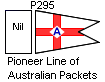
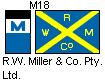
The table flag is a horizontal yellow-red-blue tricolour with a central white rhomb and black sans-serif lettering transcribed as “?B” in the source. Schneider describes the red as slightly orange. Rosanoski notes that the drawing makes the central stripe slightly narrower and differs particularly in its orange-red shade and the diamond’s height.
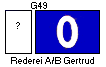
Kapitän Rörd Braren established the company in 1990 according to its website, while Lloyd’s gives 1989. The fleet was chartered out but remained under company management.

Germany, Kollmar.

“ROMA” SOCIETÀ DI NAVIGAZIONE.

R214
image by Jarig Bakker, 13 July 2004

The flag’s diamond is shown just inside the field, but Rosanoski allows that it may extend fully to the edges.

Italy, Genova.